

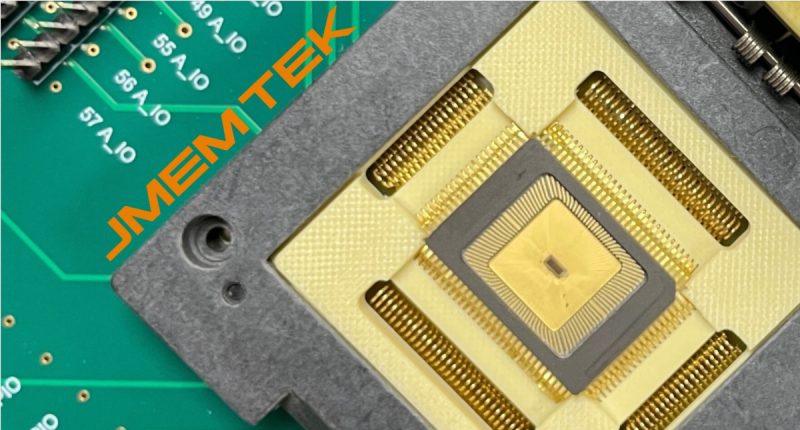
- Quantum eMotion (TSX:QNC) and Taiwan’s Jmem Tek have signed an international consortium agreement through June 2027 to develop a quantum-resilient Universal Security system-on-chip (SoC)
- The project merges Quantum eMotion’s diode-based quantum entropy source with Jmem Tek’s secure semiconductor and hardware root-of-trust architectures to defend against next-generation cyber threats
- Backed by the Canada-Taiwan Collaborative R&D Program, the agreement defines clear intellectual property rights, a revenue-sharing model based on technical contributions, and a roadmap targeting FIPS 140-3 and FedRAMP compliance
- Quantum eMotion stock (TSXV:QNC) opened trading at C$3.70
In a major step forward for next-generation hardware security, Canada’s Quantum eMotion (TSXV:QNC) and Taiwan’s Jmem Tek have officially signed an international project consortium agreement. The deal formalizes a joint initiative to develop a hardware-level, quantum-resilient semiconductor platform capable of protecting global digital infrastructure against tomorrow’s quantum-computing threats.
The milestone coincides with a recent diplomatic and technical visit by Quantum eMotion CEO Dr. Francis Bellido to Jmem Tek’s facilities in Taiwan. Dr. Francis Bellido, CEO of Quantum eMotion, met with executive and technical teams to align on upcoming development milestones and accelerate the completion of their joint Universal Security system-on-chip (SoC).
“This announcement reflects more than the signing of an agreement; it reflects the strengthening of a strategic relationship and a shared commitment to execution,” CEO Bellido said in a news release. “My visit to Jmem confirmed the quality of our alignment, the strength of our collaboration, and our common objective to accelerate completion of the Universal Security SoC. Together, we are building the foundation for a new class of quantum-resilient semiconductor security solutions.”
Direct integration of quantum tech into silicon
The newly inked consortium agreement establishes the framework for combining the distinct technical strengths of both firms:
- Quantum eMotion will provide its patented, diode-based quantum entropy source to serve as an unpredictable foundation for cryptographic security.
- Jmem Tek will integrate its specialized secure chip architectures, focused on Physical Unclonable Functions (PUF), Post-Quantum Cryptography (PQC), and hardware root-of-trust systems.
By embedding Quantum’s quantum-grade randomness directly alongside Jmem’s hardware security protocols, the resulting Universal Security SoC aims to secure highly sensitive actions like secure boots, root-of-trust operations, and overarching hardware architectures.
A detailed roadmap to 2027
Operating under the Canada-Taiwan 2024-25 Collaborative R&D Program (CIIP), the partnership transitions from its initial September 2025 Memorandum of Understanding into a concrete, legally bound operational phase spanning through June 30, 2027.
The consortium agreement outlines a comprehensive, structured implementation plan that moves beyond theory into commercial-grade products:
- Hardware prototypes: Production of the physical SoC platform alongside PCIe boards and dedicated server appliances.
- Cloud infrastructure support: Tailored deployment capabilities for Cryptography-as-a-Service (CaaS) and Entropy-as-a-Service (EaaS) environments.
- Software tools: Deployment of comprehensive cryptographic Software Development Kits (SDKs) and APIs for developer integration.
- Regulatory compliance: Preparation of strict technical documentation to meet world-class federal standards, specifically FIPS 140-3 and FedRAMP frameworks.
Governance and financial architecture
To manage the international workflow, the companies have established a cross-border governance model consisting of joint steering committees, focused technical working groups, and coordinated budget and reporting lines.
Crucially, the agreement contains a commercialization framework protecting both organizations. Commercial revenues derived from the finalized SoC will be shared proportionally relative to each company’s technical and financial contributions, which will undergo a mutually agreed-upon valuation model before hit-to-market deployment.
On the intellectual property front, the protection lines are distinct: all background intellectual property remains the exclusive asset of its original creator, while newly engineered “foreground” IP generated during the project will be jointly owned. Any subsequent post-project commercial licensing or sublicensing will require unanimous, written consent from both Quantum and Jmem Tek.
With cybersecurity threats compounding alongside the rapid emergence of quantum computing capabilities, this cross-border semiconductor alliance positions both companies at the cutting edge of the post-quantum hardware transition.
You can learn more about Quantum eMotion’s overall strategy and its patented random number generator in this video detailing the Quantum eMotion 2026 TSX Venture 50 Rank.
About Quantum eMotion
Quantum eMotion is a quantum technology company focused on digital security spanning cryptography, communications and financial transactions.
Quantum eMotion stock (TSXV:QNC) opened trading at C$3.70 and is up more than 475 per cent since this time last year.
Join the discussion: Find out what investors are saying about this technology stock on the Quantum eMotion Corp. Bullboard and make sure to explore the rest of Stockhouse’s stock forums and message boards.