


Microsoft stock (NASDAQ:MSFT) took a beating after replacing the CEO of its Gaming division with Asha Sharma, president of its CoreAI products group, who brings no professional video game experience and seemingly little in the way of personal experience, reigniting the debate about the place of AI in video game creation.
This article is a journalistic opinion piece which has been written based on independent research. It is intended to inform investors and should not be taken as a recommendation or financial advice.
According to a report from Ars Technica, while many are unreservedly against the use of generative AI, leading to numerous examples of gaming studio fallout, including Sandfall Interactive and Running With Scissors, majors players, such as Tim Sweeney, founder and CEO of Epic Games, and game developer Jon Cormack, have shown public support for the technology’s ability to increase productivity and attract a new generation of creators.
Sharma herself told Variety that “AI has long been part of gaming and will continue to be,” but that “great stories are created by humans,” firmly walking the line between brain power and compute power.
Regardless of the side you take, it’s clear that any company integrating AI into game development – which is likely to be all of them, at least according to one of Sweeney’s recent tweets – must do so while balancing profitability and game quality, insuring that both customers and investors see a viable path forward.
A well-known gaming stock excelling at this balancing act is Roblox (NYSE:RBLX), which offers access to a shared gaming environment, hosting more than 40 million games, where users can play and interact.
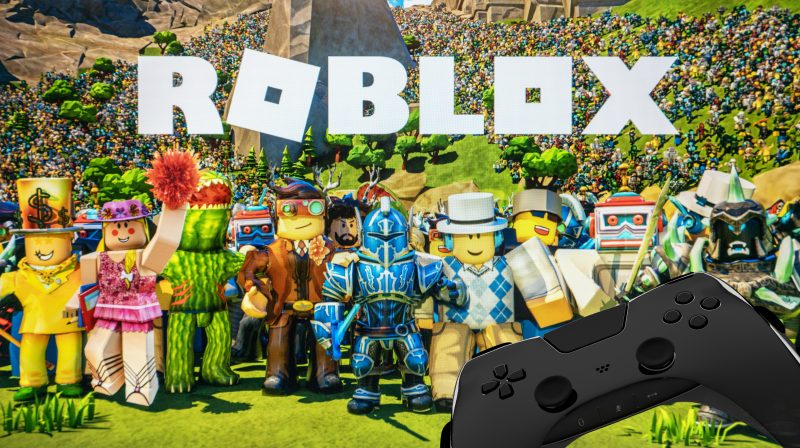
In September, the company rolled out a new suite of AI tools designed to “help creators get from idea to shared reality faster,” in the words of Nick Tornow, senior vice president of engineering at Roblox, by enhancing functionality in tandem with artistic freedom. These include:
- 4D Objects, enabling interactions between objects, environments and people through models with built-in functionality – for example, a car ready to be driven with doors that open – with a limited release beginning in Q4 2025.
- Real-Time Voice Chat Translation, beginning in 2026, for English, Spanish, French and German speakers. with additional languages to follow, building on the text-based iteration Roblox released in February 2024.
- Text-to-Speech API, now in a limited release, enabling the conversion of text to audio from 10 preset voices to expedite character development.
- Speech-to-Text API, which allows creators to trigger actions through a game player’s voice commands.
- Assistant Improvements and Model Context Protocol, making it easier for creators to use plain language to code, build and add texture to their gaming environments.
As we can see, rather than cutting corners and offering players a poorer product, Roblox is adopting a developer-first stance, building tools that refine artistry without decreasing freedom of choice, optimizing both productivity and the creative process, and in so doing setting a standard for AI integrations that the industry at large would do well to live up to.
The company’s approach to AI is a broader reflection of its goal to create and foster a space for human experiences, where playing, learning, communication and exploration remain front-and-centre, and its daily active user growth, which has soared from 9 million in 2016 to 144 million at last count, is evidence that the philosophy is playing out in practice.
Growth has, in turn, began to show encouraging signs on Roblox’s income statements, with revenue more than doubling from US$2.22 billion in 2022 to US$4.89 billion in 2025, supported by an exponential increase in gross profits from US$1.67 billion to US$3.81 billion, respectively, generating US$3 million in adjusted EBITDA in Q4 2025, ending the quarter with US$5.5 billion in cash and investments – up from US$3.2 billion in Q4 2023 – versus only US$1 billion in debt. The picture these results paint is one of increasing operational efficiency as the company focuses on growing its community in line with user and developer needs. Recent initiatives include:
- Instituting an age-check for users to access chat, encouraging age-appropriate communication and limiting adult-minor interactions on the platform.
- A new youth guide to community standards and mental health partnership to support gamer well-being and positive digital experiences.
Given that Roblox stock is basically flat since 2021 and down by about 50 per cent from its all-time-high in 2025, it’s reasonable to suppose that the broader market is underappreciating the company’s responsible growth trajectory. This makes current pessimism a potentially outsized opportunity for investors who can recognize the clear reasons for conviction in Roblox’s financials.
Join the discussion: Find out what investors are saying about this gaming stock on the Roblox Corp. Bullboard and make sure to explore the rest of Stockhouse’s stock forums and message boards.
Stockhouse does not provide investment advice or recommendations. All investment decisions should be made based on your own research and consultation with a registered investment professional. The issuer is solely responsible for the accuracy of the information contained herein.
For full disclaimer information, please click here.