
BASF: The Established Giant at the Positive Pole
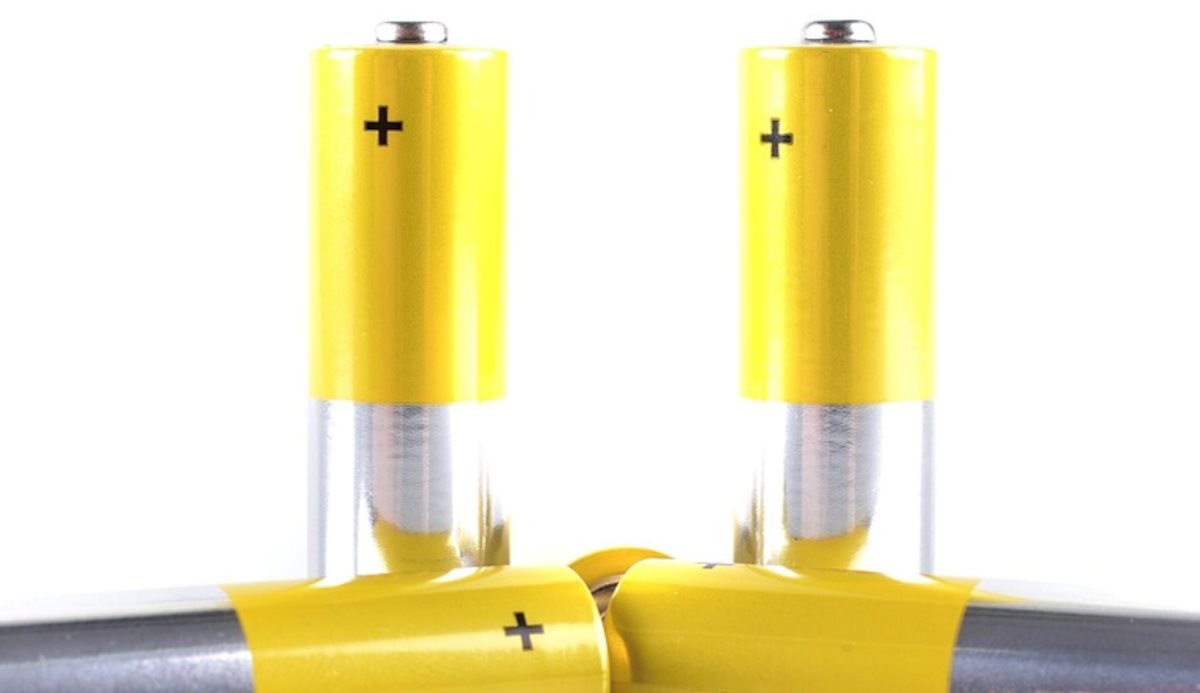
BASF was one of the first companies on the European continent to invest heavily in cathode materials. The cathode is the positive terminal of a lithium-ion cell. It plays a decisive role in determining how much energy a battery can store and how much it costs. A visible sign of this commitment is the plant in Schwarzheide, Brandenburg. The highly automated facility is designed to produce approximately 24,000 metric tons of cathode material per year and is, to date, the only one of its kind in Europe. Chemically, the focus is on NMC, a mixture of nickel, manganese and cobalt. This formulation packs a lot of energy into a small space and enables long ranges. However, it is expensive and challenging to manufacture, as nickel and cobalt are scarce and must be precisely measured. Its natural market is therefore the luxury automotive segment. The Chinese cell manufacturer CATL describes BASF as an important supplier. Since the end of 2023, the battery division has been operated as an independent unit, and the German chemical company’s major growth investments are now flowing primarily to Asia. A new integrated site is being built in Zhanjiang, China, for EUR 8.7 billion—the largest single investment in the company’s history.
On the stock market, however, a different topic is currently dominating the discussion. Late last week, BASF confirmed exploratory talks with Evonik and its major shareholder, the RAG Foundation, regarding a potential takeover. According to information from the news agency Reuters, Evonik reportedly declined, rejecting an offer of around EUR 22.15 per share as too low. This price has not been officially confirmed. Analysts are divided. JPMorgan continues to rate BASF “Underweight” and sets the price target at EUR 40—well below the current price of EUR 50.49. Analyst Chetan Udeshi believes that consolidation is the only credible way out of the industry crisis, but sees more attractive targets for BASF with lower implementation risk. Bernstein Research lowered its price target slightly from EUR 63 to 61 but remains optimistic. Deutsche Bank confirmed its “Buy” recommendation with a target of EUR 60.
Operationally, things are back on track for Europe’s largest chemical company after several lacklustre years. In the second quarter, BASF increased revenue by 16% to EUR 17.2 billion and raised its full-year forecast for adjusted earnings before interest, taxes, depreciation, and amortization (EBITDA) to EUR 6.9 to 7.7 billion. A share buyback program worth EUR 1 billion is currently underway. Nevertheless, on average, analysts estimate the fair value at just over EUR 52, which is only slightly above the current share price—whether or not the Evonik acquisition goes through. Shareholders take comfort in a dividend yield that has never fallen below 5% in recent years.
IBU-tec: The Bridge Builder for the Mass Market
However, NMC is only one answer to the European battery question. In the mass market, price matters most. This is where LFP comes into play—short for lithium iron phosphate. This cathode chemistry uses no nickel or cobalt. It is cheaper, more heat-resistant, and longer-lasting, but stores slightly less energy. For vehicles with a range of 400 to 500 km, that is entirely sufficient. The problem: The market is firmly in Chinese hands. Depending on the component, at least 80% of battery materials come from China; for anodes, the figure is as high as 99%, estimates Ulrich Weitz, the founder of IBU-tec.
The medium-sized company from Weimar positions itself as a bridge-builder for the European battery industry. A plant capable of producing 15,000 metric tons of LFP material per year is being built in Bitterfeld-Wolfen and is scheduled to begin production in 2028. VW’s battery subsidiary, PowerCo, has secured the entire capacity for 10 years at fixed prices and is helping finance construction through milestone payments. The process does not rely on Chinese technology. Instead of the tunnel kiln commonly used there, IBU-tec employs a rotary kiln. According to the company, it requires about 96% less space and 49% less energy. Approval for the new operational buildings was granted in early September. “This lays the foundation for exponential growth in revenue and earnings in the coming years,” says CEO Jörg Leinenbach. Additional tailwinds could come from Brussels. The planned Industrial Accelerator Act requires that batteries contain at least three key components sourced from the EU. This current year, however, is considered a transition phase, with projected revenue of EUR 37 to 39 million and a loss of EUR 1.1 million in the first six months. Analysts do not expect the company to return to profitability until 2027.
Nevertheless, the Hamburg-based research firm Montega recently reaffirmed its “Buy” rating with a price target of EUR 25. The reason: The battery business alone is expected to generate EUR 85 to 90 million in revenue by 2030, while the company’s total revenue is projected to climb to EUR 120 to 140 million. This is not reflected much in the share price. The stock has lost about 30% since the start of the year and is currently trading at EUR 13.65, with a market capitalization of just EUR 67 million—a fraction of the EUR 43.5 billion that BASF is worth. The IBU-tec stock is also exciting because of an order announced in June. IBU-tec is developing synthetic graphite as an anode material for an international energy company. “This once again underscores our ability to manufacture both cathode and anode materials on a large scale,” emphasizes CEO Leinenbach.
HPQ Silicon: The Silicon Pioneer at the Negative Terminal
Graphite has been the standard at the negative terminal for decades. But the material is reaching its physical limits. Theoretically, it stores around 372 milliampere-hours (mAh) per gram. Silicon achieves about 4,200 mAh—more than ten times as much. The catch: During charging, silicon expands by more than 300%. Without sophisticated materials technology, the anode crumbles after just a few cycles. Overcoming this hurdle is the core business of Novacium. The company, headquartered in Solaize, France (near Lyon), is not publicly traded itself. Nevertheless, investors can still play the anode card, as Montreal-based HPQ Silicon holds a 36.8% stake in the specialist and owns the exclusive marketing rights for Canada, the US and Mexico. In addition, HPQ is developing processes for pyrogenic (fumed) silica and hydrogen, though its battery business is the most advanced.
This progress can be quantified. Using third-generation (GEN3) anode material, cells in the standard 18650 format achieved an average capacity of 4,030 mAh and retained more than 3,000 mAh after 1,000 charge cycles. The fourth generation brought larger 21700-type cells to over 6,600 mAh. A 6,500-mAh cell under the HPQ ENDURA+™ brand has also received UL 1642 safety certification from an independent testing laboratory. This has piqued the military’s interest. Last week, HPQ announced an order from the Technical Section of the French Army (STAT), which tests and certifies equipment for the ground forces. Novacium is set to develop prototype batteries for tactical radios. The goal is significantly greater capacity, ideally double, without modifying the connectors or chargers. Initial prototypes in 2025 already delivered 23% more energy than the comparable battery. “We were selected because our GEN3 and GEN4 cells offer exceptional energy density,” says Novacium CEO Jed Kraiem. The contract value remains confidential.
One Groundbreaking Contract After Another
A few days earlier, the French drone defence specialist Alta Ares had ordered more than 100 battery packs for its interceptor drone X-Lock. Alta Ares, together with the defence contractor MBDA, was selected for a program run by the Direction générale de l’armement (DGA), an agency of the French Ministry of Defence, and won a NATO innovation competition in 2025. The packs are lighter than the previous solution while delivering at least the same performance. “For an interceptor drone like the X-Lock, every gram counts,” emphasizes Julien Théodore of Alta Ares. Back in the summer, partner LN Innov had already ordered batteries from Novacium for FPV drones used by a regiment of the French Army. FPV stands for “First Person View”. The drones are controlled from a first-person perspective using video goggles. At the end of August, 30 packs were also shipped to three European drone manufacturers for final qualification.
In addition, there is a non-binding collaboration with Tokai COBEX, the French subsidiary of the Japanese Tokai Carbon Group. Together, they are investigating whether Novacium’s silicon can be combined with graphite—produced in France using climate-friendly methods—to form a complete anode. At the same time, a new market is opening up in North America. Canada aims to build capacity for millions of drones within two years. HPQ is evaluating a Canadian propulsion platform with LN Innov and Novacium, based so far on a non-binding letter of intent. “Every advance Novacium makes in the defence sector strengthens the strategic value of our investment,” explains HPQ CEO Bernard Tourillon.
Banks and brokers have barely had HPQ stock on their radar so far; no research is available yet. This is both an opportunity and a risk. On the one hand, the story is still largely undiscovered; any new report could attract additional buyers. On the other hand, it is a largely overlooked micro-cap—that is, a very small-cap stock—with correspondingly thin trading volume and high volatility. The share price stands at just CAD 0.14 (EUR 0.08 on German exchanges), with a market capitalization equivalent to only about EUR 42 million.
From Dividend Payers to Tech Bets
The three companies represent three layers of the European battery industry. BASF provides the industrial foundation for the high-end segment with NMC, but is struggling with high costs. The stock is more attractive for its high dividend than for potential price gains. IBU-tec is bringing cost-effective LFP chemistry to Europe at scale and has a reliable customer in PowerCo. There is no getting around this company when it comes to building a European battery value chain. The low market capitalization leaves plenty of room for the stock to rise. HPQ Silicon and Novacium are working on the next leap in energy density and are finding their first paying customers in the defence sector. Once prototypes turn into mass production, the path upward is wide open. It may take well-known analysts or major investors to notice the story and boost the share price. Until then, HPQ remains a hidden gem. For investors, the spectrum ranges from a solid dividend payer with limited upside potential to a dynamic growth stock in transition to a speculative technology play.
Conflict of interest
Pursuant to §85 of the German Securities Trading Act (WpHG), we point out that Apaton Finance GmbH as well as partners, authors or employees of Apaton Finance GmbH (hereinafter referred to as “Relevant Persons”) may hold shares or other financial instruments of the aforementioned companies in the future or may bet on rising or falling prices and thus a conflict of interest may arise in the future. The Relevant Persons reserve the right to buy or sell shares or other financial instruments of the Company at any time (hereinafter each a “Transaction”). Transactions may, under certain circumstances, influence the respective price of the shares or other financial instruments of the Company.
In addition, Apaton Finance GmbH is active in the context of the preparation and publication of the reporting in paid contractual relationships.
For this reason, there is a concrete conflict of interest.
The above information on existing conflicts of interest applies to all types and forms of publication used by Apaton Finance GmbH for publications on companies.
Risk notice
Apaton Finance GmbH offers editors, agencies and companies the opportunity to publish commentaries, interviews, summaries, news and the like on news.financial. These contents are exclusively for the information of the readers and do not represent any call to action or recommendations, neither explicitly nor implicitly they are to be understood as an assurance of possible price developments. The contents do not replace individual expert investment advice and do not constitute an offer to sell the discussed share(s) or other financial instruments, nor an invitation to buy or sell such.
The content is expressly not a financial analysis, but a journalistic or advertising text. Readers or users who make investment decisions or carry out transactions on the basis of the information provided here do so entirely at their own risk. No contractual relationship is established between Apaton Finance GmbH and its readers or the users of its offers, as our information only refers to the company and not to the investment decision of the reader or user.
The acquisition of financial instruments involves high risks, which can lead to the total loss of the invested capital. The information published by Apaton Finance GmbH and its authors is based on careful research. Nevertheless, no liability is assumed for financial losses or a content-related guarantee for the topicality, correctness, appropriateness and completeness of the content provided here. Please also note our Terms of use.
Stockhouse does not provide investment advice or recommendations. All investment decisions should be made based on your own research and consultation with a registered investment professional. The issuer is solely responsible for the accuracy of the information contained herein. For full disclaimer information, please click here.