
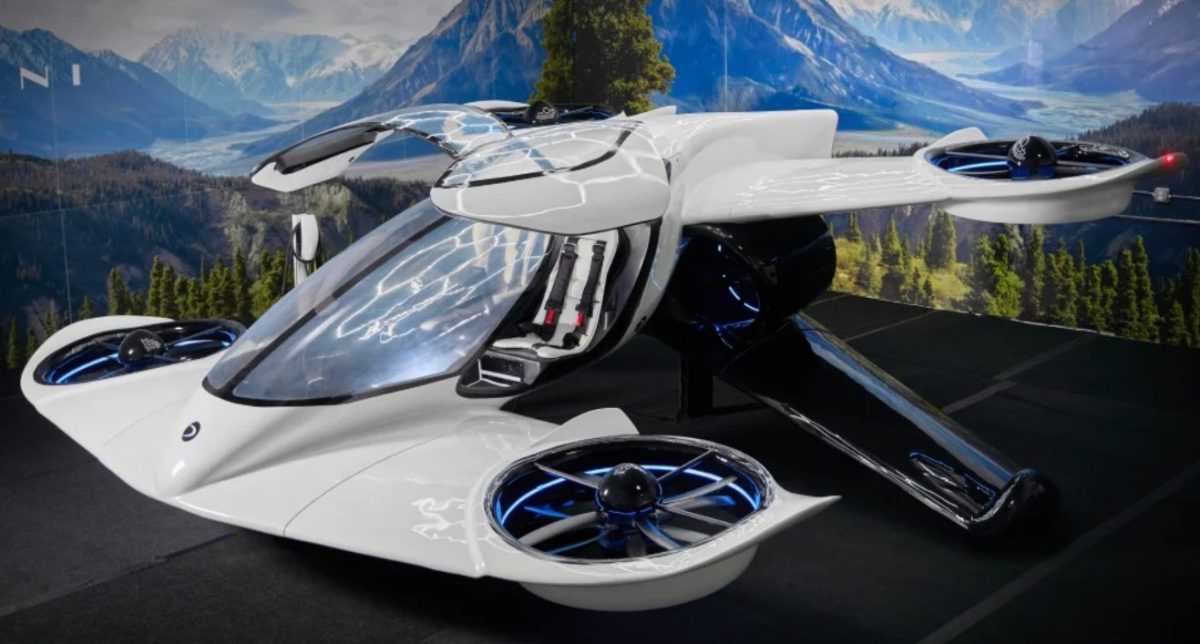

- Doroni Aerospace (NASDAQ:DRNI) is betting on personal ownership of flying cars, targeting consumer-ready eVTOL deliveries by 2028 rather than fleet-based air taxis
- The company has achieved key milestones, including FAA testing approval, 70+ test flights, and 600+ pre-orders worth US$240M+ in potential revenue
- Its flagship H1-X aircraft offers practical specs (120 mph, 100-mile range, 25-minute charge) and features an AI-assisted co-pilot for easier everyday use
- Doroni is positioning itself in a US$1T future mobility market, but remains a high-risk, early-stage investment dependent on certification, infrastructure, and consumer adoption
Doroni Aerospace targets NASDAQ debut as personal eVTOL market accelerates
We always knew there was a place for flying cars in the future. Looks like the future could be as soon as 2028.
As the race to redefine urban mobility intensifies, Doroni Aerospace is positioning itself as one of the most differentiated entrants in the electric vertical takeoff and landing (eVTOL) sector. With plans to go public on the NASDAQ under the reserved ticker DRNI, the Florida-based company is advancing a vision that diverges from the dominant “air taxi” model: consumer-owned flying vehicles designed for everyday use.
For investors, Doroni represents a high-risk, high-upside play on what could become one of the most transformative mobility markets of the next two decades.
This article is a journalistic opinion piece that has been written based on independent research. It is intended to inform investors and should not be taken as a recommendation or financial advice.
A different bet on flying cars
Most capital in the eVTOL space has flowed toward companies developing fleet-based urban air mobility solutions—think Joby Aviation (NYSE:JOBY), or Archer Aviation (NYSE:ACHR)—focused on piloted or autonomous air taxi services.
Doroni is taking a fundamentally different approach:
Personal ownership over fleet operation.
Its flagship aircraft, the H1-X, is designed not for commercial fleets but for individuals—effectively aiming to create a consumer aviation category analogous to the automobile revolution of the early 20th century.
This distinction matters:
- It shifts the revenue model from service-based to direct hardware sales
- It reduces reliance on complex fleet logistics and operator certification
- It opens a path toward a consumer-driven scaling curve, rather than infrastructure-limited adoption

A massive market emerging
The company’s strategy aligns with broader macro projections. According to Morgan Stanley Research, the urban air mobility (UAM) market could reach US$1 trillion by 2040, fueled by advancements in battery technology, autonomy, and regulatory frameworks.
At the same time, the FAA’s evolving regulatory environment—including the MOSAIC rule framework—is beginning to define a clearer certification pathway for personal eVTOL aircraft. Doroni estimates this creates a US$100B+ near-term addressable market for personal flight.
The underlying demand signal is compelling:
- The average commuter loses up to nine days per year in traffic
- Urban congestion continues to worsen globally
- Remote work trends are expanding acceptable commuting distances—if time can be compressed
Doroni is betting that short-distance personal flight becomes a practical alternative for high-income, early-adopter consumers.
The H1-X: Product and positioning
Doroni’s H1-X sits at the centre of its investment thesis. Officially unveiled in April 2026 at the company’s “Soul of the Sky” event, the aircraft represents a production-intent prototype rather than a concept design.
Key specifications:
- Top speed: 193 kph (120 mph)
- Cruise speed: 152 kph (95 mph)
- Range: 160 km (100 miles) per charge
- Charge time: ~25 minutes
- Altitude: 500–1,500 ft AGL
- Payload: 226 kg (500 lbs)
- Configuration: 2 passengers
Built on a carbon fibre airframe, the H1-X uses a ducted fan propulsion system with:
- Four vertical lift fans
- Two forward propulsion fans
Consumer-focused design elements:
- Vertical takeoff (no runway required)
- Home charging capability
- Compact footprint suitable for residential use
- 270-degree panoramic cockpit
This reflects a deliberate effort to make aviation accessible, not just possible.
AI-assisted flight: SOUL AI system
A core differentiator is Doroni’s SOUL AI digital co-pilot, which aims to simplify piloting and make ownership feasible for non-professional aviators.
The system integrates:
- LiDAR, radar, and vision sensors
- Real-time weather and airspace data
- Anti-collision alerts
- Voice-controlled cabin systems
Rather than pursuing full autonomy—still a regulatory hurdle—Doroni is focusing on augmented piloting, reducing cognitive load while maintaining human control.
This may prove to be a more pragmatic near-term strategy compared to fully autonomous competitors.
Traction and milestones
In an industry often criticized for concept-heavy narratives, Doroni is emphasizing execution milestones:
- FAA Special Airworthiness Certificate granted
- 70+ successful test flights, including manned flights
- 600+ pre-orders representing US$240M+ in potential revenue
- US$18.5M raised from over 5,500 investors
- Eight patents filed across propulsion and safety systems
- Recent showroom-ready H1-X prototype unveiled
Notably, the company reports its last capital raise was fully subscribed in under 100 days, suggesting strong retail investor enthusiasm.
Certification path and timeline
Doroni is targeting commercial deliveries by 2028, contingent on FAA certification progress.
Unlike air taxi operators pursuing Part 135 certification, Doroni’s pathway centres on:
- Powered-lift aircraft classification
- Sport pilot–level accessibility (or higher)
This could be a meaningful advantage if certification requirements remain less burdensome than commercial operator frameworks.
However, investors should recognize:
- Certification timelines in aviation are historically unpredictable
- eVTOL standards are still evolving
- Regulatory requirements may tighten as the category matures
Risks and open questions
Despite strong positioning, Doroni faces several structural challenges common to the sector:
1. Regulatory uncertainty
Even with FAA progress, timelines for powered-lift certification remain fluid.
2. Infrastructure gaps
- Where will these vehicles land at scale?
- How widespread will charging networks become?
3. Consumer readiness
- Will individuals adopt piloted flight vehicles at scale?
- What does insurance look like for personal eVTOLs?
4. Competitive pressure
While Doroni targets a different segment, major players with far larger capital bases could pivot toward personal ownership if the market proves viable.
Investment outlook: Early, speculative, potentially transformational
Doroni Aerospace is not a late-stage aerospace company—it is an early-stage innovation bet with significant execution and regulatory risk.
However, it also offers exposure to:
- A potential new consumer mobility category
- A differentiated strategy within the eVTOL landscape
- Early traction in pre-orders and investor participation
- A clear milestone roadmap leading to 2028
If successful, Doroni could be among the first companies to commercialize consumer-grade flying vehicles, a milestone that would mark a shift from experimental aviation to mainstream mobility.
A new attitude
Doroni’s NASDAQ ambitions under ticker DRNI signal growing confidence in both its technology and market timing.
Its core thesis is simple but bold:
Transportation doesn’t have to be limited to roads—and everyday people don’t need to wait for fleets to take to the skies.
For investors, the question is not whether urban air mobility will emerge—but whether personal ownership will become a meaningful slice of that future.
Doroni is betting that it will.
Join the discussion: Find out what the Bullboards are saying about aerospace stocks and check out Stockhouse’s stock forums and message boards.