

- One of the major lessons investors need to internalize before venturing away from index funds into individual stocks is that fundamentals supersede sentiment
- In other words, value creation is what the market will reward in the end
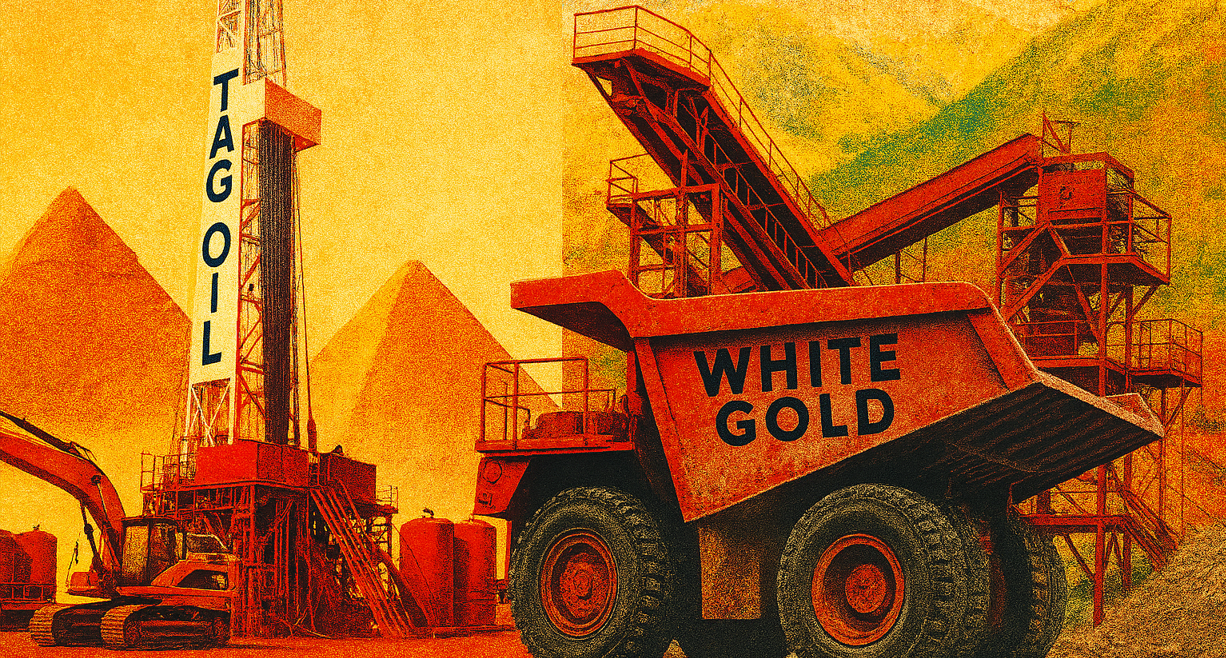
- In the newest edition of Stockhouse’s Weekly Market Movers, two attractive resource stocks on opposite sides of investor perception, both of which are strong buys, despite appearances
One of the major lessons investors need to internalize before venturing away from index funds into individual stocks is that fundamentals supersede sentiment.
In other words, while the broader world will impact a company’s operations in short-term bursts, because of, say, a pandemic or new tariff policy, it’s leadership’s ability to create value that’ll be rewarded in the end, after the worries of the day die down in a return to business as usual.
It follows that a company can be creating this value, whether or not the market is recognizing it with a higher stock price, requiring investors to look past price action and get their hands dirty to make a proper assessment.
In the newest edition of Stockhouse’s Weekly Market Movers, I’ll examine two attractive resource stocks on opposite sides of investor perception, with eyes on delineating why they’re both strong buys, despite appearances.
White Gold
Our first resource stock, mineral explorer and developer White Gold, market capitalization C$178.63 million, is on the sunnier side of the street, sporting a 250 per cent return year-over-year, supported by gold’s 48.37 per cent gain over the period, as well as by ample evidence of disciplined development on its White Gold project in the Yukon, hosting one of the highest-grade undeveloped open-pittable gold deposits in Canada.
This article is disseminated in partnership with resource stocks White Gold Corp. and TAG Oil Ltd. It is intended to inform investors and should not be taken as a recommendation or financial advice.
White Gold began the year by increasing its flagship project’s resource estimate to 1.203 million ounces indicated, up by 4.3 per cent from the 2023 estimate, and to 1.117 million ounces inferred, up by 18.5 per cent from 2023. At the price of US$3,995.95 per ounce as of Nov. 7, the total resource represents more than US$9.2 billion in the ground.
Leadership followed this up with the discovery of a near-surface, gold-bearing structure along the 2.2 kilometre Christ Target near the main White Gold deposit, painting a prospective picture of the broader 5.2 km mineralized trend on which the target resides.
The company then embarked on a phase-1 exploration program, including geophysics and diamond drilling, with eyes on testing high-potential targets and expanding focus towards critical minerals including copper, molybdenum, tungsten, antimony and bismuth.
When crews returned from the field, the company succeeded in delivering on its expectations, further increasing indicated resources to 1.732 million ounces and inferred resources to 1.265 million ounces, with the deposit remaining open for expansion in multiple directions.
Well-funded through a recently closed C$23 million financing, White Gold continues to prove out its project’s potential with the drill bit, recently expanding mineralization in the main deposit (6.89 g/t gold over 50.2 m) as well as in a footwall parallel to it (6.89 g/t gold over 2.8 m), bolstering its leadership position in the Canadian exploration space, and helping it to further justify its place among sizable neighboring gold discoveries, including Newmont’s Coffee project and Western Copper and Gold’s Casino project.
Look for milestones on the journey to mine construction and eventual production to close the gap between White Gold’s small-cap valuation and billions of dollars in potential gold revenue.
David D’Onofrio, president and chief executive officer of White Gold, sat down with Stockhouse’s Ricki Lee to discuss the company’s latest resource update. Watch the interview here.
White Gold stock (TSXV:WGO) last traded at C$0.91.
TAG Oil
The other half in our pair of prospective resource stocks, Egypt-based oil and gas explorer TAG Oil, market capitalization C$26.04 million, is nursing a 23.33 per cent loss year-over-year, despite its portfolio hosting an estimated 3.7 billion barrels of oil-initially-in-place, including 500 million barrels in the BED-1 concession and 3.2 billion barrels in the SERQ concession, both of which were past-producing in the hands of energy majors Shell and Sipetrol, respectively.
Backed by an established Egyptian energy industry, as highlighted by 2024 production of 530,000 barrels of oil per day and 6 billion cubic feet of gas per day, TAG started the year by acquiring the SERQ concessions, selling non-essential interests in New Zealand to strengthen its balance sheet for growth – eventually raising US$2.2 million – and fielding partnership offers from multiple parties interested in developing its resource-rich assets.
The company followed this up with confirmation that initial wells at BED-1 remain productive, collectively surpassing the 40,000 barrel mark dating back to 2023, demonstrating the land package’s economical nature to potential joint venture partners, with whom numerous discussions are underway.
TAG proceeded to reinforce its balance sheet with a US$1 million disposition of its Australian royalty interests and secure a petroleum services contract with the Egyptian National Petroleum for Exploration and Development Company for the SERQ concession, guaranteeing the company 48-55 per cent of gross project revenue.
The November publication of an independent resource estimate at SERQ concludes TAG’s news flow year to date, substantiating the concession’s 3.2-billion-barrel resource, with planned seismic interpretation and production testing to provide a more accurate assessment of concession economics.
The question of the moment then becomes, why has TAG Oil stock (TSXV:TAO) been cut by almost one fourth year-over-year, in what has been an otherwise value-added past 12 months?
From my perspective, the oil price is largely to blame, with WTI dropping from US$70.20 to US$59.80 per barrel over the period, influenced by the Russia-Ukraine War, conflicts in the Middle East, and of course US President Donald Trump’s aggressive tariff policy spooking industries across the board.
Though, if we look at oil’s long-term tailwinds, we see demand is actually expected to increase through 2050, suggesting that the these points of tension are simply the price of admission on the road to compounding investment returns, supposing you’ve invested in high-quality, untapped assets, as TAG’s are increasingly shaping up to be.
Abby Badwi, TAG Oil’s executive chairman and chief executive officer, joined Ricki Lee to comment on the petroleum services agreement at the SERQ concession. Watch the interview here.
Thanks for reading! I’ll see you next week for a new edition of Weekly Market Movers, where I delve into companies that sat down with Stockhouse for an interview over the past week. Here’s last week’s article, in case you missed it.
Join the discussion: Find out what investors are saying about these resource stocks on the White Gold Corp. and TAG Oil Ltd. Bullboards, and make sure to explore the rest of Stockhouse’s stock forums and message boards.
Stockhouse does not provide investment advice or recommendations. All investment decisions should be made based on your own research and consultation with a registered investment professional. The issuer is solely responsible for the accuracy of the information contained herein.
For full disclaimer information, please click here.