
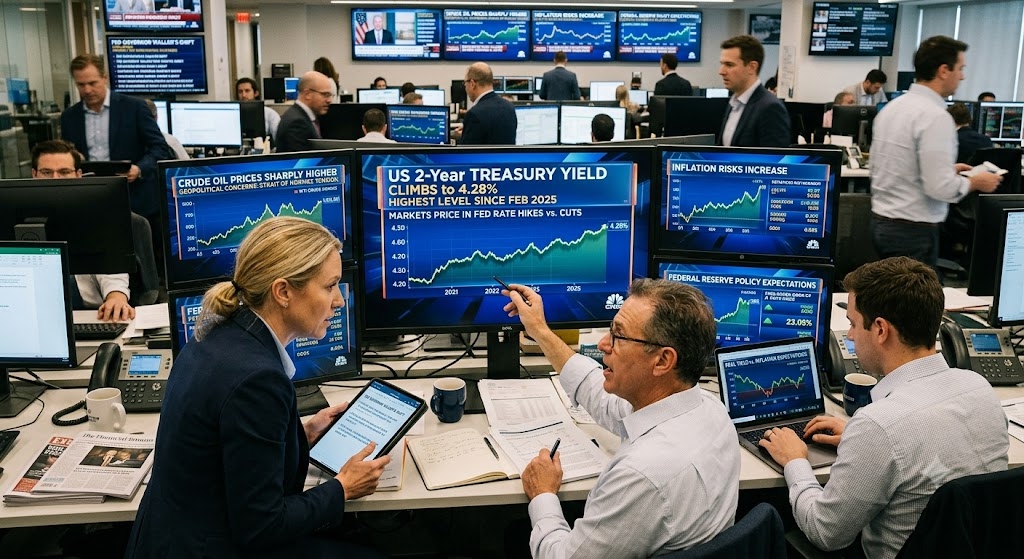

- The U.S. two-year Treasury yield rose to 4.28 per cent, its highest level since early 2025, signalling that investors increasingly expect the Federal Reserve to keep rates high or potentially raise them
- Rising tensions between the U.S. and Iran and concerns over oil shipments through the Strait of Hormuz have pushed oil prices higher, increasing inflation worries
- Fed Governor Christopher Waller surprised markets by suggesting rate hikes may be needed if inflation remains elevated, reinforcing expectations of tighter monetary policy
- The bond market’s reaction suggests investors still trust the Fed to control inflation, but higher interest rates could increase borrowing costs and slow economic growth
The U.S. two-year Treasury yield climbed to 4.28 per cent this week, its highest level since February 2025, sending a clear message from bond markets: investors are becoming more concerned about inflation risks and are increasingly pricing in the possibility of additional Federal Reserve rate hikes rather than rate cuts.
For investors, the move is significant because the two-year Treasury yield is widely viewed as one of the best real-time indicators of where markets believe Federal Reserve policy is headed over the next several months. Unlike longer-dated Treasury securities, the two-year note is highly sensitive to changes in interest rate expectations. When investors anticipate rate cuts, the yield typically falls. When they expect tighter monetary policy, it rises.
A Treasury security is effectively a loan to the U.S. government. Investors purchase Treasury notes and receive periodic interest payments in exchange for lending money to Washington. The yield represents the return investors earn for holding that debt.
The recent surge in yields suggests markets believe the Fed may need to keep interest rates elevated, or potentially raise them further, to prevent a new inflation wave from taking hold. Money markets have even begun assigning meaningful odds to a near-term rate increase after a combination of rising oil prices and increasingly hawkish commentary from Fed officials.
This article is a journalistic opinion piece that has been written based on independent research. It is intended to inform investors and should not be taken as a recommendation or financial advice.
Oil and geopolitics drive inflation concerns
A major catalyst behind the move has been renewed conflict involving the United States and Iran. Escalating military exchanges and uncertainty surrounding shipping through the Strait of Hormuz, one of the world’s most important energy transit routes, have pushed crude oil prices sharply higher.
For markets, higher oil prices immediately raise concerns about inflation. More expensive crude generally translates into higher gasoline prices, increased transportation costs, and broader price pressures throughout the economy. Those effects can complicate the Fed’s effort to return inflation to its long-term 2 per cent target.
As a result, investors have become less confident that policymakers will be able to ease monetary policy anytime soon. Instead, the focus has shifted toward whether inflation data will force the Fed to maintain or even increase its restrictive stance.
Waller’s shift catches investors’ attention
Another important development came from Federal Reserve Governor Christopher Waller, who indicated that policymakers may need to consider raising rates if upcoming inflation data show persistent price pressures.
The comments attracted attention because Waller had previously been viewed as one of the more dovish voices at the Fed and had often been associated with arguments for eventual policy easing. His willingness to discuss rate hikes reinforced the perception that policymakers are becoming more concerned about inflation risks.
Bond traders responded by pushing up short-term yields, increasing expectations that the central bank could act more aggressively if inflation remains stubborn.
What the yield move is actually saying
Importantly, the rise in the two-year Treasury yield does not necessarily mean investors believe inflation is about to spiral out of control.
In bond markets, a nominal Treasury yield consists of two broad components: expected inflation and the “real yield,” which represents the inflation-adjusted return investors demand. Analysts note that a significant portion of the recent move appears tied to higher real yields rather than a dramatic rise in long-term inflation expectations.
That distinction matters.
If investors were losing faith in the Fed’s ability to control inflation, inflation expectations would likely surge alongside yields. Instead, the market appears to be signalling confidence that policymakers will respond forcefully if inflation pressures intensify.
In other words, traders are not necessarily saying inflation will run wild. They are saying the Fed is likely to keep its foot on the brake if inflation threatens to accelerate.
Implications for investors
If the market’s expectations prove correct and interest rates remain high for longer, the effects will be felt across the economy.
Higher rates increase borrowing costs for consumers and businesses. Mortgage rates typically remain elevated, corporate financing becomes more expensive, and investment activity can slow. Those conditions tend to weigh on economic growth while helping reduce inflationary pressures over time.
The dynamic is familiar to investors. Since the inflation shock that followed the COVID-19 pandemic, the Fed has relied on higher interest rates to cool demand and bring price growth under control. While inflation has eased from its peak, policymakers continue to face challenges, particularly when external events such as energy market disruptions threaten to reignite price pressures.
For now, the bond market’s message is relatively straightforward: investors see rising inflation risks from geopolitical tensions and energy prices, but they also believe the Federal Reserve is prepared to respond. The jump in the two-year Treasury yield reflects growing confidence that policymakers will prioritize inflation control, even if doing so means keeping financial conditions tight and economic growth somewhat restrained in the months ahead.
Join the discussion: Find out what the Bullboards are saying about financial services and check out Stockhouse’s stock forums and message boards.