
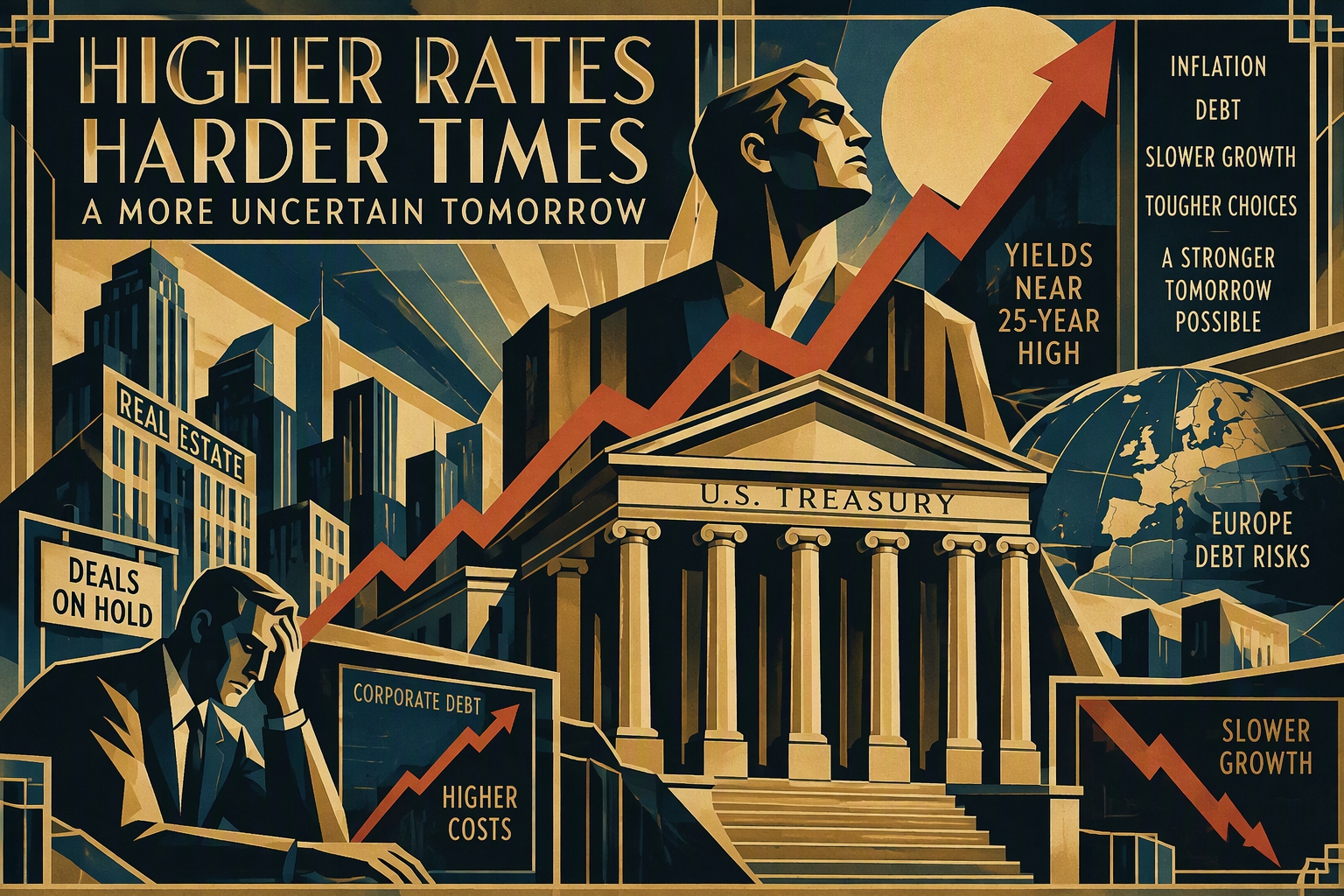

- U.S. Treasury yields pulled back slightly after reaching their highest levels in nearly 25 years
- Investors remain concerned about persistent inflation, rising government debt, and elevated borrowing costs
- Higher interest rates are creating pressure on commercial real estate and increasing financing costs for lower-rated companies
- Goldman Sachs warns sustained high yields could slow U.S. economic growth, pressure stocks, and increase calls for deficit reduction efforts
Economic concerns simmering
U.S. Treasury bonds staged a modest rebound Tuesday after yields climbed to their highest levels in nearly 25 years, as investors increasingly weighed the potential economic consequences of persistently elevated borrowing costs.
The pullback in yields comes after months of sharp increases across major government bond markets. Yields throughout much of the G7 have risen as investors grapple with stubborn inflation, growing government debt burdens, and expectations that interest rates could remain higher for longer than previously anticipated. Concerns have also emerged over the possibility of mounting debt pressures in parts of Europe, adding to volatility in global fixed-income markets.
While Treasury yields remain near recent highs, some investors stepped back into the market after signs emerged that rising financing costs are beginning to strain key sectors of the U.S. economy.
Commercial real estate has become one of the most visible pressure points. Several large property transactions have reportedly faced delays or uncertainty as buyers seek better financing terms in response to higher interest rates. The surge in borrowing costs has made it more difficult for buyers and developers to justify valuations that were established during the era of ultra-low rates.
This article is a journalistic opinion piece that has been written based on independent research. It is intended to inform investors and should not be taken as a recommendation or financial advice.
Corporate borrowers are also feeling the impact. Companies with lower credit ratings have experienced a sharp increase in the cost of issuing debt, raising concerns about refinancing risks and potentially limiting investment and expansion plans. Analysts warn that smaller and more heavily leveraged businesses could face growing challenges if elevated rates persist.
Economists at Goldman Sachs (NYSE:GS) have cautioned that the rise in Treasury yields could have broader implications for the U.S. economy. The bank estimates that sustained higher yields may reduce U.S. GDP growth by approximately 0.2 percentage points next year. Higher borrowing costs can act as a drag on consumer spending, business investment, and housing activity, all of which are important drivers of economic growth.
The firm also warned that persistently elevated yields could pose risks to the strong performance of U.S. equities. Rising bond yields generally increase competition for investor capital by offering more attractive fixed-income returns, while also reducing the present value of future corporate earnings. As a result, higher rates can place pressure on stock market valuations, particularly among growth-oriented companies.
Meanwhile, increasing interest expenses on government debt could intensify pressure on Washington’s fiscal outlook. With borrowing costs rising, policymakers may face greater calls to prioritize deficit reduction efforts in the years ahead.
Although the recent rebound in Treasury prices offered some relief to investors, market participants remain focused on whether higher yields are beginning to have a meaningful impact on economic activity. Any further signs of slowing growth, combined with ongoing inflation concerns, are likely to influence the direction of bond markets and monetary policy expectations in the months ahead.
Join the discussion: Find out what the Bullboards are saying about Goldman Sachs and check out Stockhouse’s stock forums and message boards.