

- SpaceX (NASDAQ:SPCX) reported revenue growth of 92 per cent and beat earnings expectations, but investors had already priced in strong results after a 16 per cent rally in the two days before earnings
- More than 900 million insider shares are set to become eligible for sale when the IPO lockup expires, creating fears of a major increase in supply
- Index funds bought fewer shares than expected while investors remain concerned about SpaceX’s huge AI spending and ambitious long-term valuation, putting pressure on the stock despite strong results
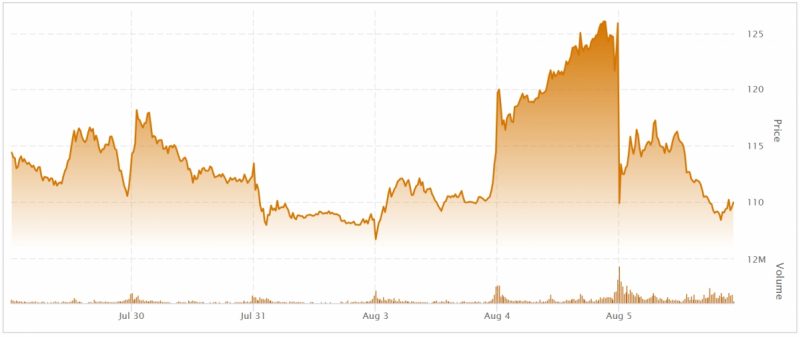
- SpaceX stock (NASDAQ:SPCX) last traded at US$108.06
The lessons from SpaceX’s post-earnings drop
Investors often assume a company that reports strong earnings should see its stock rise. But the stock market doesn’t work that way. In fact, some of the biggest selloffs happen after seemingly great news. That’s exactly what happened with SpaceX (NASDAQ:SPCX) this week. The company reported revenue growth of 92 per cent year over year and beat Wall Street expectations in its first earnings report as a public company, yet the stock fell after the announcement.
So why does a stock go down on good news?
The answer comes down to four key reasons.
This article is a journalistic opinion piece that has been written based on independent research. It is intended to inform investors and should not be taken as a recommendation or financial advice.
1. The good news was already priced in
Stock prices are forward-looking. Investors don’t wait for earnings reports to form opinions. They spend weeks and months trying to predict the results.
Before SpaceX reported earnings, the stock had already surged. Shares jumped roughly 9 per cent on Tuesday alone and rallied about 16 per cent over two days leading into the report. Investors were widely expecting SpaceX to beat estimates.
When the company finally delivered stronger-than-expected revenue and a smaller-than-expected loss, there was little surprise left for the market.
This is a classic example of Wall Street’s old saying: “Buy the rumour, sell the news.”
Investors had already bid up the stock based on expectations of a strong quarter. Once those expectations became reality, many traders simply took profits.

2. A massive wave of new shares is about to hit the market
Another factor worrying investors is supply.
A large portion of SpaceX shares held by insiders, employees and early investors have been locked up since the company’s June IPO. Those shareholders were restricted from selling their stock immediately after the listing.
That lockup period expires today (Thursday), potentially making more than 900 million additional shares available for sale.
Before the expiration, only about 640 million shares were freely tradable. If the same company suddenly has roughly 2.5 times as many shares available to trade, investors must consider the impact of a potential oversupply.
Markets run on supply and demand. If supply rises dramatically while demand stays flat, prices often fall.
Many traders try to anticipate these events and sell before the lockup expires, putting pressure on the stock ahead of time.
3. Index fund demand was smaller than expected
Investors were also counting on a major source of automatic buying.
After SpaceX joined the NASDAQ-100, index funds tracking the benchmark were required to purchase shares. Normally, that can provide a significant boost to demand.
However, because relatively few SpaceX shares trade publicly, index rules limit the company’s weighting within the benchmark. According to Deutsche Bank, passive funds ultimately bought fewer shares than many investors had expected.
That creates a problem for the bull case.
One anticipated source of demand has turned out to be weaker than expected, while a major source of new supply is about to arrive through the lockup expiration.
When expected demand falls and potential supply rises, stock prices frequently move lower regardless of how strong recent earnings may have been.
4. Investors are really betting on the next decade, not the last quarter
The most important reason may be valuation.
SpaceX CEO Elon Musk has said he believes the company can eventually generate US$1 trillion in annual revenue by 2030. Analyst estimates, meanwhile, are closer to roughly US$200 billion by 2029. That’s an enormous gulf in expectations.
At the same time, SpaceX spent approximately US$18 billion during the quarter, with the vast majority directed toward AI infrastructure and expansion efforts. Investors remain uncertain about how much spending will be required in the years ahead and the company provided limited formal guidance.
A stock price is supposed to represent the value of all future cash a company is expected to generate, discounted back to today’s dollars.
That means the value of a company like SpaceX is not primarily determined by one earnings report. It is determined by what investors think the business will look like five, 10 or 20 years from now.
The latest quarter may have been excellent, but if investors become less confident about future growth, profitability, spending levels or valuation, the stock can still decline.

Great expectations
SpaceX’s earnings report is a reminder that stock prices don’t simply react to good news or bad news. They react to expectations.
The company reported a 92 per cent jump in revenue and beat analyst forecasts, yet investors focused on four other issues: the good news was already priced in, hundreds of millions of shares are about to become sellable, index fund demand disappointed, and questions remain about an extremely ambitious long-term valuation.
That’s why a company can post great earnings and still see its stock fall. This isn’t necessarily exclusive to SpaceX. Both Thomson Reuters (TSX:TRI) and Suncor Energy (TSX:SU) closed lower on Wednesday, even after reporting stronger-than-expected second-quarter revenue and profit, while raising outlooks for annual revenue growth. Sometimes the story behind the stock matters more than the numbers in the quarter. The market isn’t just pricing what happened yesterday. It’s trying to price everything that could happen tomorrow.
Space Exploration Technologies Corp. provides satellite broadband services to customers in the U.S., Canada, Ireland, and other international markets, operating across its Space, Connectivity, and AI divisions.
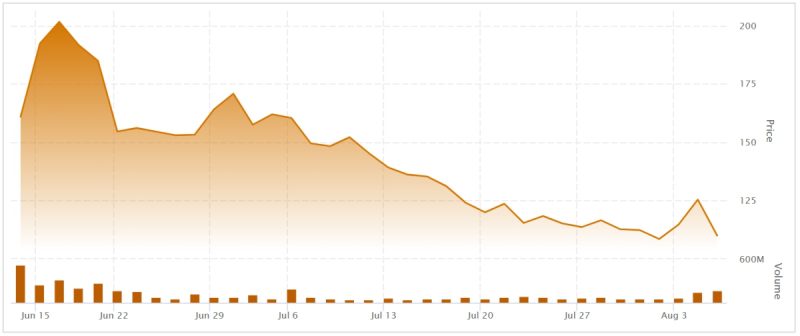
SpaceX stock (NASDAQ:SPCX) closed 13.78 per cent lower at US$108.06 and has lost nearly 27 per cent of its value since going public in June 2026.
Join the discussion: Find out what the Bullboards are saying about SpaceX and check out Stockhouse’s stock forums and message boards.