
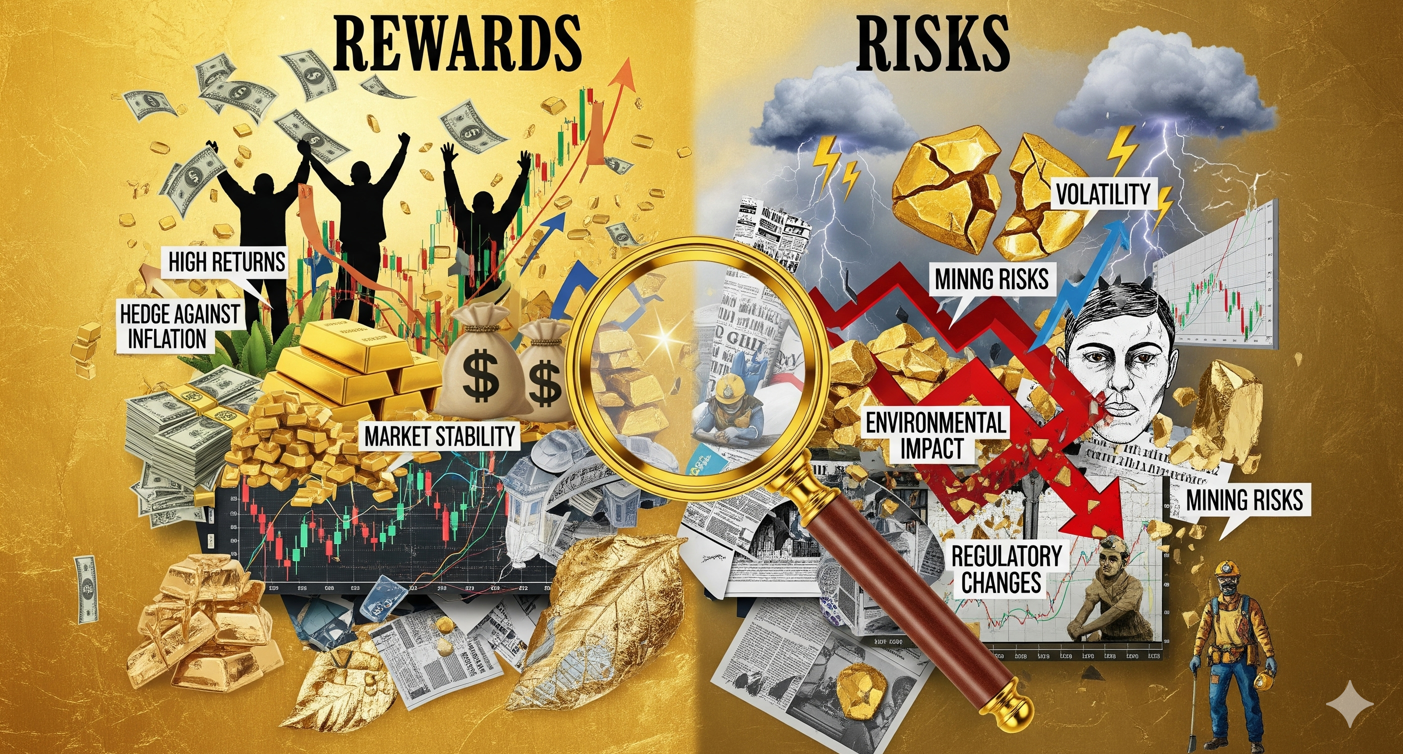

Gold recently touched an all-time-high of more than US$3,700 per ounce, adding more than 80 per cent since 2023, driven by heightened economic uncertainty stemming from U.S. tariffs, a weakening dollar, China’s manufacturing monopoly and numerous ongoing wars, all of which are muddling interest rate policy and threatening to make inflation rear its head again.
This article is a journalistic opinion piece which has been written based on independent research. It is intended to inform investors and should not be taken as a recommendation or financial advice.
Unsurprisingly, the price surge has kicked the gold supply chain into high gear, offering explorers, developers and producers an added incentive to optimize efficiency and take advantage of this momentum.
Investors, in turn, are showing increasing interest in the added value gold companies are currently positioned to create, with Google search results for September, as per Gemini, indicating “a strong and ongoing interest in gold-related investments.”
This is why it’s the right time to revisit some gold stock investing fundamentals, with eyes on helping readers consider if the asset class belongs in their portfolios, and if so, how to best navigate its complexities to capitalize on the ongoing bull market.
7 things you should know before investing in gold stocks
- Gold stocks have a complicated relationship with the gold price.
- Risk-reward potential should be evaluated based on the mining lifecycle.
- Management is a key value driver for earlier-stage gold companies.
- The return potential of gold stocks isn’t limited to production.
- A gold stock will react to factors beyond the metal’s price.
- Gold stocks vs. gold ETFs: The benefits and trade-offs.
- Adding leverage through flow-through shares.
1. Gold stocks have a complicated relationship with the gold price
Gold stocks should rise and fall in proportion to the gold price and what it costs to get it out of the ground. This is a reasonable theoretical fact. However, it is only selectively true in practice.
Gold producers show the tightest relationship with the gold price because they’re generating finished tangible ounces that will be marketed based on the spot price. Producer stocks may rise or fall relative to this price depending on profitability and revenue growth, but they will probably not separate themselves by an order of magnitude unless a major discovery or acquisition takes place, making them the best place to add exposure to gold’s inflation hedging and safe-haven properties.
The relationship becomes more volatile with gold mine developers, whose resources are established by mineral resource estimates and economic studies, such as a preliminary economic assessment or a feasibility study, but still retain a margin for error and remain contingent on financing to get the mine built and running.
Then we have gold explorers, the least reliable of all when it comes to fluctuations in the gold price, where investors must often make due with nothing more than sample and drilling results and management track records for their due diligence. Wide price-value dislocations are common among the junior cohort, ready and waiting for investors that can identify prospective projects, as we get into in numeral 2.
2. Risk-reward potential should be evaluated based on the mining lifecycle
When it comes to evaluating a gold stock for potential inclusion in your portfolio, set your expectations accordingly based on where the company finds itself on the mining lifecycle.
A gold producer will likely do well in terms of creating shareholder value if it delivers revenue growth, margin improvement and higher net income over time, all while increasing reserves to keep production going. Returns may be robust, should the company show progress under these metrics, but they will be more modest compared to developers and explorers, whose journeys from pre-revenue to potential profits often go hand-in-hand with an exponential increase in stock price.
A gold developer should be judged by the company’s ability to secure financing and consistently meet construction milestones, granting investors confidence that ounces will hit the market when demand is hot. Take a look at your picks’ stated deadlines on the investor sections of their official websites, or by typing their names into Stockhouse, and hold their feet to the fire.
Evaluation turns esoteric with junior gold stocks, whose underling companies are only beginning to understand the mineralization on their properties through sampling, drilling, geophysical and geochemical studies, and work from previous property owners, and are often numerous years away from filing a mineral resource estimate. Because project data will likely only suggest resource potential, without being able to establish certified ounces, an investment in a junior gold stock is always going to carry an element of speculation, which you can minimize by sticking to miners that keep positive news flowing, suggesting that their projects are of economic interest.
3. Management is a key value driver for earlier-stage gold companies
Any stock’s success as an investment depends on a management team experienced enough to create value from existing assets, but this is the case for pre-revenue companies, such as gold explorers and developers, to a more significant degree, because of their reliance on capital markets to fund growth initiatives and on management’s capital allocation skills to make them a reality.
Ergo, the executives and technical professionals running your prospective gold companies should have ideally excelled in similar situations before, delivering value from gold projects at the same stage of the mining lifecycle, in the same country and of a similar geology. Any deviation from this, into different commodities or non-complementary geologies or jurisdictions, increases the likelihood of your returns falling short of expectations.
4. The return potential of gold stocks isn’t limited to production
While investors may have to wait up to 15 years for a gold miner to progress from exploration to production, there are luckily shorter-term avenues for the company to create shareholder value along the way, offering exit strategies that may be more amenable to your personal financial plan.
The first avenue, spanning 1-10 years, is through exploration results, including drilling and sampling, which seek to identify mineralized trends that are hopefully large enough and of a high enough grade to merit extraction. Even though a miner may take a few years to gather data sufficient to commission an official resource estimate, if its results consistently increase the probability that a discovery is underfoot, chances are its stock will rise.
The second avenue, taking up to 5 years, focuses on gold mine development, calling on a management team to work with regulatory authorities to secure all required permits and licenses to green light mine construction. This process will involve everything from community engagement to environmental studies to infrastructure updates, and will require a steady stream of funding, which puts the company at risk of either shareholder dilution or an earn-in agreement that will see the company give up a percentage of its project to a third-party partner. Should management demonstrate efficiency here, dotting every i and crossing every t, investors will be encouraged to push the share price higher, even though initial revenue may be years away.
5. A gold stock will react to factors beyond the metal’s price
Having established how gold stocks react to fluctuations in the gold price, investors should also be aware of their portfolios’ exposure to other idiosyncratic factors inapplicable to owning the metal alone. Here are a trio to consider:
- If inflation is high, investors often flock to gold as a hedge under the assumption that the metal’s price will rise to offset losses from higher prices for goods and services. While this may benefit cash-flowing gold producers, as we discussed in numeral 1, it will weigh pre-revenue gold companies down, saddling them with increased costs they will have to account for to deliver further growth.
- Gold’s reputation for luxury and wealth makes the metal a source of pride in every nation that has it in considerable quantity. That said, every well-mineralized nation isn’t necessarily a mining friendly jurisdiction – as recently seen in Panama and Mali – with governments often commandeering mines driven by disagreements with operating companies, which could mean anything from perceived illegality, to bureaucratic hang-ups, to a distaste for foreign interests. If relations turn sour and a mine becomes public property, expect related stocks to tank.
- Boasting trillions in market value and tens of billions in daily trading volume, physical gold benefits from widespread investor awareness, meaning that the spot price is pretty much always a reflection of fair value. This is, however, not the case for smaller-capitalization gold companies that are just beginning to introduce themselves to the market, commonly resulting in gaps between investor sentiment and fair value that may persist for years until operational progress becomes too notable to ignore.
Regardless of the short-term headwinds that may get in a gold company’s way, the market will always recognize value creation in the end, placing a premium on building high-conviction cases for your gold stocks based on the topics we’ve broached today before putting any money to work.
6. Gold stocks vs. gold ETFs: The benefits and trade-offs
If you’re not keen on individual stock research, you may be interested in assigning that responsibility to an investment manager and building a position in a gold exchange-traded fund (ETF), gaining exposure to a portfolio of stocks based on a specific mandate.
Key benefits to this approach include:
- Saving time you’d otherwise spend with your nose buried in investor decks or company press releases, shifting this responsibility to the fund.
- Diversification, as fund companies will have the infrastructure in place to invest in and track dozens or hundreds of gold stocks, extending far beyond the purview of an individual investor.
Key trade-offs to opting for gold stock ETFs include:
- A gold miner index fund may charge around 0.5 per cent of assets per year, while an active fund may ask for 1 per cent or more to compensate for a more robust research component, as opposed to no fee for single stock investing, supposing you’re taking advantage of commission-free trading at your brokerage of choice.
- Unlike with gold miners, ETF management evaluation requires its own unique analytical approach, where you consider the fund’s performance track record in conjunction with a manager’s expertise, often offered through a biography on the fund’s website, allowing you to source LinkedIn profiles and other related source material.
Whichever route you choose should best align with your personal financial plan, including income and risk tolerance, ensuring that you remain on track to fulfilling your long-term goals.
7. Adding leverage through flow-through shares
We end our gold stock refresher with a feature of the Canadian mining industry that deserves wider recognition; namely, flow-through shares.
A gold miner can issue flow-through shares to pass on qualified exploration expenses to investors, who, in turn, receive equity exposure, plus the ability to reduce their taxable income for every dollar invested.
Should gold stocks on your watchlist happen to be engaged in flow-through financings, it may make sense to take advantage of the added tax incentive, on top of numerous additional federal and provincial incentives, to increase the probability of a successful outcome.
Tying it all together
Gold’s current bull market, like all instances of investor exuberance, will eventually end, and the particular circumstances surrounding the metal’s supply chain at that moment are anybody’s guess.
This is why, regardless of your asset classes of choice, a focus on business fundamentals and value creation will, more often than not, come out ahead of playing Nostradamus and timing the market.
To stay on the right side of probability, make sure the numbers backing your conviction in a given stock are solid enough to keep your sleep pattern intact, preserving energy for the activities your portfolio is meant to fund.
Join the discussion: Find out what investors are saying about gold stocks on Stockhouse’s stock forums and message boards.
Stockhouse does not provide investment advice or recommendations. All investment decisions should be made based on your own research and consultation with a registered investment professional. The issuer is solely responsible for the accuracy of the information contained herein.
For full disclaimer information, please click here.