
In parts one and two of this three-part series, we laid the foundation for why graphite is one of the most important critical minerals of our time, with deep ties to the defense, technology and renewable energy industries, and why Graphite One (TSXV:GPH), owner and developer of the Graphite Creek deposit in Alaska, the largest graphite deposit in the US, is leading the charge towards reducing domestic reliance on imports, reinforcing technological capabilities and safeguarding national security.
This article is disseminated in partnership with Graphite One Inc. It is intended to inform investors and should not be taken as a recommendation or financial advice.
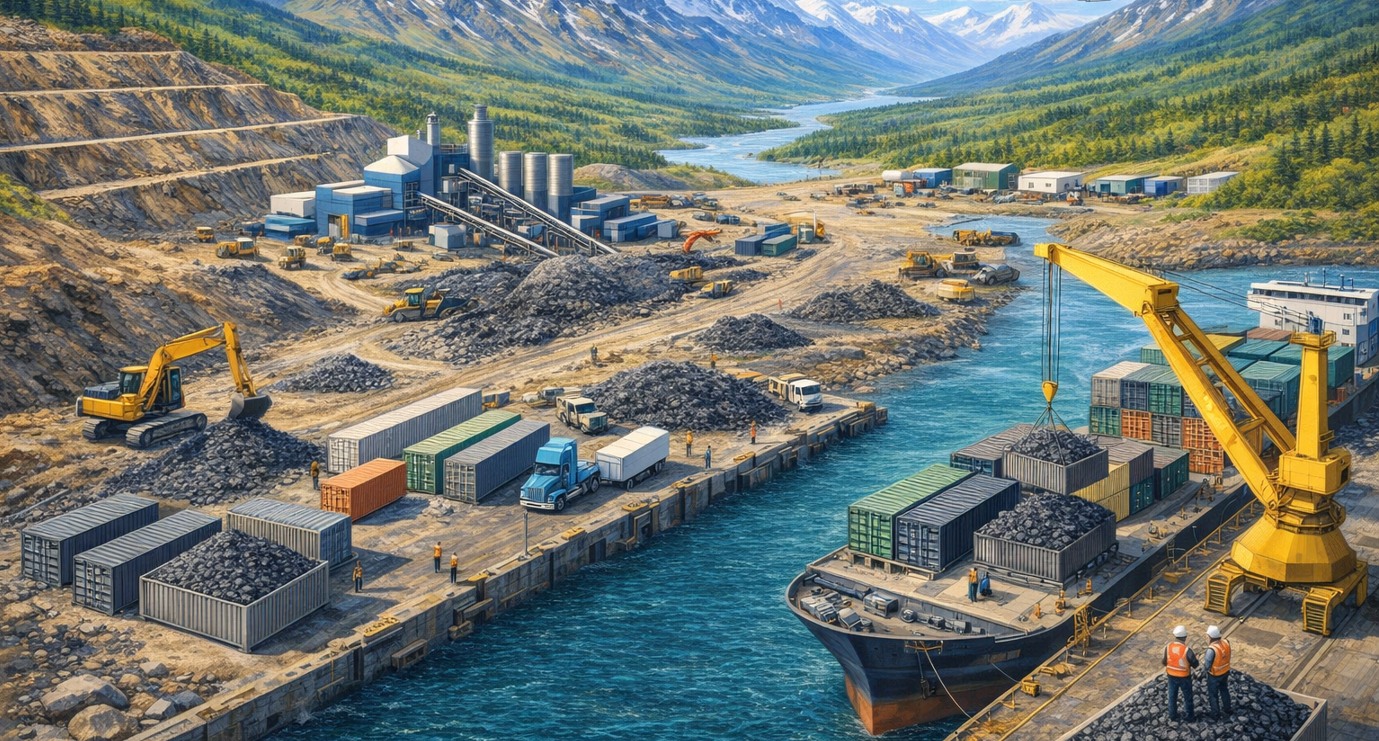
Now, in part three, we’ll weave these elements into a unified story, shedding light on why Graphite Creek isn’t merely a mining development but a nationally significant infrastructure project, one poised to add value to the US industrial landscape and society at large for decades to come.
The community perspective
We begin with our feet on the ground, highlighting the approximately 256 jobs Graphite Creek is expected to create locally within Alaska, including project construction and the estimated 20 years it will take to extract a resource estimated at more than 16 million tons of graphitic carbon (Cg), as per the 2025 bankable feasibility study. Based on North American prices cited by Business Analytiq for March 2026, we can conservatively estimate this tonnage at more than US$20 billion in the ground.
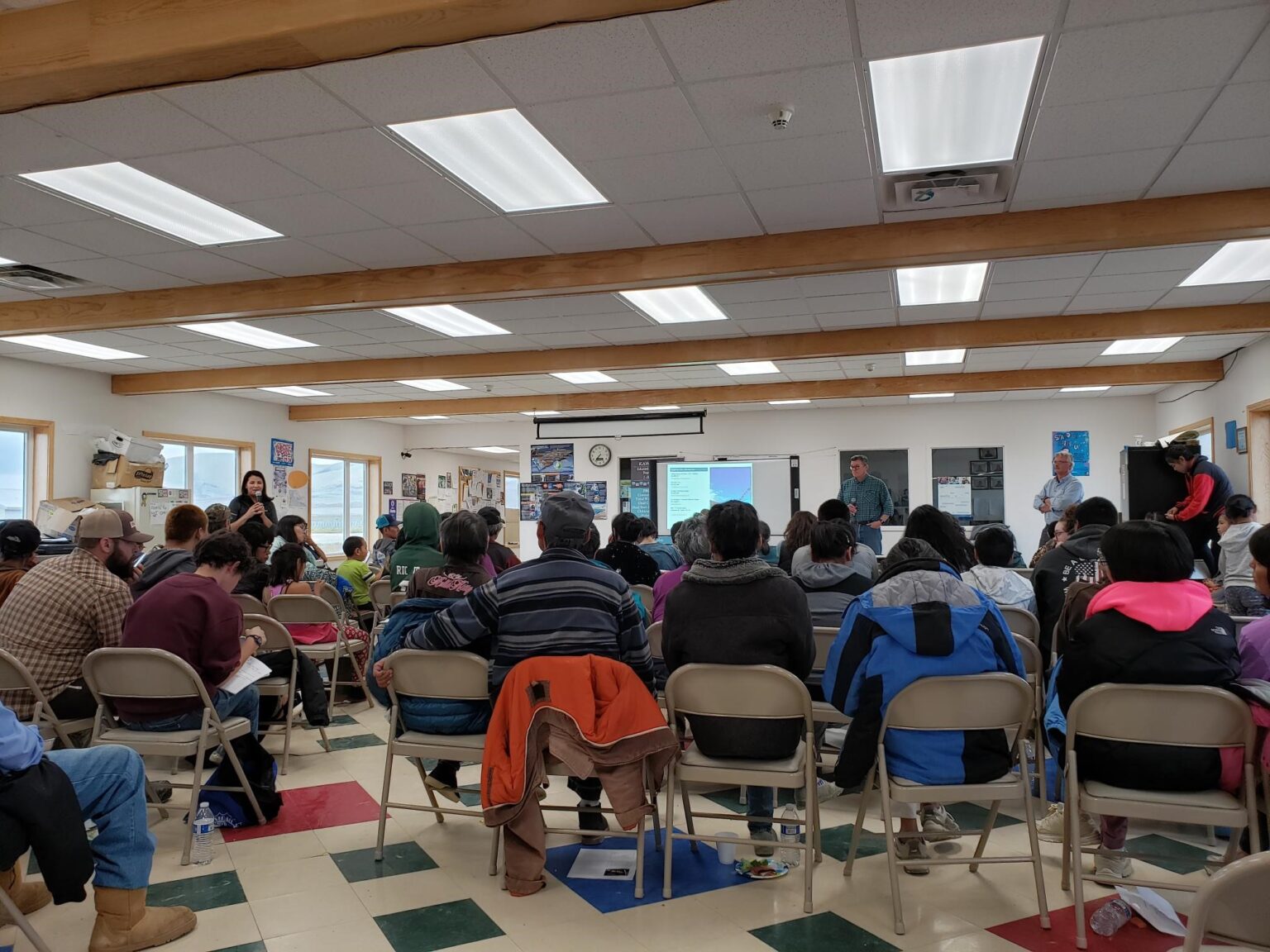
With Graphite Creek expected to become operational in 2030, only two years after Graphite One’s advanced graphite materials facility in Ohio is slated to generate initial cash flow, the company has wasted no time engaging with local communities, establishing a mutually beneficial relationship that is improving quality of life while fostering shareholder value. Key initiatives worth highlighting include:
- Regular meetings with tribal, city and corporate leaders in the Indigenous Iñupiaq communities of Teller, Mary’s Igloo and Brevig Mission in Graphite Creek’s immediate vicinity, who have been caring for and subsisting off the land for generations. This is in addition to consultations with leadership, community groups and the general public in the nearby city of Nome, addressing major concerns from hiring and training, to cultural preservation, to environmental protection, with environmental baseline studies ongoing since 2014.
- Regular meetings with regional organizations and governing bodies including Kawerak, Bering Straits Native Corporation (BSNC), the Nome Chamber of Commerce, Sitnasuak Native Corporation, Nome Eskimo Community and the NACTEC–VOCED training center in Nome.
- A multi-year track record of supporting local education and professional training through donations to the communities of Teller and Brevig Mission, Nome’s NEST facility, plus numerous local school and non-profit organizations, as well as establishing scholarship funds for local residents in partnership with BSNC.
- Assisting in the creation of the Subsistence Advisory Council, where members from 8 different Iñupiaq community groups nominated by the city, tribal government and village corporations advise Graphite One on helicopter activities, wildlife interaction and optimal routes during hunting season.
Through a focus on advancing shared interests, bolstering local economies while keeping environmental conservation front-and-centre, Graphite One is doing its part to honor how Graphite Creek is but the latest development in communities whose history dates back to time immemorial, and whose cultures must be enriched to ensure they thrive for generations to come as the original caretakers of the land.
The industrial perspective
Graphite Creek’s seamless integration into its local and regional communities goes hand-in-hand with its potential to meaningfully reinforce the US graphite supply chain, which is 100-per-cent dependent on imports and relies on China as its largest supplier, a relationship complicated by the communist nation’s strong-arming of its leading share of global critical mineral processing and production. China’s export restrictions on graphite, rare earth elements and other critical minerals remain on a one-year pause as the world’s two largest economies work out a more tenable long-term commercial relationship.
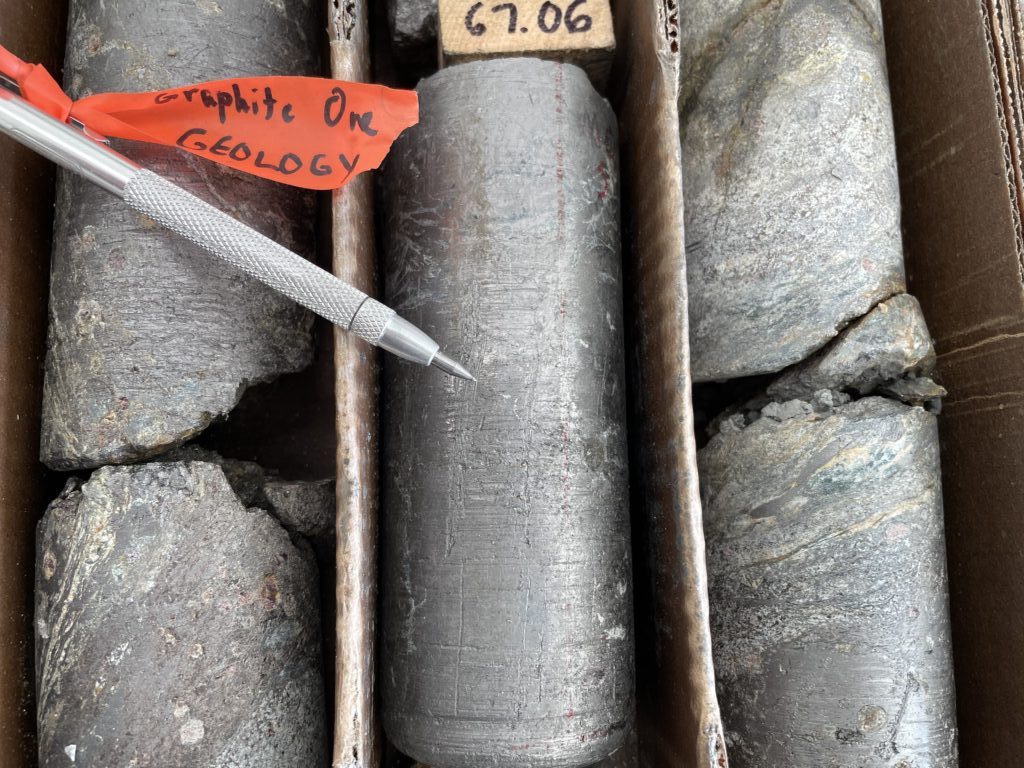
Graphite Creek’s estimated annual production is expected to average 175,000 tons of graphite concentrate and 256,000 tons of graphite and carbon products over the next two decades, figures whose importance requires context to be fully felt. Here are two ways to visualize how the project will impact the US industrial landscape drawing on graphite’s use-cases in batteries and electrodes, representing more than half of yearly supply in 2024:
- Take an electric vehicle (EV) battery, which requires north of 50 kilograms of graphite, according to Visual Capitalist, thanks to the critical mineral’s high conductivity, durability and heat resistance. Should Graphite One cut a deal with an EV manufacturer for one year’s worth of anode material production, accounting for about 169,000 tons of the 256,000 total, that would be enough to supply more than 3.3 million EVs – more than double the 1.6 million vehicles sold domestically in 2025 – better equipping the US to deliver on expected production of 4.1 million vehicles in 2030.
- When it comes to the steel making process, graphite is found in electrodes in electric arc furnaces used to melt iron ore and scrap metal, rid them of impurities and refine them before entering the market. With the average furnace requiring about 3 kg of electrodes to produce 1 ton of steel, according to data from FRC Global, and Graphite Creek’s concentrate designed to yield more than 95 per cent purity, the project would be able to supply electrodes to produce more than 55 million tons of steel per year, accounting for a staggering almost two thirds of 2025 US production. Such a boost would allow the country to displace Japan and potentially India to take the second spot among top global producers, with China once again coming out ahead.
The project’s ability to fulfill a significant unmet domestic need, extending to use-cases in lubricants, pencils, paints, airplane components, sensors, nuclear reactors and more, would improve millions of American lives and fortify thousands of businesses across the country, making it more efficient and affordable to acquire an input at the heart of industrial competitiveness, modern technology and the renewable energy transition.
This is why it’s no surprise that a growing cohort of retail and institutional parties have recognized Graphite Creek’s value-creation potential, in each case building conviction in the project’s near-term path to playing a foundational role in the US critical mineral supply chain. Here are a handful of notable transactions worth considering:
- A 20 per cent anchor stake held by Taiga Mining Company, a private mining company in Alaska.
- Graphite One is the only company that has three Alaskan Native corporations (Bering Straits, Doyon and Aleut) as shareholders, owning a combined 9.2 per cent equity interest in the company.
- Two non-binding supply agreements with top EV maker Lucid Group (NASDAQ:LCID).
- A C$35 million public offering closed in February 2026 destined to advance the company’s Ohio manufacturing facility.
- Approximately 3 per cent insider ownership, according to Simply Wall Street, equating to more than C$7.8 million at the current C$1.25 stock price.
With only two years until initial revenue, which is estimated at US$89 million by 2028 and nearly US$1 billion by 2032, supported by EBITDA of US$40 million and US$530 million, respectively (see slide 13 of Graphite One’s Q1 2026 investor deck), market participants are quickly waking up to the company’s near-term path towards a potentially exponential re-valuation.
The government perspective
Graphite Creek’s broad appeal, backed by community, industrial and institutional buy-in, has made it a winning proposition for state and federal legislators, who have spent the past few years rallying around the project’s strong potential to reduce US critical mineral dependence on China by helping to onshore the production of EVs, energy storage systems and clean energy more broadly, in addition to numerous defense applications including ammunition, artillery, submarines, battle tanks and fighter aircraft, effectively reducing trade tensions and national security risk.
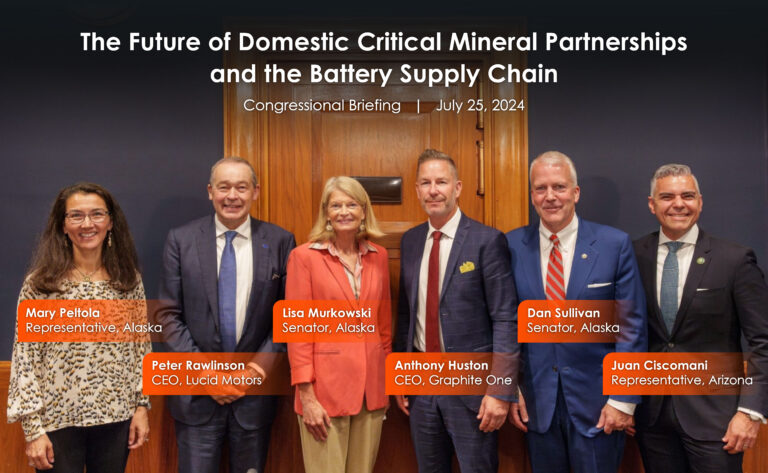
Graphite One’s productive relationship with the Alaska Department of Natural Resources dates back to 2022 and has traced an efficient path to state permitting, which is expected to begin in 2026. Concurrently, Federal permitting has also delivered promising advancements, with Graphite Creek accepted under the US Government’s FAST-41 pathway, reserved for key infrastructure projects, in August 2025, quickly followed by initial evaluations by the US Army Corp of Engineers under the National Environmental Protection Act Environmental Assessment process.
In conjunction with consistent progress on the permitting front, Graphite Creek has received two robust government funding commitments that crystalized the project’s national importance. Here’s a breakdown:
- Graphite One secured a US$37.5 million grant from the US Department of Defense in 2023 to accelerate Graphite Creek’s feasibility study, with the department increasing its commitment to fund related expenditures from 50 to 75 per cent in 2024. Feasibility reached bankable status in April 2025, yielding an after-tax net present value of US$5 billion, representing only about 12 per cent of the project’s 9.5-mile-long geophysical anomaly hosting known mineralization.
- Graphite One parlayed this development milestone into US$2.07 billion in letters of interest from the Export-Import Bank of the United States in December 2025, including US$670 million for Graphite Creek, up from US$570 million in September, and up to US$1.4 billion for its planned advanced graphite materials plant in Ohio, up considerably from US$325 million in 2024, throwing the full faith and credit of the US Government behind the company’s plan to kickstart a vertically integrated domestic graphite supply chain.
With government funding accounting for about 70 per cent of Graphite Creek and the Ohio facility’s development, and discussions ongoing with top North American institutions for the remaining 30 per cent, Graphite One remains on track to commission up to 10,000 tons per year (tpy) of active anode materials by Q4 2027, 48,000 tpy by 2028 and 100,000 tpy by 2032, with the extraction of Graphite Creek’s unmatched resource scheduled to begin in 2030, positioning the company to gradually transition from pre-revenue to a top line of approximately US$1 billion by the beginning of the next decade. All this while growing into a pillar of US technological and clean energy leadership, a role Graphite One could occupy into the 2050s and beyond, with billions in additional cash flow expected in tow, as the company fully explores Graphite Creek’s geophysical anomaly.
A bargain of generational proportions
Despite Graphite Creek’s support across the stakeholder spectrum, from local communities, to the business community, to the highest offices of the US government, Graphite One’s current market capitalization of C$239 million, more than four times smaller than expected 2032 revenue, reveals how investors have yet to recognize the company’s generational value proposition.
Readers, in turn, are being presented with an underpriced opportunity to build exposure to a nationally significant infrastructure project before it fully comes into its own, with half a decade of development and production milestones lined up to foster market conviction and shareholder value.
Continue your due diligence at www.graphiteoneinc.com.
Join the discussion: Find out what investors are saying about this critical mineral stock on the Graphite One Inc. Bullboard and make sure to explore the rest of Stockhouse’s stock forums and message boards.