


Canada’s main equity index has delivered a mixed performance this week, as investors weigh competing forces influencing market sentiment. On one hand, escalating costs and uncertainty tied to the ongoing conflict involving Iran have pressured global markets, driving caution across energy, logistics, and defence-sensitive sectors. On the other, a steady stream of generally solid corporate earnings has helped stabilize the TSX, preventing sharper declines and reinforcing confidence in underlying business fundamentals.
What the “Buzz”
Our Bullboards have up to 2 million pageviews a day. Get the inside scoop on conversations around the most significant trends and stock appreciations in our weekly wrap up.
Get “Buzz on the Bullboards” delivered to your inbox every third Thursday!
Buzz on the Bullboards | Sign Up Here
Within this environment of push-and-pull market dynamics, several Canadian-listed companies are drawing attention for meaningful operational updates that highlight longer-term intentional positioning. Each offers a snapshot of how firms across different industries are advancing through innovation, certification, and workforce development.
This article is a journalistic opinion piece that has been written based on independent research. It is intended to inform investors and should not be taken as a recommendation or financial advice.
Reinforcing its role in secure government communications
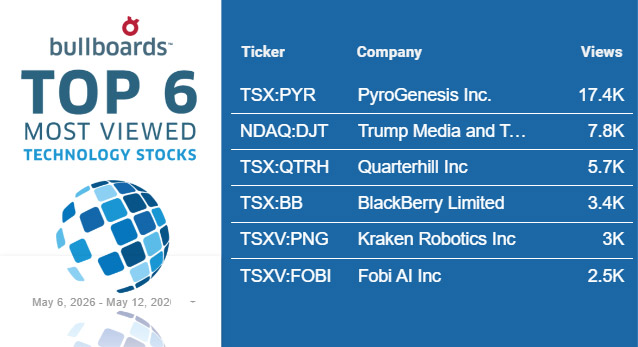
BlackBerry (TSX:BB, Forum) continues to sharpen its focus on mission-critical communications through its Secure Communications division. The company recently announced that its BlackBerry AtHoc platform has successfully completed its 2026 FedRAMP Class D (High) re-certification, a significant milestone in maintaining its position within U.S. government systems.
This level of certification is reserved for cloud services handling highly sensitive but unclassified government data—systems where any compromise could have severe or even catastrophic implications for operations or public safety. As U.S. federal agencies increasingly invest in emergency notification and crisis coordination tools, maintaining this designation ensures BlackBerry remains eligible to serve some of the most demanding environments in the public sector.
The re-certification reflects more than compliance. Since initially achieving FedRAMP High status, BlackBerry has continued evolving the AtHoc platform to meet increasingly complex operational demands. One of the most notable updates is its enhanced Command Centre, which provides a unified workspace that allows agencies to share real-time operational data, track personnel accountability, and coordinate responses across multiple locations and organizations.
This shift away from fragmented systems toward a centralized “single source of truth” is particularly valuable in crisis situations, where speed and clarity are essential. It also aligns with broader trends in emergency management, where coordination across agencies and jurisdictions has become increasingly critical.
BlackBerry AtHoc’s reach is already substantial: the platform is used by approximately 80 per cent of U.S. federal government agencies, along with defence organizations, emergency services, and critical infrastructure operators globally. The latest certification reinforces its standing as a trusted tool in scenarios ranging from natural disasters to cyber incidents.
Fast-tracking workforce development
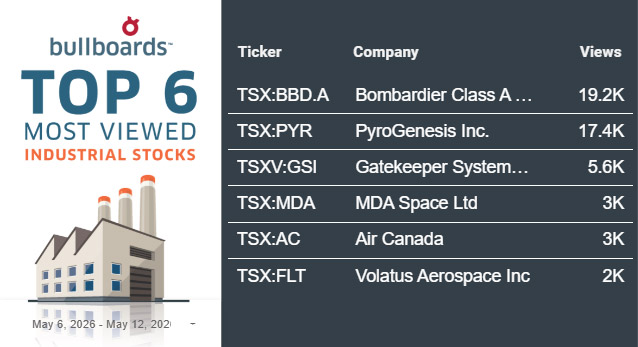
Bombardier (TSX:BBD, Forum) is addressing a different kind of industry challenge—talent shortages—through the expansion of its FastTrack training program for aircraft maintenance technicians in the United States.
Originally developed with Wichita State University’s WSU Tech, the initiative is now being extended to Hartford, Connecticut, in collaboration with CT Aero Tech and supported by state development organization AdvanceCT. The program is designed to help experienced technicians accelerate their path toward FAA Airframe and Powerplant (A&P) certification, a key credential in aviation maintenance.
FastTrack targets individuals who already have hands-on experience—requiring 18 months in a single discipline or 30 months combined—but who may lack formal certification. Participants undergo a condensed training pathway beginning with two to four weeks of classroom instruction focused on FAA exam preparation, followed by practical hands-on training ahead of final evaluations.
By streamlining what is traditionally a lengthy certification process, Bombardier aims to quickly convert existing experience into credentialed expertise—without compromising regulatory standards.
The expansion speaks to broader pressures facing the aviation industry. As global air travel demand continues to recover and grow, airlines and service providers are dealing with a shortage of certified maintenance personnel, compounded by retirements among older workers. Programs like FastTrack aim to close that gap efficiently.
The initiative also highlights cross-sector collaboration, bringing together corporate resources, academic expertise, and government-backed workforce development efforts. For Bombardier, this alignment supports both operational needs—ensuring sufficient staffing at service centres—and long-term growth planning.
While additional expansion sites have not yet been formally announced, the company has indicated its intention to replicate the program across more U.S. locations, suggesting FastTrack could become a cornerstone of its workforce strategy.
Advancing toward commercial deployment
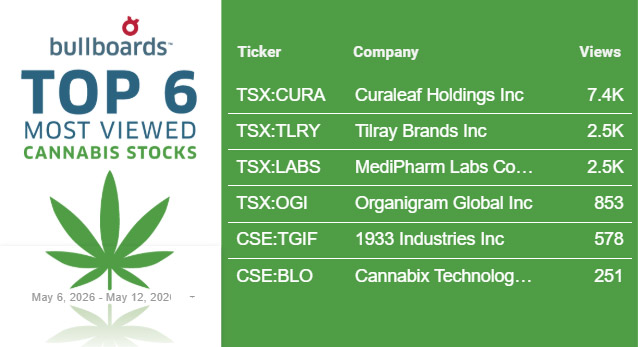
Cannabix Technologies (CSE:BLO, Forum) is making progress in the regulatory and commercialization phase of its Marijuana Breath Test (MBT) system. The company recently announced that its Breath Collection Unit (BCU) has achieved both UL and CSA electrical safety certifications, marking an important milestone in its development pipeline.
The certifications—UL 61010-1 for the United States and CSA 61010-1-12 for Canada—are widely recognized standards confirming that equipment meets stringent safety requirements for professional and industrial use. Testing was conducted by an independent laboratory accredited under ISO/IEC 17025 standards.
For Cannabix, these certifications serve multiple purposes. They open doors to procurement opportunities where UL and CSA compliance is mandatory, including law enforcement, workplace safety programs, and government agencies. They also help reduce regulatory friction as the company moves toward pilot programs and early-stage commercialization in North America.
The BCU, along with proprietary breath cartridges, forms the hardware backbone of the MBT system, which is designed to capture breath samples for analysis using liquid chromatography-mass spectrometry (LC-MS)—a highly reliable laboratory method. Cannabix is working alongside Omega Laboratories, a firm with decades of experience in forensic drug testing, to support development and potential rollout.
As interest grows in non-invasive methods for detecting recent cannabis use—particularly in safety-sensitive industries—certifications like these play a key role in building trust with prospective customers and regulators. They also position the company to integrate its technology into regulated environments more seamlessly.
While still in a developmental phase relative to larger peers, Cannabix’s progress underscores how smaller-cap companies can advance through targeted technical and regulatory milestones.
A market that rewards diligence
From cybersecurity infrastructure to aviation workforce pipelines and emerging testing technologies, these three TSX-connected companies illustrate the breadth of innovation and adaptation underway in Canadian equities. In a market shaped by both geopolitical uncertainty and resilient corporate performance, stock-specific developments are increasingly important in separating opportunity from noise.
For investors, staying informed on these evolving narratives is essential. Whether through certifications, partnerships, or operational expansion, news-driven developments can signal longer-term shifts in company trajectory. Taking the time to dig deeper into such updates may help ensure portfolios remain aligned with both current trends and future potential.
Get “Buzz on the Bullboards” delivered to your inbox every other Thursday!
Buzz on the Bullboards | Sign Up HereFor previous editions of Buzz on the Bullboards, click here.
Join the discussion: Find out what everybody’s saying about these stocks on Stockhouse’s stock forums and message boards.