
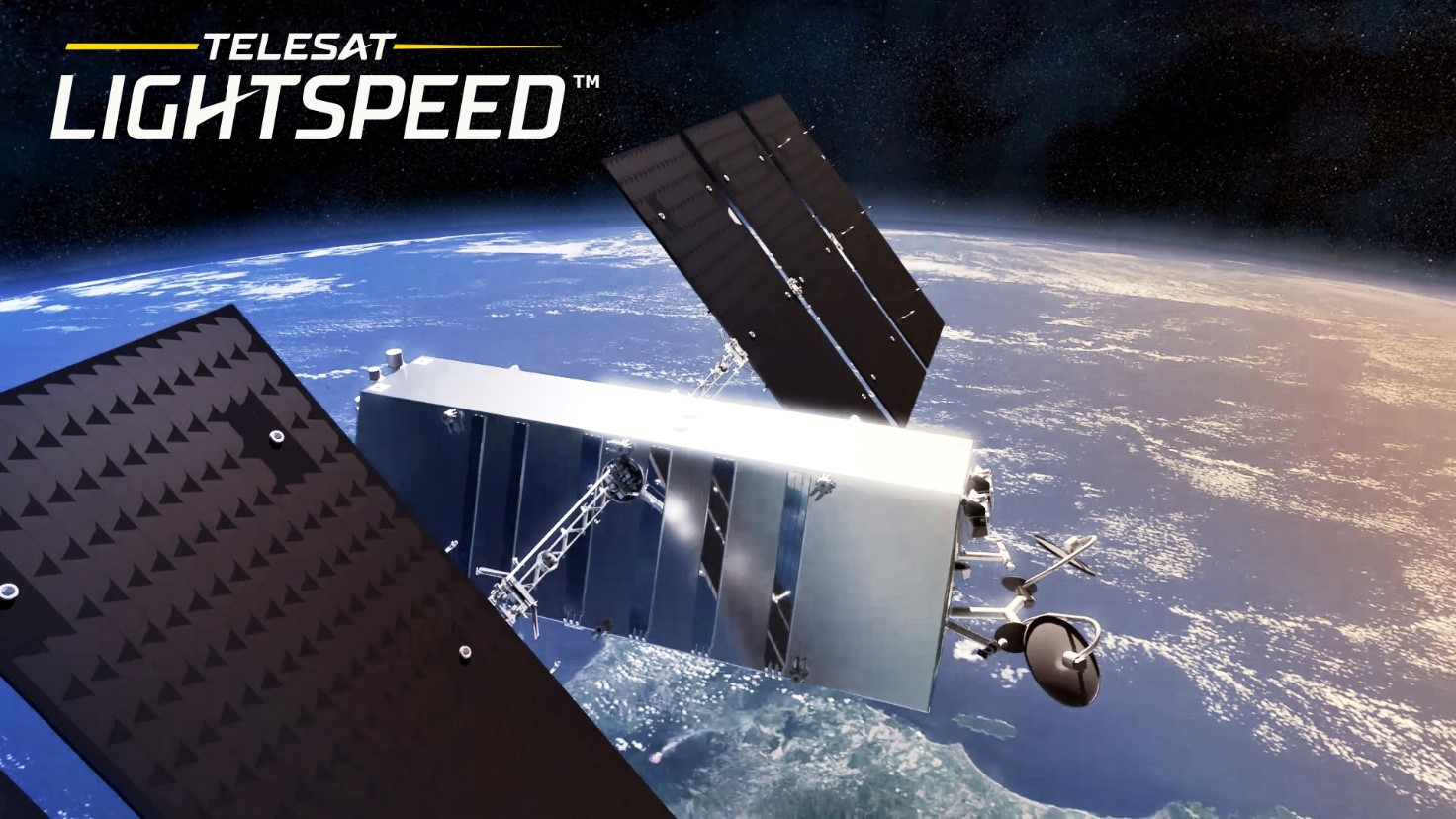
- Telesat (TSX:TSAT) won a C$2.3 billion contract from Canada’s Defence Investment Agency to provide secure Arctic military satellite communications, with the deal potentially reaching C$2.7 billion including options
- The agreement expands the Telesat Lightspeed constellation from 156 to 225 satellites, increasing network capacity by approximately 44 per cent and marking the largest contract in the company’s history
- The project will support Canadian Armed Forces operations across the Arctic beginning in 2028, while enhancing Telesat’s ability to serve NATO and allied military customers
- Telesat stock (TSX:TSAT) closed trading at C$76.84
The top-gaining TSX stock (by per centage) on Tuesday was Telesat (TSX:TSAT), whose stock was up more than 45 per cent following news that it had secured the largest contract in its history.
The Ottawa-based satellite company has signed a C$2.3 billion agreement with Canada’s Defence Investment Agency (DIA) to provide secure military satellite communications across the Arctic through its low Earth orbit (LEO) Telesat Lightspeed network.
The deal will see Telesat deliver Military Ka-band (Mil-Ka) connectivity to the Canadian Armed Forces (CAF) under the government’s Enhanced Satellite Communications Project – Polar (ESCP-P) program. The contract includes two optional five-year extensions worth approximately C$200 million each, bringing the potential total value of the agreement to C$2.7 billion.
Service is expected to begin in 2028 and continue for up to 15 years if both option periods are exercised. Telesat said its global Lightspeed service rollout remains on schedule for the first quarter of 2028.
This article is a journalistic opinion piece that has been written based on independent research. It is intended to inform investors and should not be taken as a recommendation or financial advice.
Wide orbit
The agreement will significantly expand the scale of the Telesat Lightspeed constellation, strengthening the company’s position in the rapidly growing satellite communications market.
Under the contract, Telesat will add 69 fully funded satellites to its planned network, increasing the constellation from 156 satellites to 225 satellites. The expansion represents a 44 per cent increase in network capacity and will provide both commercial and military-grade communications services.
All 69 new satellites will be manufactured by MDA Space Ltd. (TSX:MDA) at its satellite production facility in Montreal. The spacecraft will be launched aboard SpaceX Falcon 9 rockets, with most launch services already secured.
The mission partner to the rapidly expanding global space industry, announced that it will be supplying Telesat with additional MDA AURORA next-generation broadband satellites, coinciding with the operator’s announcement that it is expanding the Telesat Lightspeed low Earth orbit constellation.
Funding for the expansion will come through milestone-based payments from the Government of Canada beginning in the third quarter of 2026.
Working to bring secure connectivity to the Arctic
The initial phase of the ESCP-P program focuses on delivering secure Mil-Ka communications capabilities across Canada’s northern territories and Arctic waters.
Telesat will provide coverage spanning 65 to 90 degrees north latitude, an area that presents unique communications challenges due to its remote geography and harsh operating conditions.
The Mil-Ka component of the program is designed to support military operations with secure, resilient, and high-capacity satellite connectivity. A separate agreement between the DIA and Telesat is expected to cover related network integration services, including user terminals, ground infrastructure, training, operational support, and control systems.
Significant importance for Canada and NATO allies
The addition of military-grade capabilities to the Lightspeed constellation is expected to increase Telesat’s appeal beyond Canada.
According to the company, integrated Mil-Ka services will position the network to support the communications requirements of NATO members and allied nations, enabling greater interoperability, coordination, and mission effectiveness across different geographic regions and operational domains.
The Arctic has become an increasingly important strategic region as nations seek improved communications, surveillance, and security capabilities in northern territories.
Growing investment in Canada’s space sector
With the addition of the 69 satellites, Telesat’s total planned investment in the 225-satellite Lightspeed network is expected to reach approximately C$7 billion.
The company reported that roughly C$2.7 billion has already been invested in the project to date.
Officials expect the expanded constellation to create and sustain thousands of highly skilled jobs across Canada while generating export opportunities and strengthening the country’s position in the global space industry.
Broader ESCP-P program continues
The Arctic communications contract represents only one portion of the broader ESCP-P initiative.
The program also includes the development of Ultra-High Frequency (UHF) and X-band satellite systems. MDA Space will serve as the prime contractor for those capabilities and will be responsible for overall mission delivery.
Telesat will play a key supporting role as a subcontractor, including acting as a systems integrator responsible for coordinating implementation across the Mil-Ka, UHF, and X-band networks.
The contract marks a significant milestone for Canada’s space industry and provides a major boost for Telesat as it prepares to launch its next-generation Lightspeed constellation, positioning the company as a key provider of secure satellite communications for both commercial customers and allied military organizations.
Sit-rep
“This contract ensures the Canadian Armed Forces will have access to secure, resilient and sovereign connectivity years earlier than originally planned, at a great value for money, and with a scalable architecture designed to meet future global operational requirements and support interoperability with Canada’s allies and partners,” Telesat’s president and CEO, Dan Goldberg, stated in a news brief. “High speed and low latency connectivity is critical for modern military forces, and Telesat Lightspeed is expected to be foundational for future CAF and allied governments’ operations.”
Telesat is one of the world’s largest satellite operators.
Telesat stock (TSX:TSAT) closed trading 47.57 per cent higher at C$76.84 and has risen 94.19 per cent since the year began.
Join the discussion: Find out what everybody’s saying about this satellite stock on the Telesat Corp. Bullboard and check out the rest of Stockhouse’s stock forums and message boards.