

- Dolby (NYSE:DLB) reported third-quarter revenue of US$305 million and lower year-over-year earnings, but continued returning capital through dividends and share repurchases
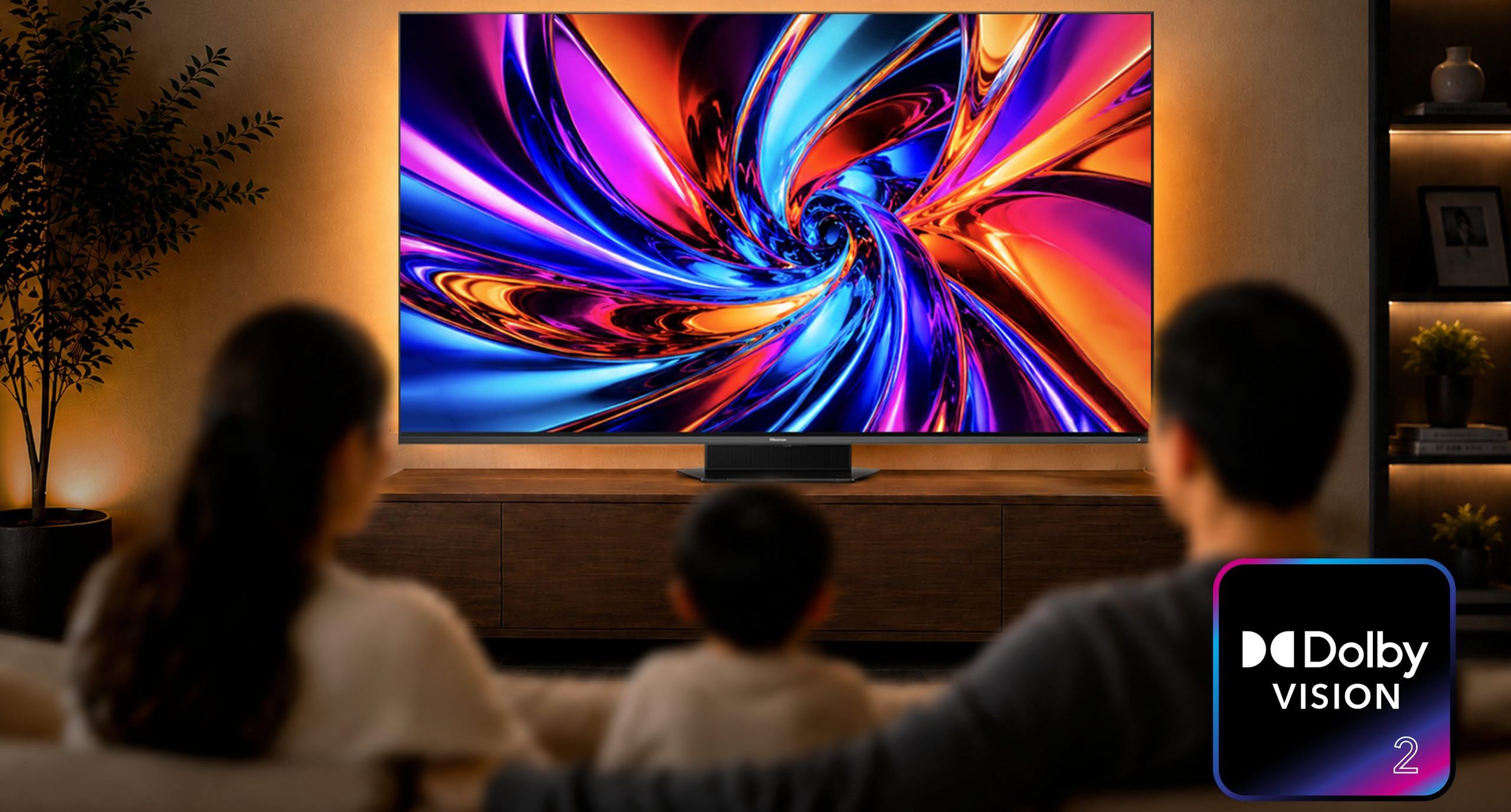
- Dolby Vision 2 launched on select Hisense TVs and is expanding to additional manufacturers, creating new licensing opportunities across the television market
- Growth initiatives in streaming, automotive, augmented reality, and premium cinema experiences highlight Dolby’s long-term expansion beyond its traditional entertainment business
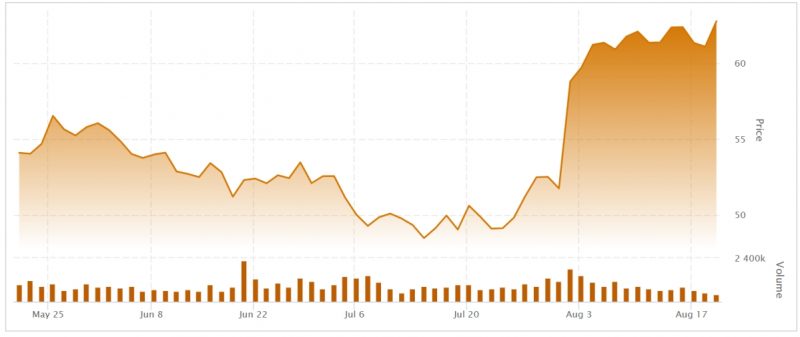
- Dolby stock (NYSE:DLB) opened trading at US$62.35
A leading media technology company known for its premium audio and imaging innovations is navigating a period of softer earnings while continuing to expand its footprint across streaming, television, automotive, and emerging device markets.
With new product rollouts, growing adoption of its technologies, and enhanced shareholder returns, investors are evaluating whether these initiatives can support long-term growth despite near-term financial headwinds.
Dolby Laboratories (NYSE: DLB), one of the most recognizable names in audio and imaging technology, continues to demonstrate the strength of its licensing-driven business model despite reporting softer year-over-year third-quarter fiscal 2026 results.
The company remains deeply embedded across the global media and entertainment ecosystem, with Dolby Atmos and Dolby Vision technologies powering premium experiences in cinemas, streaming services, televisions, smartphones, automotive platforms, and emerging categories such as augmented reality devices.
For investors, Dolby’s latest earnings report presents a mixed picture: modest revenue declines and lower profitability in the quarter, offset by continued technology adoption, shareholder-friendly capital returns, and a pipeline of new licensing opportunities that could support long-term growth.
Third-quarter results reflect temporary headwinds
For the third quarter of fiscal 2026, Dolby reported total revenue of US$305 million, down from US$316 million in the same period last year. The decline flowed through to earnings, with GAAP net income falling to US$29 million, or US$0.30 per diluted share, compared with US$46 million, or US$0.48 per diluted share, a year earlier.
On a non-GAAP basis, Dolby earned US$65 million, or US$0.69 per diluted share, compared with US$76 million, or US$0.78 per diluted share in the prior-year quarter.
While the quarter was not among Dolby’s strongest in recent years, the results expose the resilience of a business model built largely around intellectual property licensing rather than hardware manufacturing. Because Dolby earns royalties from a broad range of consumer electronics, media services, and content distributors, it maintains exceptionally high margins relative to many technology companies.
The company also continued returning capital to shareholders, repurchasing approximately 1.2 million shares for US$65 million during the quarter.
Dolby stock has a strong buy rating among analysts, three of whom give it a “buy”, and none consider it a “sell”.
Licensing engine remains the foundation of the investment story
Unlike many technology companies, Dolby generates much of its revenue through licensing agreements that allow partners to embed Dolby technologies into products and services. This model has enabled the company to build a global ecosystem that spans television manufacturers, streaming platforms, movie studios, automotive companies, smartphone makers, and broadcasters.
The strength of that ecosystem was evident in several major business developments announced during the quarter.
One notable highlight was Dolby’s presence at the 2026 FIFA World Cup, where Dolby Atmos and Dolby Vision were deployed across multiple broadcast and streaming partners, including Peacock and Comcast in the United States, Bell TV in Canada, and TV Global in Brazil. High-profile global sporting events provide valuable visibility for Dolby’s technologies and may help drive broader consumer awareness of premium audio and visual experiences.
Dolby Vision 2 expands growth potential in television markets
Among the most significant developments for investors is the rollout of Dolby Vision 2, the company’s next-generation imaging platform.
In August 2026, Dolby and Hisense (OTC Pink:HISEF) announced that select Hisense television models would become the first commercially available TVs supporting Dolby Vision 2. Additional launches from TCL (OTC Pink: TCLHF) and Philips (OTC Pink:TCLHF) are expected before year-end, significantly expanding the technology’s market reach.
Dolby Vision 2 introduces several enhancements designed to improve picture quality and user customization, including:
- A new image-processing engine
- Content Intelligence scene optimization
- User-adjustable intensity controls
- Enhanced viewing-angle compensation
- Dynamic lighting adaptation
For premium televisions, Dolby Vision 2 Max adds advanced capabilities such as:
- Authentic Motion technology designed to preserve cinematic presentation
- Light Sense 2 environmental optimization
- More extensive professional calibration controls
The launch represents an important evolution for Dolby because it gives television manufacturers and content providers additional reasons to license Dolby technology. The commitment from content partners including CANAL+, iQIYI, and Peacock further strengthens the ecosystem around the new platform.
Momentum beyond traditional media
Dolby’s expansion strategy increasingly extends beyond cinema and television.
The company highlighted several new deployments that demonstrate the broad applicability of its intellectual property:
- RayNeo GT Max became the first augmented reality smart glasses supporting Dolby Vision.
- Insta360 Luna Ultra launched with Dolby Vision capture capabilities.
- Google announced Dolby Atmos support through Android Auto, with automotive partners including BMW, Genesis, Mahindra, Mercedes, Renault, and Skoda.
- Roberts Communications Network adopted Dolby OptiView technology to provide ultra-low-latency horse-racing broadcasts.
These developments are important because they create incremental royalty streams beyond Dolby’s traditional core markets. As connected vehicles, AR devices, and next-generation streaming platforms proliferate, Dolby’s technologies may become increasingly embedded in a wider range of consumer experiences.
Cinema business continues building premium experiences
Dolby’s cinematic heritage remains a powerful differentiator.
The company previously announced that The Movie Experience SLO, the oldest existing theater company in the western United States, plans to open a new Dolby Vision+Atmos auditorium in San Luis Obispo, California. The venue will become the first U.S. theatrical exhibitor to publicly adopt the Dolby Vision+Atmos solution outside Dolby Cinema branding.
The announcement reflects ongoing demand for premium theatrical experiences despite industry concerns about movie attendance trends. More than 700 theatrical features have been released or confirmed in Dolby Vision and Dolby Atmos, reinforcing Dolby’s position as a critical technology provider for filmmakers and exhibitors worldwide.
Strong capital allocation signals confidence
Management also delivered two shareholder-friendly announcements.
First, Dolby declared a quarterly cash dividend of $0.36 per share for both Class A and Class B shareholders.
Second, the board approved an additional US$350 million authorization for the company’s stock repurchase program, increasing total remaining repurchase capacity to approximately US$427 million.
These actions suggest management remains confident in the company’s cash-generation capabilities despite near-term earnings pressure.
Investors should note, however, that an insider transaction disclosed in August showed a senior vice president selling 3,000 shares at an average price of US$62.71, reducing their position by approximately 3.9 per cent. While insider sales can occur for many personal reasons and do not necessarily indicate negative sentiment, they are often monitored by investors alongside other corporate activity.
Outlook suggests strong finish to fiscal 2026
Looking ahead, Dolby expects a stronger fourth quarter.
Management projects fourth-quarter revenue between US$362 million and US$392 million, with licensing revenue expected between US$335 million and US$365 million.
For the full fiscal year, Dolby forecasts:
- Revenue of US$1.41 billion to US$1.44 billion
- Licensing revenue of US$1.31 billion to US$1.34 billion
- GAAP operating margin of approximately 21 per cent
- Non-GAAP operating margin of approximately 34 per cent
- GAAP diluted EPS of US$2.62 to US$2.77
- Non-GAAP diluted EPS of US$4.25 to US$4.40
Management cautioned that visibility remains somewhat limited due to factors including trade restrictions, geopolitical uncertainty, supply-chain challenges, inflationary pressures, and changing global economic conditions.
Investor’s corner
Dolby Laboratories remains a unique company in the technology sector: an asset-light intellectual property business with exceptionally high margins, strong free cash flow potential, and deep relationships throughout the global entertainment ecosystem. While fiscal third-quarter results reflected moderating revenue and earnings, the continued expansion of Dolby Atmos and Dolby Vision across streaming, television, automotive, AR, gaming, and live-event markets demonstrates that the company’s technology relevance continues to grow.
With Dolby Vision 2 entering commercial deployment, new automotive partnerships emerging, continued content ecosystem expansion, and an enlarged share repurchase program, Dolby appears positioned to pursue long-term value creation despite near-term market uncertainty. Investors interested in the stock should conduct further due diligence on royalty growth trends, licensing renewal opportunities, competitive technology developments, and consumer electronics demand before making any investment decisions.
Dolby stock (NYSE:DLB) opened trading at US$62.35 and rose around half a per cent higher in early trading though it has lost around a per cent since the year began, it has risen nearly 20 per cent over the past three months.
Join the discussion: Find out what the Bullboards are saying about Dolby Laboratories and check out Stockhouse’s stock forums and message boards.