

For more than half a century, the Bathurst Mining Camp has been recognized as one of the world’s premier volcanogenic massive sulphide (VMS) districts, producing significant quantities of copper, zinc, lead and silver from deposits that helped establish New Brunswick as a major mining jurisdiction.
While the district’s rich history is well documented, its future may prove just as compelling. Driven by the growing demand for critical minerals, modern exploration techniques, and a renewed focus on overlooked opportunities, there is increasing evidence that many chapters remain to be written in the Bathurst mining story.
A critical minerals explorer focused on Bathurst
One company aiming to contribute to that next chapter is Nine Mile Metals (CSE:NINE) (OTCID:VMSXF) (FSE: KQ9), a Canadian public mineral exploration company focused on Critical Minerals VMS exploration, targeting copper, lead, zinc, silver, and gold in the world-famous Bathurst Mining Camp of New Brunswick, Canada.
The company’s primary business objective is to advance its portfolio of VMS projects, with a particular focus on the Wedge VMS Project, a historical producer that has become the centrepiece of Nine Mile’s exploration efforts. Through a combination of modern geological interpretation, systematic drilling and advanced three-dimensional modelling, the company is working to demonstrate the potential for significant additional mineralization beyond the limits of the historic mine.
This article is disseminated in partnership with Nine Mile Metals Ltd. It is intended to inform investors and should not be taken as a recommendation or financial advice.
That case took a significant step forward in August 2026, when Nine Mile reported the first certified assay results of its 2026 drill campaign: 3.49 per cent copper-equivalent over 24.55 metres of true width in DDH WD-26-09, including a 6.50-metre section grading 5.22 per cent copper-equivalent, with payable silver, gold, lead and zinc across broadly the same interval.
The Wedge Project: Revisiting a historic producer
The Wedge Project consists of 164 claim units covering 35.83 square kilometres within the Bathurst Mining Camp.
Historically, the Wedge Deposit was mined by Cominco and produced approximately 1.503 million tonnes grading 2.88 per cent copper, 0.65 per cent lead, 1.81 per cent zinc and 20.6 g/t silver. These historical production figures predate NI 43-101 and have not been verified by a qualified person on behalf of the company; they should not be relied upon, though they are considered relevant in demonstrating the mineralized nature of the system. While that history established Wedge as a significant VMS system, recent exploration suggests substantial mineralization may exist beyond the limits of previous mining.
Recent drilling success has significantly strengthened the investment thesis for the project. Over multiple drill campaigns, Nine Mile has expanded the known footprint of mineralization beyond the historic mine area, identifying new copper-rich VMS zones and extending mineralization both laterally and at depth. Recent drilling has consistently intersected chalcopyrite-rich sulphide mineralization containing copper, zinc, lead, silver and gold, highlighting the potential for additional discoveries within a system that remains open along strike and at depth.
The TriBag and West Wedge occurrences remain particularly compelling targets. Neither area has been adequately tested at depth, and both remain open in multiple directions along the mineralized trend. Strategically, the Wedge Project also borders Nine Mile’s California Lake and Canoe Landing Lake projects, helping solidify the company’s regional land position within the highly prospective Bathurst Saddle Fold structures.
Nine Mile’s exploration strategy combines historical mining data with modern geophysical interpretation and advanced three-dimensional geological modelling. Following successful UAV surveying and geophysical work across its Bathurst Mining Camp properties, the company is now working closely with Apex Geoscience on detailed 3D modelling and Maxwell plate analysis to refine drill targeting and better understand the geometry and extent of mineralization at Wedge. This work is expected to play an important role in advancing the project toward an updated NI 43-101 assessment.
April 2026: A high-grade signpost for follow-up drilling
In April 2026, Nine Mile released certified assay results from drill hole WD-25-02B, collared approximately 60 metres northwest of WD-25-01. The hole intersected massive copper-bearing sulphides in two distinct zones — an upper zone within a contact breccia at approximately 56.4 metres and a copper-rich lower zone near the bottom of the hole — along with elevated silver and gold values. Deteriorating ground conditions in a fault zone forced termination of the hole at 122 metres, just as the drill entered a high-grade copper-bearing section, leaving an important target for follow-up drilling from a different orientation.
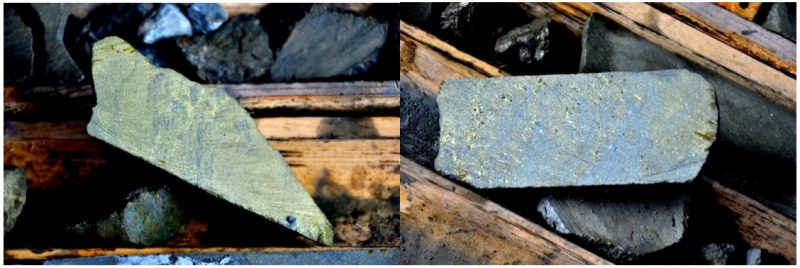
“The drill results continue to show impressive high-grade results through different styles and zonation of mineralization,”CEO Patrick Cruickshank stated in a news release. “Having multiple zonations of mineralization is a valuable perspective and brings a host of opportunities for us.”
May 2026: Launching a 10,000-metre drill program
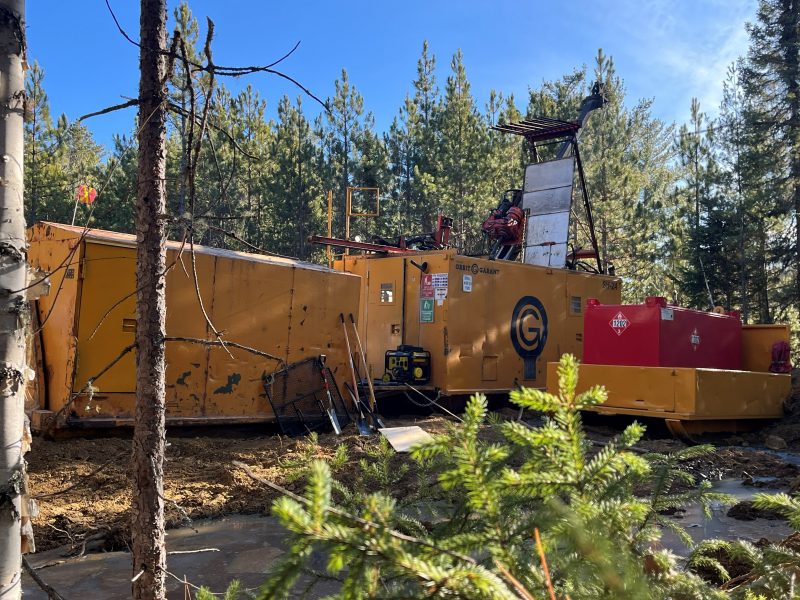
Momentum continued in May 2026 when Nine Mile announced that Orbit Garant Drilling, one of Canada’s largest drilling contractors, had mobilized a YS2000 skid-mounted drill rig for the company’s planned 10,000-metre drilling campaign.
The program began at the Wedge Mine with Phase 3 drilling before expanding to evaluate the TriBag and West Wedge targets. Orbit Garant committed a drill rig for the entire season through December, providing continuity for the company’s aggressive exploration plans.
The campaign builds on the fall 2025 drill program, which focused on the western extension of the Wedge Mine and successfully identified new high-grade copper-gold-silver lenses. Combined with earlier expansion work on the eastern side of the deposit, those results increased the overall footprint of the mineralized system and validated updated geophysical interpretations and modelling.
Phase 3 drilling was designed to specifically target these newly identified high-grade zones while testing the western side of the fault structure where drilling encountered significant copper mineralization before losing ground conditions in hole WD-25-02B.
“With previous mining and exploration limited to the upper portions of the deposit, this series of drill holes will expand the mineralized footprint, as we accomplished in the east, adding to the resource,” Gary Lohman, P.Geo., the company’s Vice President of Exploration and a director, stated in a media release. “All drill holes will be capped on completion to facilitate downhole geophysics or revisit to extend the holes, which, along with the cross-section drill results, assists in resource 3D modelling and future exploration planning. We look forward to sharing our first results.”
June 2026: A new copper-rich horizon at depth
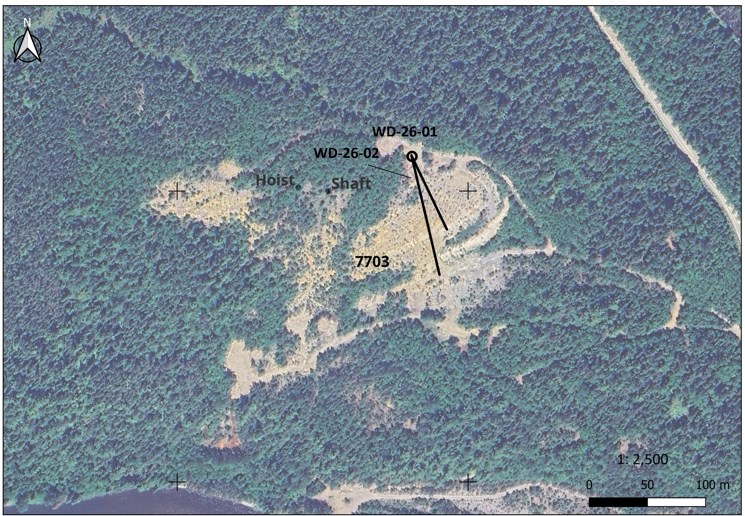
In June 2026, Nine Mile reported results from DDH WD-26-02, one of the most significant drill holes completed during the current campaign.
The hole intersected base-metal sulphides, pyrite, and chalcopyrite mineralization over an impressive 234.15 metres, extending from 39.20 metres to 273.35 metres, and identified two distinct copper-bearing VMS horizons, including a newly discovered copper-rich zone at depth.
Drilled to a final depth of 290.50 metres, the hole was designed to expand mineralization identified through previous drilling and supported by 3D modelling completed by Apex Geoscience.
One of the most notable intervals occurred between 204.60 and 222.30 metres, where the company intersected a 17.70-metre true-width copper-bearing VMS horizon consisting, based on visual estimates, of approximately 70 per cent sulphides, including massive visible chalcopyrite, pyrite, galena and sphalerite.
The sulphide system extended throughout both sedimentary and silicified volcanic units as bands, stringers and fine-grained masses adjacent to the primary VMS horizons, suggesting a robust and extensive mineralized environment. Reported mineralization is based on visual core logging; certified assay results are pending from ALS Global.
Lohman called the new horizon at depth a “welcome surprise confirming the robust nature of the Wedge”, in a media release, adding that drilling continues to intersect massive to semi-massive copper-bearing mineralization.
“Due to the massive nature of the mineralization and presence of galena and sphalerite, we also look forward to the lead and zinc assays in addition to gold and silver,” he said.
Confirming the north-eastern extension: DDH WD-26-01
Days later, Nine Mile reported results from DDH WD-26-01, providing additional support for the company’s evolving geological model.
The drill hole intersected 129.72 metres of sulphide mineralization between 34.60 and 164.32 metres, including two visible copper-bearing VMS horizons. The lower mineralized zone contained visible chalcopyrite accompanied by sphalerite and galena, reinforcing the polymetallic nature of the system.
Between 147.55 and 160.98 metres, drilling encountered increasing sulphide mineralization along with visible coarse-grained chalcopyrite. At 160.98 metres, massive pyritic VMS mineralization continued to 164.32 metres, identifying the presence of copper, zinc and lead.
One of the key observations from this hole was the abundance of visible coarse-grained chalcopyrite throughout the mineralized intervals, providing further evidence for a strong copper-bearing system. As with WD-26-02, reported mineralization reflects visual core logging; assays are pending at ALS Global.
“The Wedge continues to demonstrate its viability, this hole further confirming the north-eastern extension zone of the Wedge is strongly mineralized,” Cruickshank stated in a news statement. The company also noted that a second Orbit Garant drill rig was scheduled to arrive in early July — part of a broader capacity build-out by the contractor — with a track-mounted rig secured for September onwards.
July 2026: Extending the system at depth with DDH WD-26-03
Nine Mile continued to build on the success of its 2026 drill campaign with DDH WD-26-03, which was specifically designed to follow up on and expand the mineralization encountered in hole WD-26-02. Drilled to a depth of 395 metres, the hole intersected 125.25 metres of pyrite and chalcopyrite mineralization between 212.95 and 338.20 metres, further supporting the growing scale of the Wedge system at depth. Of particular interest was a broad sequence of chloritic sediments and volcanic rocks displaying characteristics commonly associated with the footwall alteration zones of VMS deposits.
The hole also encountered a 2.4-metre true-width interval of massive sulphides containing coarse visible chalcopyrite between 309.60 and 312.00 metres, with visual estimates indicating 40-50 per cent pyrite and 4-7 per cent chalcopyrite. The presence of minor arsenopyrite, a recognized gold pathfinder mineral, also adds another dimension to the evolving geological model. Collectively, the results from WD-26-03 continue to demonstrate strong continuity of sulphide mineralization and further reinforce management’s belief that the Wedge project has the potential to host a significantly larger mineralized system beyond the limits of the historic mine.
All drill core has been measured, logged, photographed and prepared for laboratory analysis. Samples have been submitted to ALS Global for comprehensive base metal, precious metal and antimony testing.
August 2026: Certified assays confirm a five-metal system at the Wedge
On August 12, 2026, Nine Mile released the first certified assay results of its 2026 campaign, from DDH WD-26-09. The hole returned 3.49 per cent copper-equivalent over 24.55 metres, including 4.03 per cent copper-equivalent over 16.50 metres and a best high-grade intercept of 5.22 per cent copper-equivalent over 6.50 metres between 114.00 and 120.50 metres. All reported intersections are true width.
WD-26-09 was collared in the southwest at the edge of the company’s drill pattern, oriented at 340 degrees and angled 50 degrees below horizontal to a depth of 200 metres. It intersected a thick massive sulphide lens carrying copper, lead, zinc, silver and gold, with visible chalcopyrite and bornite — a notably copper-rich sulphide — logged in the core.
What distinguishes the hole is the breadth of the metal suite rather than any single number. Across broadly the same interval, drilling returned a 21.75-metre silver zone averaging 31.72 grams per tonne (1.02 ounces per tonne), including 41.00 g/t over 13.00 metres and a peak sample of 58 g/t; a 20.20-metre gold zone averaging 0.67 g/t, including 0.87 g/t over 11.00 metres; and zinc averaging 2.02 per cent over 22.50 metres, including 4.82 per cent over 5.75 metres and 8.09 per cent over 3.00 metres, with a peak sample of 11.40 per cent zinc.
Copper-equivalent grades combine all five metals into a single comparable figure. Nine Mile calculated them using August 11, 2026 Bloomberg pricing — US$6.63 per pound copper, US$0.84 per pound lead, US$1.72 per pound zinc, US$65.10 per ounce silver and US$4,443.90 per ounce gold — assuming a uniform 95 per cent metallurgical recovery for all metals. Because it is not yet clear which metals would be the principal products, the company considers metal-specific recovery assumptions premature at this stage.
“Definitely nice to return to the VMS section previously identified in the southwest,” Lohman said. Drilled at a steeper angle than earlier holes in the vicinity, he noted, WD-26-09 helps expand the deposit footprint. “Intersecting five payable metals over this width and seeing copper strengthen toward the base of the zone is exactly what we want to see at this stage. Additional drill holes are planned for this western portion of the Wedge, where we believe there is meaningful room to expand the deposit.”
Cruickshank characterised WD-26-09 as a strong polymetallic hole with a large lens zone, observing that each of the copper, silver and gold intercepts “would be a success on their own accord, but to combine them all in one hole shows the strength of this Lens.” He described the result as a strong opening to the company’s results season and said the data will be fed into live 3D modelling led by Mike Dufresne, president of Apex Geoscience, and Nine Mile’s technical team, “to move towards an updated 43-101 and an MRE objective.”
Further certified results from the 2026 program remain outstanding at ALS Global in Moncton, and the company has cautioned that it does not control the order in which the laboratory returns them. Samples were prepared and assayed by ALS Global, an independent commercial laboratory, under both ALS’s own QA/QC protocols and Nine Mile’s program of certified reference materials, duplicates and blanks; the company reported no material errors on review. The technical information was reviewed and approved by Gary Lohman, B.Sc., P.Geo., VP Exploration and Director, Nine Mile’s qualified person under NI 43-101, who is not independent of the company.
Building toward a NI 43-101 assessment
The company’s recent drill programs have been particularly important in validating its geological model. Drilling has confirmed multiple horizons of copper-bearing VMS mineralization and identified new sulphide zones beneath historically mined areas.
These results suggest the Wedge system may be significantly larger than previously understood and provide important data for ongoing geological modelling and future resource evaluation. Upcoming borehole electromagnetic (BHEM) surveys are expected to further assist in targeting potential extensions of the newly identified mineralized zones.
Apex Geoscience, led by president Mike Dufresne, continues to review drill data, inspect core and advance a live three-dimensional interpretation of the deposit. The company has said the WD-26-09 assays will be incorporated into that modelling as it works toward an updated NI 43-101 technical report and, ultimately, a mineral resource estimate — the milestone that would move the Wedge from a drilling story to a quantified one.
Strengthening the treasury
Exploration success requires access to capital, and Nine Mile has significantly improved its financial position through a series of financings that provide the company with the resources necessary to execute its exploration strategy.
During 2026, the company completed financing initiatives totalling approximately C$5.6 million, including both a conventional financing and a flow-through financing that attracted strong investor participation. Notably, the flow-through financing was completed at a substantial 100 per cent premium to the company’s prevailing market price, reflecting investor confidence in the company’s exploration potential and the value associated with flow-through shares.
This treasury positions Nine Mile to continue advancing its Bathurst Mining Camp portfolio, including the ongoing 10,000-metre drill campaign at Wedge, work at TriBag and West Wedge, continued geological modelling by Apex Geoscience and advancement toward future technical reporting milestones.
For investors, a well-funded junior explorer is often better positioned to create shareholder value because it can execute exploration plans without the constant need for near-term financing. With capital in place and drilling underway, Nine Mile enters the next phase of exploration with multiple catalysts ahead.
Investor’s corner
The resurgence of exploration activity in the Bathurst Mining Camp is attracting renewed attention to one of Canada’s most productive VMS districts, and Nine Mile Metals is positioning itself at the centre of that opportunity. The company’s work at Wedge has already produced encouraging results, including the expansion of known mineralization, the discovery of new copper-rich horizons at depth and the continued refinement of a geological model that suggests the system remains open for further growth.
With active drilling, advanced 3D modelling, ongoing technical work by Apex Geoscience and a well-funded treasury, the company appears well positioned to continue advancing the project through the next stages of exploration and evaluation.
As always, investors should conduct their own thorough due diligence and carefully assess the opportunities and risks inherent in mineral exploration. However, for investors seeking exposure to critical minerals in a world-class mining district, Nine Mile Metals offers a developing story that may deserve closer attention.
With the first certified assays of the 2026 campaign now in hand, attention turns to the results still outstanding at ALS and to the modelling work that will convert them into a resource picture. Whether the market’s interest holds will depend on those results and on the pace of project advancement, but one thing is becoming increasingly apparent: there are still many chapters left to be written in the Bathurst mining story.
To learn more about the company, take a look at its investor presentation.
Join the discussion: Find out what everybody’s saying about this stock on the Nine Mile Metals Bullboard investor discussion forum and check out the rest of Stockhouse’s stock forums and message boards.
Forward-looking information and technical disclosure
This article contains forward-looking information within the meaning of Canadian securities legislation concerning the business of Nine Mile Metals Ltd., identifiable by words such as “will,” “may,” “expect,” “intend,” “plan,” “anticipate,” “believe,” “estimate,” “potential,” “continue” and similar expressions. Forward-looking statements in this article include that additional drill holes are planned for the western portion of the Wedge VMS Project as part of the 2026 drill program; that further certified assay results will be reported upon receipt from ALS Global; that borehole electromagnetic surveys will assist in targeting extensions of the newly identified mineralized zones; and that results will be incorporated into three-dimensional modelling work directed toward an updated NI 43-101 technical report and a future mineral resource estimate. Although Nine Mile believes the expectations and assumptions on which such forward-looking information is based are reasonable, undue reliance should not be placed on it, as Nine Mile can give no assurance they will prove correct.
Historical production figures and historical resource estimates referred to in this article predate NI 43-101, have not been verified by a qualified person on behalf of the Company, and should not be relied upon. Mineralization described from drill holes WD-26-01, WD-26-02 and WD-26-03 is based on visual core logging; certified assay results for those holes remain pending at ALS Global. Copper-equivalent grades are calculated on the metal price and metallurgical recovery assumptions stated above and are not an indication of economic viability. The technical information in this article has been reviewed and approved by Gary Lohman, B.Sc., P.Geo., VP Exploration and Director, the Company’s Qualified Person under NI 43-101, who is not independent of the Company.
The Canadian Securities Exchange has not reviewed and does not accept responsibility for the adequacy or accuracy of the contents of this article.
Stockhouse does not provide investment advice or recommendations. All investment decisions should be made based on your own research and consultation with a registered investment professional. The issuer is solely responsible for the accuracy of the information contained herein. For full disclaimer information, please click here.