

Building a multi‑platform industrial gas and carbon management powerhouse
In the evolving landscape of North American energy, few companies have repositioned themselves as boldly—or as deliberately—as U.S. Energy Corp. (NASDAQ:USEG).
What once resembled a traditional exploration and production company is now transforming into something far more ambitious: a vertically integrated industrial gas and carbon management platform positioned at the crossroads of energy security, helium supply, and long‑duration decarbonization.
It’s a story about scale, timing, and strategy—one that investors are only beginning to appreciate.
This article is disseminated in partnership with U.S. Energy Corp. It is intended to inform investors and should not be taken as a recommendation or financial advice.
A company reinventing itself at the right moment
Over the past 18 months, U.S. Energy has undergone a stealthy and profound evolution. The driving force behind that transformation is a management team with deep domain expertise—not just in oil and gas, but in helium, carbon capture, complex project development, and capital markets strategy. Their collective backgrounds, as outlined on the company’s website, represent decades of developing unconventional assets, building infrastructure, and monetizing industrial gas opportunities.
This team hasn’t simply added new assets to the portfolio—they’ve reshaped the company’s identity. Their vision is clear: build a platform capable of producing oil, advancing helium, and scaling carbon capture and utilization, all anchored by one world‑class geological resource. Few emerging companies have positioned themselves so directly in the flow of both traditional energy demand and the accelerating push for industrial decarbonization.
The centre of gravity: Kevin Dome
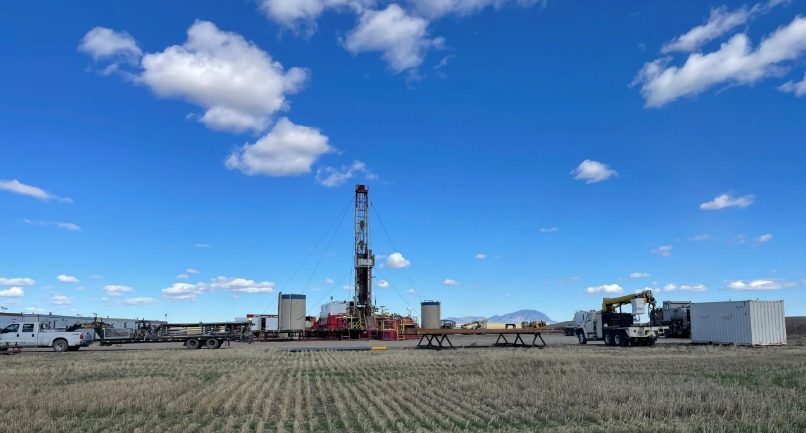
Much of U.S. Energy’s long‑term opportunity revolves around a massive geologic structure in Montana known as Kevin Dome. Through a series of strategic transactions, the company has assembled approximately 32,000 acres across this dome—a land position large enough to support multiple decades of industrial gas development and carbon management operations at its Big Sky Carbon Hub.
Independent evaluations have affirmed what management already believed: Kevin Dome is a rare, resource-rich asset containing an estimated 1.3 trillion cubic feet of naturally occurring CO₂ and 2.3 billion cubic feet of helium. In a world increasingly defined by critical mineral scarcity, industrial gas shortages, and tightening decarbonization expectations, this combination is uniquely valuable.
But U.S. Energy’s strategy is not to commercialize these resources in isolation. Instead, the company is building an interconnected platform—one in which helium production, CO₂ capture, utilization, and sequestration, and enhanced oil recovery work together to maximize both cash flow and optionality.
“Over the past 18 months, we have deliberately built what we believe is one of the most compelling industrial gas, energy, and carbon management platforms in the country,” the company’s CEO, Ryan Smith said in a news release. “From assembling a rare, large-scale resource position at Kevin Dome, to advancing Montana’s first Monitoring, Reporting, and Verification (MRV) submissions, securing a purpose-built plant site, and finalizing our processing facility design, our team has consistently delivered against key milestones.”
Kevin Dome isn’t just a resource. It’s the foundation for a vertically integrated energy and industrial gas ecosystem.
A deliberate, de‑risking march forward
While many early‑stage resource stories hinge on future potential, U.S. Energy has already executed several key milestones that materially reduce the project’s risk profile.
One of the most important was the submission of two MRV plans to the U.S. Environmental Protection Agency—the first such submissions ever made in the State of Montana. Once approved, these plans would place the company among the largest 20 carbon capture, utilization, and storage projects in the United States, giving U.S. Energy early‑mover regulatory positioning in a sector dominated by large industrial players.
At the same time, the company already has three producing industrial gas wells online. These wells are expected to supply steady, low‑decline volumes for the initial phase of gas processing—meaning early operations do not require additional drilling. In an industry where capital intensity can quickly spiral, this is a meaningful advantage.
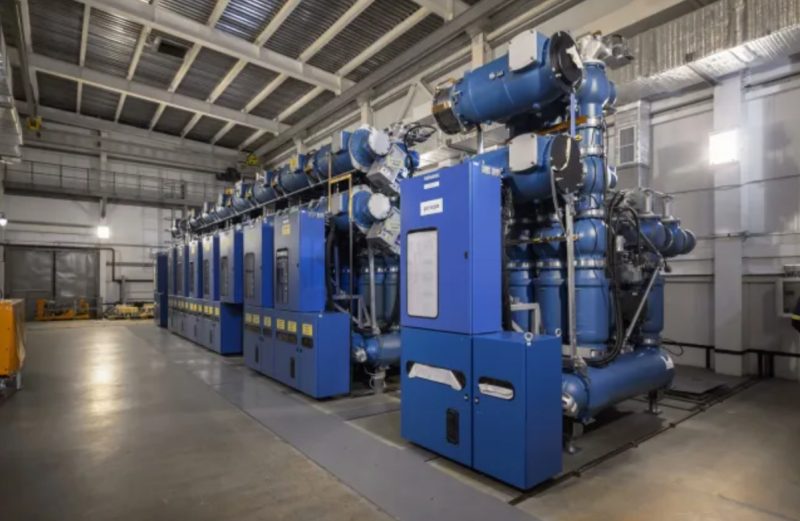
The company also completed final engineering and design for its proposed gas processing facility and, in January 2026, acquired a 32-acre site strategically located for power access, road logistics, and offtake pathways. Securing this land reduces construction risk and ensures ample room for future expansion as helium, CO₂ management, and energy operations scale.
Individually, each of these achievements is notable. Collectively, they represent the creation of a highly differentiated platform—one built to generate durable cash flow while participating in multi‑decade industrial gas and carbon management demand.
A new type of energy company for a new energy era
The emerging USEG story is less about any single commodity and more about the convergence of several powerful trends:
- The growing need for domestic helium to support semiconductor fabrication, aerospace, defence, and healthcare
- The push for CO₂ capture, utilization, and storage as U.S. industry accelerates decarbonization
- The durability of oil demand, especially in high‑value applications supported by enhanced oil recovery
- The rise of integrated, vertically controlled energy‑gas‑carbon hubs—a model previously reserved for far larger corporations
U.S. Energy is positioning itself not just as a producer, but as a platform—a multi‑segment operator capable of capturing full-cycle value from extraction to processing to long-duration carbon management.
For investors, this represents a rare opportunity: exposure to a diversified industrial gas and energy company still in the early stages of its growth curve, yet already well‑advanced in its de‑risking.
To keep up with the latest developments from the company, visit usnrg.com.
Part 2 takes the story deeper
This first installment set the stage by focusing on the strategic foundation, leadership, and milestones that define U.S. Energy’s transformation. In Part 2, we’ll dive deeper into the 2026 development plan, the roadmap for Kevin Dome commercialization, and the upcoming catalysts that could reshape the company’s value trajectory over the next 12–24 months.
Join the discussion: Find out what the Bullboards are saying about U.S. Energy and check out Stockhouse’s stock forums and message boards.
Stockhouse does not provide investment advice or recommendations. All investment decisions should be made based on your own research and consultation with a registered investment professional. The issuer is solely responsible for the accuracy of the information contained herein. For full disclaimer information, please click here.