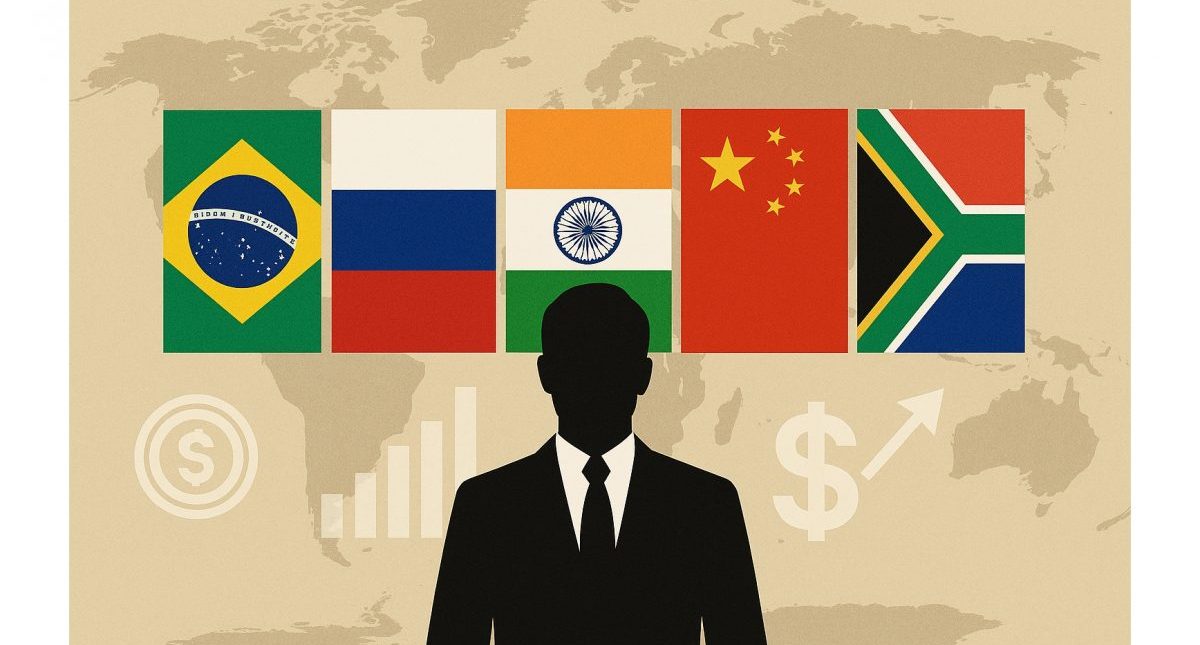

- BRICS is an informal coalition of emerging economies to challenge the dominance of Western-led institutions like the IMF and World Bank.
- The bloc now represents over a quarter of global GDP and nearly half of the world’s population, making it a significant player in shaping global economic and political dynamics
- BRICS aims to reform global governance by advocating for more representation of emerging economies in institutions like the U.N. Security Council
- BRICS’ push to reduce dependence on the U.S. dollar could lead to increased use of local currencies or gold-backed trade mechanisms
What Is BRICS?
BRICS is an informal coalition of emerging economies—Brazil, Russia, India, China, and South Africa—formed in 2009 to challenge the dominance of Western-led institutions like the IMF and World Bank. In recent years, the group has expanded to include Egypt, Ethiopia, Iran, the United Arab Emirates, and Indonesia, with several other countries designated as “partners”.
The bloc now represents over a quarter of global GDP and nearly half of the world’s population, making it a significant player in shaping global economic and political dynamics.
This article is a journalistic opinion piece which has been written based on independent research. It is intended to inform investors and should not be taken as a recommendation or financial advice.
BRICS’ role in the global economy
BRICS aims to:
- Reform global governance by advocating for more representation of emerging economies in institutions like the U.N. Security Council.
- Coordinate economic policy among members to stabilize trade and investment flows.
- Reduce reliance on the U.S. dollar, promoting trade in local currencies and exploring the idea of a common BRICS currency.
- Develop alternative financial systems, such as the New Development Bank (NDB) and the Contingent Reserve Arrangement (CRA), which offer infrastructure and development financing outside traditional Western channels.
Despite internal divisions and geopolitical tensions—such as differing stances on Russia’s invasion of Ukraine—the bloc continues to grow in influence, particularly among countries in the Global South seeking alternatives to Western dominance.
Implications for Canadian investors
The expansion and ambitions of BRICS carry several key implications for Canadian investors:
1. Currency diversification and de-dollarization
BRICS’ push to reduce dependence on the U.S. dollar could lead to increased use of local currencies or gold-backed trade mechanisms. This shift may affect currency markets and global liquidity, prompting Canadian investors to reassess exposure to USD-denominated assets and consider diversification into commodities or emerging market currencies.
2. Commodity markets and resource competition
Many BRICS members are resource-rich nations. Their coordination on export policies and resource pricing could influence global supply chains and commodity prices. Canadian sectors like mining, energy, and agriculture may face new competition or opportunities depending on how BRICS nations manage their resource strategies.
3. Geopolitical risk and market volatility
As BRICS challenges Western institutions, geopolitical tensions may rise, affecting global markets. Canadian investors should monitor developments in BRICS-led trade agreements, sanctions, and regional conflicts, which could impact multinational corporations and global investment portfolios.
4. Emerging market opportunities
BRICS expansion opens doors to new investment opportunities in emerging markets. Canadian investors might explore infrastructure, fintech, and clean energy projects funded by the NDB or aligned with BRICS development goals. However, these opportunities come with higher political and regulatory risks, requiring careful due diligence.
5. Strategic realignment
Canada, as part of the G7 and a close ally of the U.S., may need to recalibrate its foreign policy and trade strategies in response to BRICS’ growing influence. This could affect bilateral trade agreements, investment flows, and regulatory environments that Canadian investors rely on.
Conclusion
BRICS is no longer just a loose coalition of emerging economies—it’s a growing force reshaping the global economic order. For Canadian investors, this presents both risks and opportunities. Staying informed about BRICS developments, diversifying portfolios, and adapting to shifting geopolitical dynamics will be crucial in navigating this evolving landscape.
Stockhouse does not provide investment advice or recommendations. All investment decisions should be made based on your own research and consultation with a registered investment professional. The issuer is solely responsible for the accuracy of the information contained herein. For full disclaimer information, please click here.