


- Coffee prices remain high due to weather‑driven supply disruptions in Brazil and Vietnam, with markets expecting continued volatility before meaningful relief later in 2026
- Big brands are mixed: Starbucks (NASDAQ:SBUX) and JDE Peet’s (OTC:JDEPF) are using pricing power and restructuring to defend margins, but higher costs have capped upside
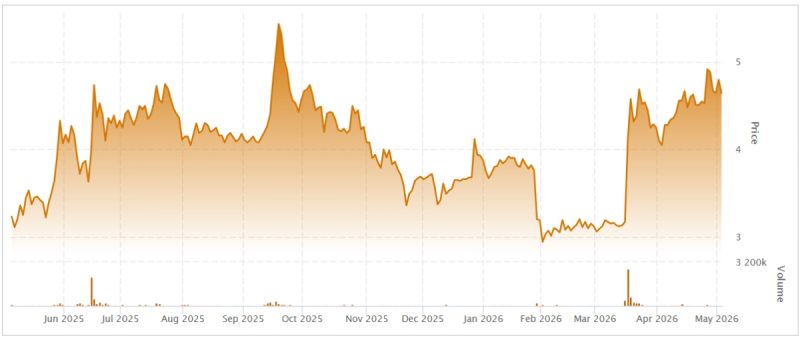
- Small-cap standout: Coffee Holding Co. (NASDAQ:JVA) is up over 40 per cent since May 2025 and just posted 20 per cent Q1 fiscal 2026 revenue growth, showing how nimble operators can thrive in volatile markets
- Not all benefit: Nestlé’s (OTC:NSRGY) stock has trended lower, highlighting that strong coffee pricing alone doesn’t guarantee investor gains—execution still rules
Coffee … some just can’t live without it
It has become one of the most talked‑about agricultural commodities in global markets—and not without reason.
Over the past 18 months, prices for both Arabica and Robusta beans have surged to multi‑year highs, squeezing consumers while reshaping profit outlooks across the coffee value chain. For investors, the rally in coffee prices has created both winners and losers, depending on where companies sit between farms, futures markets, and retail shelves.
Why coffee is so expensive right now
At the heart of rising coffee prices is a classic supply shock intensified by climate volatility. Brazil, which produces roughly one‑third of the world’s Arabica coffee, has faced repeated droughts, irregular rainfall, and frost events that damaged flowering and reduced yields for the 2024/25 and 2025/26 crop cycles. Vietnam, the world’s largest Robusta producer, has also struggled with weather disruptions that restricted exports.
These constraints have pushed global inventories sharply lower. ICE‑certified Arabica stocks sank to multi‑year lows in 2025, while Robusta supplies remained tight amid strong demand from instant coffee and ready‑to‑drink producers. Adding fuel to the fire, logistics issues and U.S. tariffs on Brazilian exports further distorted flows, amplifying price volatility.
By early 2025, Arabica futures had risen more than 30 per cent year over year, at times trading above US$4 per pound—levels rarely seen in modern coffee markets.
What’s next for coffee prices?
Looking ahead, the immediate outlook for coffee prices remains elevated but volatile. While Brazil’s 2026/27 harvest is expected to improve, analysts caution that it will take at least another full season before inventories meaningfully rebuild. In the short term, roasters and distributors are still competing for limited spot supply, keeping prices supported.
That said, the market is beginning to price in potential relief later in 2026, especially if weather conditions normalize and Vietnam delivers a strong Robusta crop. For investors, this sets the stage for a transition from commodity‑driven price shock to company‑specific performance differentiation.
Big brands feel the pressure
Large consumer brands have responded differently to higher input costs. Starbucks (NASDAQ:SBUX) has leaned on price increases, operational restructuring, and international growth to offset margin pressure. While profits dipped in parts of 2025 due to labour and restructuring costs, investors have rewarded signs of stabilization, with the stock rebounding into 2026 on improving sales momentum.
Meanwhile, JDE Peet’s (OTC:JDEPF), the world’s largest pure‑play coffee company, demonstrated pricing power in packaged coffee. In its full‑year 2025 results, the company reported double‑digit organic sales growth, driven largely by higher pricing to offset record green coffee inflation. That strategy helped stabilize earnings, but volumes softened—highlighting the trade‑off facing large retailers during commodity upcycles.
A bold flavour
One of the most compelling stories in the current coffee market sits far below the mega‑caps.
Green coffee roaster and distributor Coffee Holding Co. (NASDAQ:JVA) has emerged as a clear beneficiary of price volatility. The stock is up more than 40 per cent since May 2025, reflecting improved margins, operational efficiencies, and strong demand across multiple segments.
With a market cap of just US$27 million, the momentum with this coffee stock is real. In Q1 of fiscal 2026, Coffee Holding reported a 20 per cent year‑over‑year increase in revenue, reaching $25.6 million, alongside a notable jump in earnings per share. Management attributed the gains to reduced tariff impacts, consolidation into a single manufacturing facility, and robust sales of both private‑label and green coffee beans. [nasdaq.com]
For investors, JVA illustrates how smaller, flexible operators can sometimes outperform global giants during commodity cycles—especially when they can pass through prices while controlling costs.
Watered-down taste
Not every coffee heavyweight has benefited. Nestlé (OTC:NSRGY), the world’s largest food company and owner of Nespresso, has seen its stock trend lower over the past year, underperforming broader consumer staples indices. While Nestlé’s coffee segment continues to grow organically, currency headwinds, brand divestments, and broader portfolio restructuring have weighed on investor sentiment.
This divergence underscores a key lesson: high coffee prices alone do not guarantee shareholder gains—execution and capital allocation still matter.
Final sip: Opportunity is brewing
Coffee’s price surge has exposed fault lines across the market, rewarding agile operators while testing the resilience of household names. With prices likely to remain volatile through 2026, investors have an unusual opportunity to look beyond the café counter and into the supply chain itself.
Whether it’s a micro‑cap roaster riding volatility, a global brand defending margins, or a legacy giant navigating transition, coffee is no longer just a consumer story—it’s an investment theme. And with climate risks unlikely to fade anytime soon, this market may continue percolating with opportunity for those willing to look closely.
Join the discussion: Find out what the Bullboards are saying about specialty consumer stocks and check out Stockhouse’s stock forums and message boards.