
Mercedes-Benz – Less Hype, More Down-to-Earth Approach
Mercedes-Benz is reordering its priorities. The much-hyped Level 3 system (Drive Pilot) is taking a back seat for now. It is no longer offered in the current S-Class and the EQS facelift. The reasoning is that it is too expensive, has too few real-world use cases, and faces regulatory uncertainty. Instead, the Stuttgart-based company is focusing on Level 2++ with MB. Drive Assist Pro. This is practical, broadly scalable, and compliant with regulations. In parallel, Level 4 robotaxi projects are underway in China and Abu Dhabi with partners such as Momenta and Lumo. A smart two-pronged approach, as it reduces costs in the consumer business while allowing the company to gain early experience in the commercial mobility market.
The Group generated revenue of EUR 31.6 billion and EBIT of EUR 1.9 billion. Free cash flow from the industrial business was surprisingly high at EUR 1.86 billion, despite the ongoing model offensive and share buybacks totalling EUR 469 million. The passenger vehicle margin reached 4.1%, placing it within its own target range of 3–5%. Europe and the US grew by 7% and 20%, respectively; the van division achieved double-digit returns of 10.1%; and the financial subsidiary increased its EBIT by 44% to EUR 413 million. China remains a challenging market with intense competition and subdued demand.
Management confirmed the full-year forecast during the earnings call. Revenue is expected to be roughly on par with the previous year, while Group EBIT is projected to be significantly above 2025 levels thanks to lower one-time charges.
The largest product offensive in the company’s history is underway, with over 40 new models planned through 2027, including the all-electric C-Class and the redesigned EQS with steer-by-wire. At the same time, risks remain, such as tariff uncertainties (US-EU), the weak Chinese economy, and volatile commodity prices. On a positive note, net liquidity climbed to nearly EUR 34 billion. That is a comfortable cushion. For patient investors, Mercedes offers a mix of strong cash flow, a consistent premium strategy, and realistic turnaround potential, but no one should expect short-term margin miracles.
First Hydrogen – Robotics Instead of Just Hydrogen
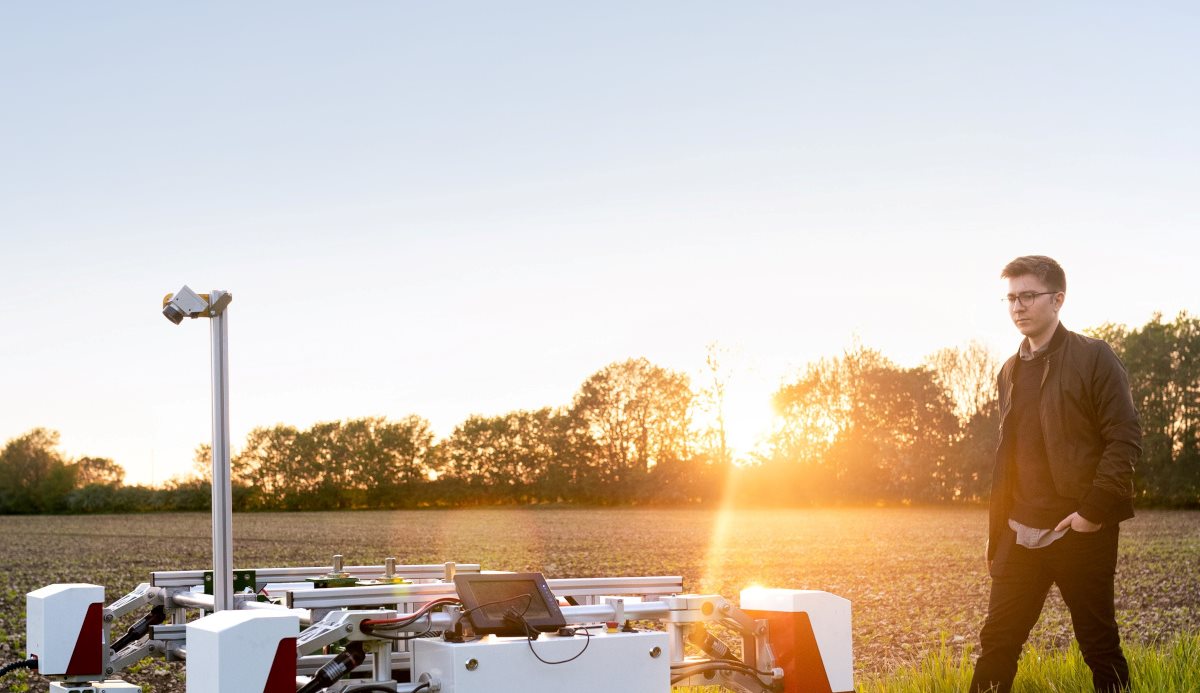
First Hydrogen is moving away from its exclusive focus on fuel cell transporters. Through an expanded memorandum of understanding, the Canadian company has secured exclusive global rights to a patented, unmanned ground vehicle (UGV) platform. The technology is from Exodus Actuation Solutions (“RoboticsCo”), which First Hydrogen recently agreed to acquire a majority stake in. Unlike traditional delivery robots, the platform relies on a hybrid architecture consisting of eight leg-wheel elements. This enables stability on uneven terrain where conventional systems fail. The move may seem surprising at first glance, but it makes perfect sense. Anyone thinking about clean mobility cannot ignore autonomous, zero-emission assistants for logistics and security.
At its core is a modular chassis with a hybrid leg-wheel combination. On smooth surfaces, the robot rolls efficiently on its wheels; on challenging terrain, its eight articulated legs ensure four points of contact at all times. The device is powered by solar energy, a battery, or a fuel cell for long operating times with low noise levels. Interchangeable payloads such as drone launch and refuelling aids, transport boxes, tools, or safety equipment can be mounted on the platform. The system navigates autonomously, can be operated remotely or follows predefined routes. This could provide real relief for depots, construction sites, or the last-mile delivery segment.
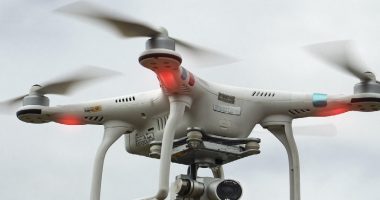
The commercialization roadmap is ambitious. First Hydrogen has two years to develop a market-ready version with a defined application. If successful, the company retains exclusive rights for the entire patent term in exchange for a comparatively low revenue share of 1%. First Hydrogen bears all development costs and secures full intellectual property rights. The global drone market is growing rapidly, reaching over USD 140 billion by 2035, signalling the industry’s direction. For investors, First Hydrogen thus represents a thematic play on three megatrends: fuel cells, autonomous robotics, and green energy infrastructure.
Rockwell Automation – Between the AI Boom and Caution
Rockwell Automation does not just sell controllers and sensors; it builds a bridge between the production floor and the IT department. The company generates one-time revenue from hardware, but the real highlight is recurring revenue from software licenses and maintenance contracts. Lifecycle Services, in particular, ensure that customers’ machines run smoothly and downtime is reduced. Annual recurring revenue is growing in the high single-digit range. Customers come from the process industry, e-commerce, and data center construction. All are relying on digitalization to make their manufacturing more efficient.
In the second fiscal quarter of 2026, Rockwell generated revenue of just under USD 2.24 billion, an increase of 12%. Adjusted for currency effects, organic growth was 9%. Adjusted earnings per share jumped 32% to USD 3.30.
The Software & Control segment in particular grew by 20%, led by Logix controllers with over 20% growth. This high-margin division now boasts a 34.9% return. The only downside is the service business, which stagnated organically as major projects continue to be delayed.
Management significantly raised its full-year forecast. Instead of 2–6%, organic growth is now expected to be 5–9%. The adjusted earnings per share range is USD 12.50 to USD 13.10, a substantial jump. The drivers are the megatrends of reshoring, AI integration, and data center expansion. Even mobile OTTO robots are gaining traction. But caution remains warranted. Storage prices and tariffs could put pressure on margins in the second half of the year. Rockwell is banking on cost neutrality here.
The next industrial revolution is taking place in a decentralized manner. Mercedes-Benz is realigning its priorities and, with strong cash flow and a realistic premium strategy, is keeping its feet on the ground instead of chasing expensive hype. First Hydrogen is making a smart pivot from a pure hydrogen propulsion manufacturer to a provider of unmanned ground robots for difficult terrain. Rockwell Automation, on the other hand, is already reaping substantial benefits from the AI boom and reshoring trend, but at the same time warns of rising storage prices and tariffs. Those with a long-term perspective will find here three very different, yet equally focused, forward-looking companies.
Conflict of interest
Pursuant to §85 of the German Securities Trading Act (WpHG), we point out that Apaton Finance GmbH as well as partners, authors or employees of Apaton Finance GmbH (hereinafter referred to as “Relevant Persons”) currently hold or hold shares or other financial instruments of the aforementioned companies and speculate on their price developments. In this respect, they intend to sell or acquire shares or other financial instruments of the companies (hereinafter each referred to as a “Transaction”). Transactions may thereby influence the respective price of the shares or other financial instruments of the Company.
In this respect, there is a concrete conflict of interest in the reporting on the companies.
In addition, Apaton Finance GmbH is active in the context of the preparation and publication of the reporting in paid contractual relationships.
For this reason, there is also a concrete conflict of interest.
The above information on existing conflicts of interest applies to all types and forms of publication used by Apaton Finance GmbH for publications on companies.
Risk notice
Apaton Finance GmbH offers editors, agencies and companies the opportunity to publish commentaries, interviews, summaries, news and the like on news.financial. These contents are exclusively for the information of the readers and do not represent any call to action or recommendations, neither explicitly nor implicitly they are to be understood as an assurance of possible price developments. The contents do not replace individual expert investment advice and do not constitute an offer to sell the discussed share(s) or other financial instruments, nor an invitation to buy or sell such.
The content is expressly not a financial analysis, but a journalistic or advertising text. Readers or users who make investment decisions or carry out transactions on the basis of the information provided here do so entirely at their own risk. No contractual relationship is established between Apaton Finance GmbH and its readers or the users of its offers, as our information only refers to the company and not to the investment decision of the reader or user.
The acquisition of financial instruments involves high risks, which can lead to the total loss of the invested capital. The information published by Apaton Finance GmbH and its authors is based on careful research. Nevertheless, no liability is assumed for financial losses or a content-related guarantee for the topicality, correctness, appropriateness and completeness of the content provided here. Please also note our Terms of use.
Stockhouse does not provide investment advice or recommendations. All investment decisions should be made based on your own research and consultation with a registered investment professional. The issuer is solely responsible for the accuracy of the information contained herein. For full disclaimer information, please click here.