

Novo Nordisk: Between Market Conquest and Margin Pressure
The Danish pharmaceutical company is undergoing a period of realignment. The company is securing its market position through innovative product delivery methods, but at the same time faces shrinking margins and a stronger competitor. The semaglutide tablet is proving to be a turning point. With over 3 million prescriptions in the US within 5 months and more than 80% new patients, the oral Wegovy is reaching exactly the target group that shies away from injections. Successes with approvals in the UK and the upcoming market entry in Europe open up further opportunities. In the first quarter, the drug already generated revenue equivalent to approximately EUR 300–330 million, nearly doubling analysts’ expectations.
This is the first time in the company’s history that a product has been launched in China before the US and Europe. This is a strategic move. The combination therapy Kyinsu was launched globally there, while the production facility in Tianjin is being expanded. At the same time, the Novo Nordisk Foundation is providing EUR 60 million to support European research. The partnership with OpenAI to utilize artificial intelligence in drug discovery underscores the company’s technological ambitions. The multi-billion stock buyback program is also a sign of confidence in the company’s fundamentals.
Eli Lilly has now captured about 60% of the US market, and price competition is intensifying. While the Medicare GLP-1 Bridge pilot program may attract millions of new patients, the catch is the additional pressure on already strained margins. Group management is therefore pulling the plug and has put together a decisive cost-cutting package. Specifically, the company is targeting savings of up to USD 1.3 billion, achieved in part by cutting approximately 11% of its workforce, but also through tough renegotiations with suppliers for price reductions. The fact that competition is severely eroding reserves is also underscored by the recently lowered annual forecast, which now projects a revenue decline of 4–12%. The share is currently trading at around EUR 42.84.
BioNxt Solutions: On the Path to Growth with Innovative Drug Delivery Systems
The Canadian biotech company BioNxt Solutions has established a remarkable position in the field of drug delivery with its sublingual thin-film and transdermal patches. Its European presence, particularly through the acquisition of Vektor Pharma TF, not only secures GMP-certified production capacity for the company but also provides years of formulation experience. An extensive patent portfolio, which includes the newly registered European Unitary Patent offering protection in 18 countries, forms the technological basis for long-term exclusivity. The flagship product BNT23001, a cladribine orally dissolvable thin-film treatment for MS, is now entering the decisive phase of bioequivalence testing, following the completion of GMP manufacturing for clinical trials in April.
The decision to strategically focus on collaborations is proving successful. A memorandum of understanding with a potential partner for the Eurasian region lays the groundwork for regional licensing agreements, which are supplemented by patent protection through 2043. In addition, a consultant specializing in business development has been engaged to present the cladribine program attractively to international pharmaceutical companies. The goal of the planned human bioavailability study is to demonstrate that sublingual administration is superior to conventional tablets. It represents a clear advantage for patients with difficulty swallowing. Thanks to its scalable production infrastructure in Germany, BioNxt is excellently positioned to quickly transition to the commercialization phase following successful studies.
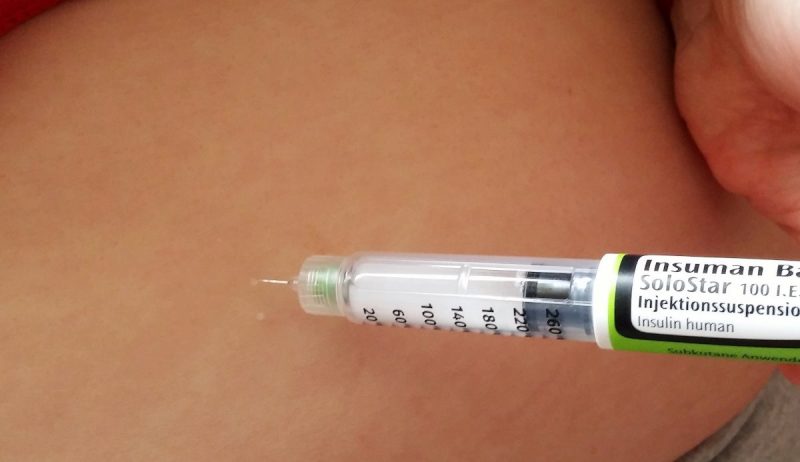
The semaglutide program for orally soluble films offers enormous market potential. Analysts expect the volume of GLP-1 drugs to rise to USD 190 billion by 2035. That is more than double the value projected for 2025. Gen-Plus GmbH is a German partner of BioNxt with which BioNxt is actively collaborating on pharmaceutical development. The goal is to create a discreet, needle-free alternative to injections. The technology platform is designed to develop other peptide therapeutics in the future, such as tirzepatide or liraglutide. If BioNxt can demonstrate bioavailability, it could become a sought-after partner for lifecycle management strategies for established pharmaceutical companies. This is a scenario with considerable potential for value appreciation. The stock is currently trading at around CAD 0.30.

Pfizer: Between the Risk of Patent Infringement and the Hope for GLP-1
In the booming market for obesity drugs, Pfizer is pursuing an aggressive acquisition strategy. The billion-dollar competition for Metsera and its oral GLP-1 pipeline underscores how seriously the company is pursuing entry into this segment. This is complemented by Bethylatide, the company’s own candidate—a once-monthly formulation that demonstrates weight loss of approximately 16% after 32 weeks. Thanks to the recent approval granted in China, Pfizer is also gaining early access to the Asian market. If the pipeline becomes market-ready by 2028 as planned, the company could stand out from Novo Nordisk and Eli Lilly with a key differentiator: less frequent dosing.
Operations are showing remarkable resilience, except for the weight-loss segment. Non-COVID business recently grew by 7%, while newly launched and acquired products recorded a 22% increase to USD 3.1 billion. The oncology segment in particular, with drugs such as Padcev and Lorbensa, is benefiting from robust clinical data and extensive market penetration. Padcev alone accounted for a 39% increase in revenue. The acquisition of Seagen is proving increasingly profitable and is driving oncology growth. The operating margin, which recently fell to 32%, is put into perspective by strict cost control.
Income investors are attracted by the dividend yield of over 7%, but questions arise regarding its sustainability. The payout ratio relative to free cash flow was 131%. Revenues are expected to decline by approximately USD 14–15 billion by 2030 due to the impending patent expirations of Eliquis, Ibrance, and other blockbuster drugs. While the portfolio of new products may gradually close this gap, the recent setback in the Sigvotatug Vedotin cancer trial highlights the clinical uncertainties. Analysts remain cautious. The stock is currently trading at around USD 24.07.
The next phase in the obesity market will be driven not by injections, but by tablets or films. Novo Nordisk is successfully defending its market leadership with its oral Wegovy, but must contend with declining margins. BioNxt Solutions is positioning itself, through its innovative film technology, as a potential game-changer that could serve as a valuable partner to established companies. Pfizer, on the other hand, is putting all its eggs in one basket. Its GLP-1 candidate must offset some of the impending patent losses, but despite high dividends, the clinical risks and financial sustainability remain fragile. The race for the future of oral medications has begun.
Conflict of interest
Pursuant to §85 of the German Securities Trading Act (WpHG), we point out that Apaton Finance GmbH as well as partners, authors or employees of Apaton Finance GmbH (hereinafter referred to as “Relevant Persons”) currently hold or hold shares or other financial instruments of the aforementioned companies and speculate on their price developments. In this respect, they intend to sell or acquire shares or other financial instruments of the companies (hereinafter each referred to as a “Transaction”). Transactions may thereby influence the respective price of the shares or other financial instruments of the Company.
In this respect, there is a concrete conflict of interest in the reporting on the companies.
In addition, Apaton Finance GmbH is active in the context of the preparation and publication of the reporting in paid contractual relationships.
For this reason, there is also a concrete conflict of interest.
The above information on existing conflicts of interest applies to all types and forms of publication used by Apaton Finance GmbH for publications on companies.
Risk notice
Apaton Finance GmbH offers editors, agencies and companies the opportunity to publish commentaries, interviews, summaries, news and the like on news.financial. These contents are exclusively for the information of the readers and do not represent any call to action or recommendations, neither explicitly nor implicitly they are to be understood as an assurance of possible price developments. The contents do not replace individual expert investment advice and do not constitute an offer to sell the discussed share(s) or other financial instruments, nor an invitation to buy or sell such.
The content is expressly not a financial analysis, but a journalistic or advertising text. Readers or users who make investment decisions or carry out transactions on the basis of the information provided here do so entirely at their own risk. No contractual relationship is established between Apaton Finance GmbH and its readers or the users of its offers, as our information only refers to the company and not to the investment decision of the reader or user.
The acquisition of financial instruments involves high risks, which can lead to the total loss of the invested capital. The information published by Apaton Finance GmbH and its authors is based on careful research. Nevertheless, no liability is assumed for financial losses or a content-related guarantee for the topicality, correctness, appropriateness and completeness of the content provided here. Please also note our Terms of use.
Stockhouse does not provide investment advice or recommendations. All investment decisions should be made based on your own research and consultation with a registered investment professional. The issuer is solely responsible for the accuracy of the information contained herein. For full disclaimer information, please click here.