
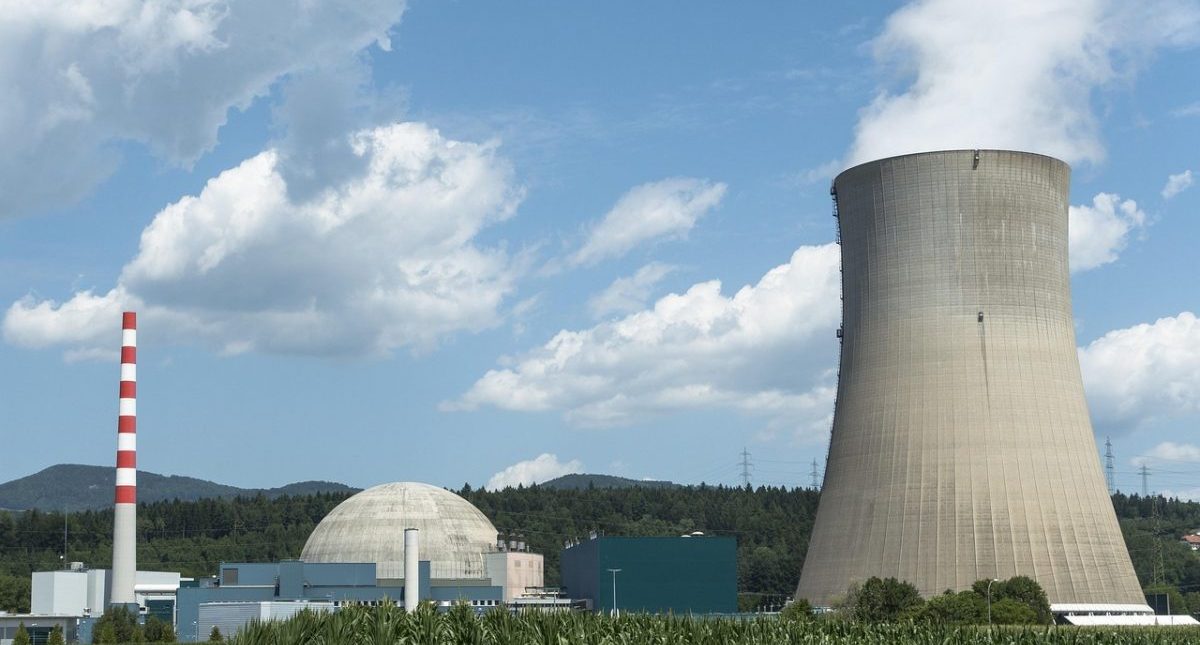


Artificial intelligence and its thirsty data centers are driving electricity demand to new heights, while geopolitical tensions and years of underinvestment are strangling the supply of uranium. Analysts predict a multiplication of the price of uranium, as mines are currently producing only three-quarters of the material needed. At the same time, US policy is pushing for the construction of dozens of new reactors and classifying nuclear power as critical infrastructure. That is why it is worth taking a look at three companies today: primary producer Cameco, exploration specialist Stallion Uranium, and reactor operator Constellation Energy.
This article is disseminated in partnership with Apaton Finance GmbH. It is intended to inform investors and should not be taken as a recommendation or financial advice.
Cameco – Undergoing strategic change
Cameco has reinvented itself in recent years. The traditional mining operator of yesteryear has become a diversified player that now serves the entire nuclear energy value chain, from ore to finished fuel elements. The 2025 financial figures speak for themselves. Revenue rose to around USD 3.5 billion, while adjusted EBITDA increased by 26% to USD 1.9 billion. In particular, the stake in reactor manufacturer Westinghouse is proving to be a strategic stroke of luck. It has not only generated operating profits, but also special distributions of over USD 170 million. However, despite this operational strength, the question arises as to whether the market has already priced in all future hopes.
With a price-to-earnings ratio of over 113, the air is getting thin. Even optimistic assumptions about the development of the uranium market already seem to be reflected in the share price. If you compare the value of proven uranium reserves with market capitalization, you get a mismatch. With a current market value of around USD 49 billion, the company is worth almost three times as much as the net value of its recoverable reserves. Although the Westinghouse deal and rising uranium prices in the long term justify part of the premium, profits would have to increase many times over in the coming years to justify the current valuation.
The long-term outlook for uranium remains intact. Thirty-one countries have committed to tripling their nuclear power capacity by 2050. Growing demand from data centers for artificial intelligence and plans to build small modular reactors point to a sustained bull market. Cameco is pursuing a disciplined strategy and has secured long-term uranium supply contracts totaling 230 million pounds. For investors, it is a double-edged sword. The stock remains the best way to bet on the nuclear renaissance, but it may be wise to wait for a pullback. The stock is currently trading at USD 112.94.
Stallion Uranium – On the hunt for the next big thing
One of the most technically sound exploration programs of the year is currently underway in Canada’s Athabasca Basin, one of the world’s most productive uranium regions. Stallion Uranium (TSXV:STUD) has assembled the largest contiguous land package in the southwestern part of the basin, covering over 1,700 sq km in close proximity to several world-class deposits. However, it is not just the size of the landholding that makes this company particularly interesting for investors. The team working here is also a decisive factor. It is led by geologists who have been involved in significant discoveries in the past, including NexGen Energy’s Arrow deposit, one of the highest-grade uranium deposits in the world.
The focus is currently on the Coyote target, a structural corridor that is now being drilled for the first time after more than a year of systematic geophysical surveys. The data is exceptional. The company has identified a combination of conductive structures, gravimetric anomalies, and proven structural complexity here. These are precisely the characteristics found in the major discoveries in the basin. The parallels to the Arrow discovery are striking, with the alteration signature at Coyote being even significantly larger. With two drilling rigs currently in operation, the company now aims to translate these theoretical models into tangible results.
The company has established a solid financial base and has nine prioritized drill targets. The shareholder structure is particularly noteworthy. Around 45% of the shares are held by insiders and management. This is a good signal for investors that those who know the business best are risking their own capital. The macroeconomic environment also favors uranium. Demand is rising due to the construction of new reactors in Asia and the revival of nuclear energy as part of the energy transition, while supply remains tight. For Stallion, the task now is to translate the promising geophysical signals into economically interesting mineralization with the current drilling program. The coming weeks are likely to be exciting. The share is currently trading at CAD 0.355.
Constellation Energy – From utility to tech enabler
Constellation Energy has undergone a fundamental transformation in recent months. The completed acquisition of Calpine for approximately USD 26.6 billion has created by far the largest electricity generator in the US. The expanded portfolio now combines the country’s largest nuclear fleet with flexible gas-fired power plants and geothermal energy. This mix is crucial for shareholders because it combines weather-independent base load with controllable output. Its operational significance is evident in negotiations with hyperscalers. Constellation no longer just supplies electricity, but develops complete energy solutions for data centers, including grid connection and site infrastructure.
Demand for reliable energy for AI applications is growing rapidly. Constellation benefits from this in two ways. Existing nuclear power plants are operating at capacity factors of over 96%, while the acquisition of Calpine opens up access to new markets and customers. The agreement with CyrusOne for more than 1,100 MW in Texas shows how strategic the positioning is. At the same time, management is investing in the modernization of the plants. The Nuclear Regulatory Commission recently approved a USD 167 million digitalization project at the Limerick site to improve reliability and cybersecurity. Such investments will secure the operation of the plants for decades to come.
However, political headwinds are weighing on the stock. The government and several governors are pushing for reforms to the capacity markets in the PJM region to protect households from rising electricity prices. For Constellation as an independent producer, price caps are a sensitive issue. The market reacted accordingly and pushed the share price down from its highs. Nevertheless, the company has already sold a large part of its production on a long-term basis. Even though the share price has already rebounded to its current level of USD 303.01, this represents an attractive entry point for long-term investors.
While the AI revolution is causing electricity demand to skyrocket, these three companies are positioning themselves precisely at the nerve centers of this new energy crisis. Cameco benefits as the dominant primary producer along the entire value chain. Stallion Uranium, in turn, offers significant leverage on a potential discovery in the Athabasca Basin, where the first drilling program is currently underway. Finally, Constellation Energy is transforming itself from a traditional utility to an indispensable tech enabler for energy-hungry hyperscalers, even as regulatory intervention threatens margins. The nuclear renaissance has begun. Now it is all about precise positioning.
Conflict of interest
Pursuant to §85 of the German Securities Trading Act (WpHG), we point out that Apaton Finance GmbH as well as partners, authors or employees of Apaton Finance GmbH (hereinafter referred to as “Relevant Persons”) currently hold or hold shares or other financial instruments of the aforementioned companies and speculate on their price developments. In this respect, they intend to sell or acquire shares or other financial instruments of the companies (hereinafter each referred to as a “Transaction”). Transactions may thereby influence the respective price of the shares or other financial instruments of the Company.
In this respect, there is a concrete conflict of interest in the reporting on the companies.
In addition, Apaton Finance GmbH is active in the context of the preparation and publication of the reporting in paid contractual relationships.
For this reason, there is also a concrete conflict of interest.
The above information on existing conflicts of interest applies to all types and forms of publication used by Apaton Finance GmbH for publications on companies.
Risk notice
Apaton Finance GmbH offers editors, agencies and companies the opportunity to publish commentaries, interviews, summaries, news and the like on news.financial. These contents are exclusively for the information of the readers and do not represent any call to action or recommendations, neither explicitly nor implicitly they are to be understood as an assurance of possible price developments. The contents do not replace individual expert investment advice and do not constitute an offer to sell the discussed share(s) or other financial instruments, nor an invitation to buy or sell such.
The content is expressly not a financial analysis, but a journalistic or advertising text. Readers or users who make investment decisions or carry out transactions on the basis of the information provided here do so entirely at their own risk. No contractual relationship is established between Apaton Finance GmbH and its readers or the users of its offers, as our information only refers to the company and not to the investment decision of the reader or user.
The acquisition of financial instruments involves high risks, which can lead to the total loss of the invested capital. The information published by Apaton Finance GmbH and its authors is based on careful research. Nevertheless, no liability is assumed for financial losses or a content-related guarantee for the topicality, correctness, appropriateness and completeness of the content provided here. Please also note our Terms of use.
Stockhouse does not provide investment advice or recommendations. All investment decisions should be made based on your own research and consultation with a registered investment professional. The issuer is solely responsible for the accuracy of the information contained herein.
For full disclaimer information, please click here.