- Guardian Metal is advancing two Nevada-based tungsten projects to support U.S. supply security
- Tungsten supply is highly concentrated, with ~90% controlled by China, Russia and North Korea
- Government backing and partnerships position the company for domestic production by 2028
US tungsten strategy gains traction as supply risks rise
Tungsten is emerging as a critical pressure point in global supply chains, and Guardian Metal Resources (LSE:GMET, OTCQB:GMTLF, NYSEAM:GMTL) is positioning to address that gap with a U.S.-focused development strategy.
In this episode of The Capital Compass, CEO Oliver Friesen outlines how the company is advancing its flagship Nevada assets — Pilot Mountain and Tempiute — with the goal of bringing two domestic tungsten mines into production before 2028.
The backdrop is increasingly strategic. With the majority of global tungsten supply concentrated in China, Russia and North Korea, demand from defense, aerospace and advanced manufacturing is driving urgency around secure, domestic sources.
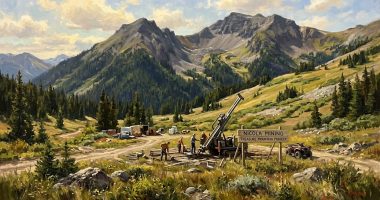
Guardian’s Pilot Mountain project is one of the largest undeveloped tungsten resources in the U.S. and has already attracted support tied to the U.S. defense industrial base. Meanwhile, Tempiute — a past-producing mine — offers additional scale and historical validation.
Jurisdiction is a key advantage. Nevada’s established infrastructure, supportive regulatory environment and strong federal backing for critical minerals provide a clear pathway to development.
With strategic partnerships in place and access to U.S. capital markets following its NYSE listing, the company is entering a phase where execution — from permitting to production — will be the key driver of value
Guardian Metal targets US tungsten supply gap
Ricki: So, Oliver, let’s start with the big picture. Tungsten doesn’t always get the same attention as say lithium or copper, but it is a critical mineral to defense, aerospace, manufacturing like I mentioned before. So why is tungsten becoming such an important strategic metal right now and where does Guardian fit into that supply chain story?
Oliver: I mean it doesn’t normally get the attention as copper and lithium as you mentioned, but that’s certainly changing right now. I would say tungsten is probably one of the most critical metals right now.
Many reasons for it. I think the first one is on the supply side. 90% of total global mined tungsten comes from China, Russia and North Korea. So, there is real supply chain vulnerabilities when it comes to where we buy our tungsten in from. And then on the demand side, as you mentioned, we’re seeing really strong demand in defense, aerospace, advanced technologies.
So, it’s a story and a metal that we need new western world mine supplies of, it’s a metal that we have not invested in over many, many decades now because of Chinese dominance in the space and Guardian’s looking to change that. And we’re looking to bring two new mines online, both in the US before the current administration ends.
Ricki: Guardian’s Pilot Mountain Project, which is backed by a strategic interest tied to the Defense Industrial Base Consortium and a reported US$6.2 million award from the United States Department of Defense. What makes Pilot Mountain such an important project and how does that support help validate its potential role as a domestic US tungsten option?
Oliver: Well, there’s many reasons why it’s such an important asset. Number one, it hosts one of the largest undeveloped tungsten resources in the entire US. It is a past producer, so tungsten was mined here back in the 1940s to support the World War II efforts, and it’s in Nevada, which is the top rated mining jurisdiction in the entire world right now.
So that combined with the fact that we acquired this asset almost five years ago now and we’ve been pushing it forward, means that we believe it’s going to be the next major tungsten producer in the US, and we believe tungsten production can come online before the end of 2028, which will go a really long way to reduce supply chain vulnerabilities for this really important critical metal.
Ricki: And your broader strategy also includes project generation, identifying and advancing high value US critical mineral assets with geological upside. Can you walk us through how the wider Nevada portfolio fits together, including the assets in Tempiute, for example?
Oliver: So, Pilot Mountain was the original asset that sort of started us out on our tungsten journey. So, we were certainly a first mover in this space, identified where the metal was coming from and identified what we thought was strong demand outlooks.
And Pilot Mountain was the first asset to plug in to build our Nevada tungsten portfolio, but we’re commercial team, we’re obviously technically focused. So, we looked at other tungsten assets that could plug in quite nicely to our story.
And Tempiute was one that was very much at the top of our list when we did a search for other assets we could plug in. It was the largest active tungsten mine in the US in the 1980s. The only reason it shut down was China flooded the market back in 1983. So, it was a significant producer of tungsten to the defense industrial base in the US only about 45 years ago.
And with the tailwinds we’re seeing now from the US government and from the general industrial base right now, we believe that asset along with Pilot can be brought back to its former glory and both of those can be in production before the end of 2028.
Ricki: And one of the key advantages here is jurisdiction. So, your projects are in Nevada, like you’ve mentioned, one of the world’s top mining jurisdictions with established infrastructure and a long mining history. So how important is that Nevada advantage when you’re trying to move critical mineral projects forward in the US?
Oliver: I mean, it’s so important, right? I mean, there are other tungsten deposits being pushed forward globally right now. We do believe that we have the leading US position and as someone who’s worked much of my career elsewhere in the world, I’ve seen other jurisdictions. I’ve seen how difficult it can be to push projects forward.
And when it came to building Guardian Metal Resources and our tungsten focus, there was no better place to be than in Nevada. Number one at the state level, it’s a mining state. There’s a lot of active mines there, and obviously they understand how to get things done. So, there’s a lot of support at the state level and at the local stakeholder level.
And then I think more importantly, moving federally now, the US is certainly the country in the world right now that is the most supportive of bringing back domestic mining of critical metals. So given the fact that we have state, local stakeholder support, but also we’re seeing federal support as well, and that comes in the likes of our active Department of War award that we have right now.
So, because of those reasons, we feel it’s the best place in the world to be pushing these projects forward.
Ricki: Partnerships seem to be a major part of Guardian’s strategy, whether that’s government, industry technical or capital partners for example. How are you thinking about partnerships as you de-risk the projects and position them for development, joint ventures or strategic transactions, for example?
Oliver: I mean, given these assets from the US we want to partner with as many US centric and US based companies as possible to support the defense industrial base. So given the fact that we would produce a mined in America tungsten concentrate we’re looking to partner with groups within the US who can take that down the value chain into finished tungsten products that that can support the defense industrial base here in the US.
So, we have a non-binding LOI offtake with a company called Global Tungsten and Powders. They have the largest tungsten processing facility outside of China that’s located in Towanda, Pennsylvania. So, looking at those sort of strategic US focused partnerships to ensure that we can be part of a fully circular mined and consumed in America tungsten product.
And as you mentioned, we have an active award with the Department of War, so looking to make sure that we’re aligned with the US government to ensure that our product is supporting not only the private industry, but also the public industry as well to effectively support the broader US national security landscape.
Ricki: And so just to round things off then, Oliver, as strategic metals gain more attention, quality US-based projects may start to command stronger valuations, partnerships or even takeover interest. So, what does success look like for Guardian Metal Resources over the next five to 10 years, for example? What excites you most about where the company is heading?
Oliver: I think the most exciting thing is that we have a very viable and realistic pathway to deliver two brand new mines on US soil before the current administration is up. And that’s obviously a big endeavor, but we’ve been working on this problem and on these projects for many, many years now. We’ve put together a really strong technical team who have built there, who have started and built mines in Nevada before. So, the experience is there.
We just listed the company on the New York Stock Exchange, so we have access to the broader US capital markets. We’re the only US focused tungsten company to have an active award from the Department of War. So, we’re bringing that all together to deliver two really, really important projects that will support US national security.
Ricki: Well, Oliver, thank you so much for your time today and walking us through the Guardian Metal Resources story.
For more information, you can visit guardianmetalresources.com.
Join the discussion: Find out what the Bullboards are saying about Guardian Metal and check out Stockhouse’s stock forums and message boards.