
The exponential adoption of electric vehicles, with sales growing from 2 million in 2018 to more than 17 million in 2024, according to the International Energy Agency (IEA), is creating accelerating demand for the lithium-ion batteries that power them, and by association for graphite, their largest component.
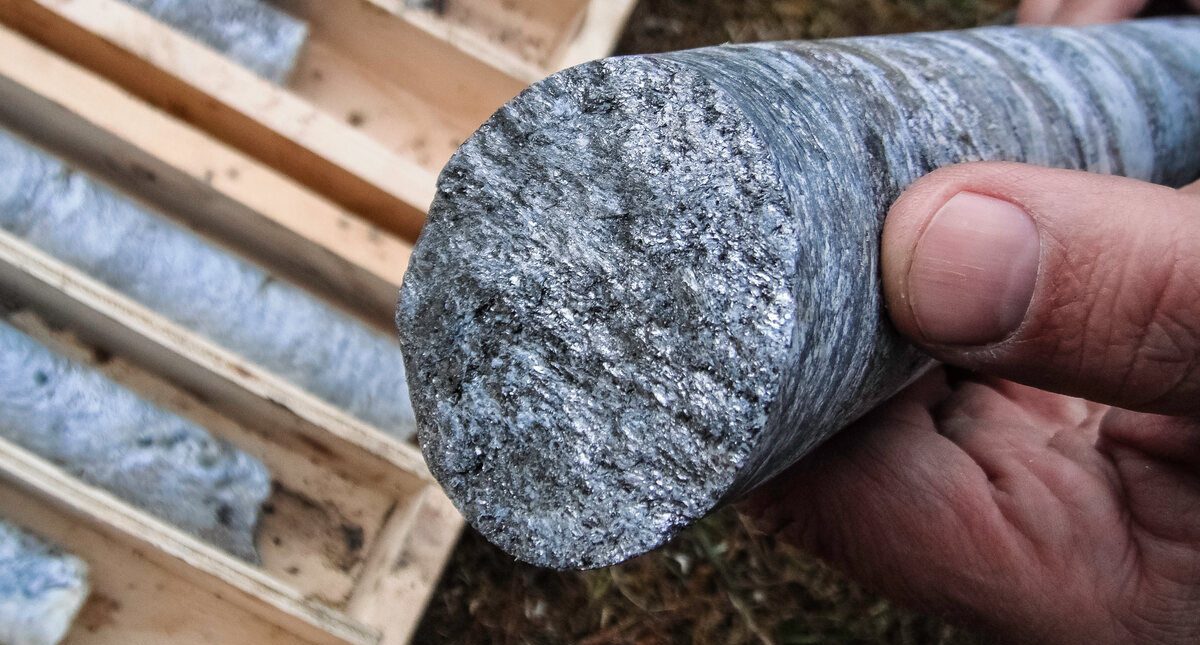
In batteries, graphite serves as anode material, offering unmatched conductivity, performance and storage capacity, thanks to its lattice-layered structure that promotes the free movement of electrons. Regardless of the device, every lithium-ion battery requires 10-20 times more graphite than lithium by weight. Take the carbon-based material away and the global battery industry would simply not be able to recover, pushing global net-zero emissions irredeemably beyond the United Nations’ 2050 goal.
Graphite’s starring role in EV batteries is complemented by its utility across industries, including:
- In the defense sector, spanning missile guidance systems, stealth and thermal shielding tech in planes and spacecrafts, as well as submarine and naval components.
- As a moderator in certain nuclear reactor designs.
- As a lubricating agent.
- In substrates to improve semiconductor performance.
- In 5G network cell towers.
- As a conductive material in fuel cells.
- In refractory and foundry to line furnaces and prevent oxidation.
- As an additive in construction materials, including steel, improving their strength, enhancing insulation or providing electrical and thermal conductivity.
Altogether, these use-cases grant graphite a more than US$15 billion market and make it the critical mineral with the second-highest demand through 2040, trailing only lithium, whose utility very much lies in graphite’s hands.
The World Bank offers numbers to back up graphite demand, estimating that it will reach 4.5 million metric tons annually by 2050, an almost 500 per cent increase from 2018 levels, with an immediate ramp-up in development activity required to prevent a global shortage threatening to remain for decades to come.
The United States’ vulnerable graphite supply chain
One of the major economies most at risk in the scramble to secure reliable graphite supply is the United States, which identifies the mineral as critical to national security, enhancing its appeal for funding, partnerships and permitting support, but currently relies on foreign production for 100 per cent of its supply.
This state of affairs is especially worrisome, as China, its economic rival, controls about 80 per cent of graphite processing capacity, and recently tightened export restrictions, severely constricting Western access and escalating urgency to reinforce supply chains.
With US natural graphite imports growing from 41,000 tons in 2020 to 60,000 tons in 2024, according to the US Geological Survey, and automakers, defense companies and battery producers at the mercy of primarily Chinese-controlled exports, investors are positioned to capitalized on companies capable of garnering government support, securing commercial partners and delivering high-quality domestic graphite, propelled by recent executive orders fostering critical mineral production.
Graphite One’s globally relevant development opportunity
A mineral developer aligned with US interests and capable of making a difference in the critical mineral supply chain is Graphite One (TSXV:GPH), a market capitalization of C$242.32 million, which is building a vertically integrated business vying to revive US graphite production.
This article is disseminated in partnership with Graphite One Inc. It is intended to inform investors and should not be taken as a recommendation or financial advice.
The company is well on its way to extracting tonnage from its Graphite One project, whose Graphite Creek deposit houses the country’s largest natural graphite deposit and one of the largest in the world – as per the Q3 investor deck – processing it into high-purity concentrate and further refining it into anode materials and other graphite products for the EV and energy storage markets.
Once fully operational, Graphite One’s bespoke leadership team, who we’ll meet later on, estimates that the company could generate up to 41,850 tons of battery-grade Coated Spherical Graphite (CSG) per year, in addition to 13,500 tons of advanced graphite powder, representing about 70 per cent of 2024 US consumption, making the eponymous project a key catalyst towards US graphite independence.
The Graphite One project
Graphite One’s flagship project, located 60 kilometres north of Nome, on 100-per-cent state-owned land, benefits from the support of the Alaskan and Federal governments, as well as surrounding communities, as highlighted by:
- Its recent acceptance onto the Federal FAST-41 Permitting Dashboard, facilitating coordination with all federal agencies involved in project permitting, enhancing transparency and predictability.
- An up to US$10.4 million investment from Bering Straits Native Corporation, Nome’s largest employer and a top Alaskan native regional corporation, which was recently complemented by a US$5 million investment from Aleut and Doyon, the latter being Alaska’s largest private landholder. Graphite One is the only mining company to have received equity investments from three Alaskan Native corporations.
- A pair of grants from the US Department of Defense under the Defense Production Act (US$37.5 million) to advance feasibility study work and from the Defense Logistics Agency (US$4.7 million) to develop a graphite-based foam fire suppressant.
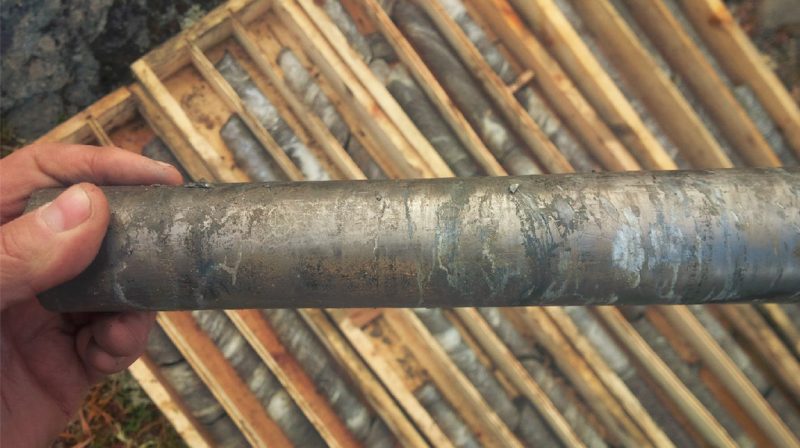
Backed by this high-conviction support system, the project benefits from a considerably de-risked development pathway on which to bring its globally relevant commodity to market, with a 2024 resource estimate detailing 4.8 million tons of graphite measured and indicated and 11.57 million tons inferred, plus 3.72 million tons in proven and probable reserves – increasing contained graphite by 296 per cent from the 2022 pre-feasibility study (PFS) estimate – representing between US$25-40 billion in the ground based on IMARC’s pricing outlook for Q2 2025 and only 1.2 miles of the 9.5-mile-long electromagnetic anomaly underpinning the source of the property’s known mineralization.
The commodity is not only available in large quantity, it’s also of high quality, naturally exhibiting the characteristics of an already processed material, prompting the company to brand its product as Stax Graphite, an anagram standing for Spheroidal Thin Aggregate eXpanded, registering a trademark in both Canada and the United States.
Graphite One followed the PFS up with a 2025 bankable feasibility study detailing a project of robust economics, with a post-tax net present value of US$5 billion, a 7.5-year payback period and initial and sustaining capital costs of US$4.16 billion, increasing estimated concentrate production from 53,000 tons per year (tpy) in the PFS to 175,000 tpy over a 20-year mine life.
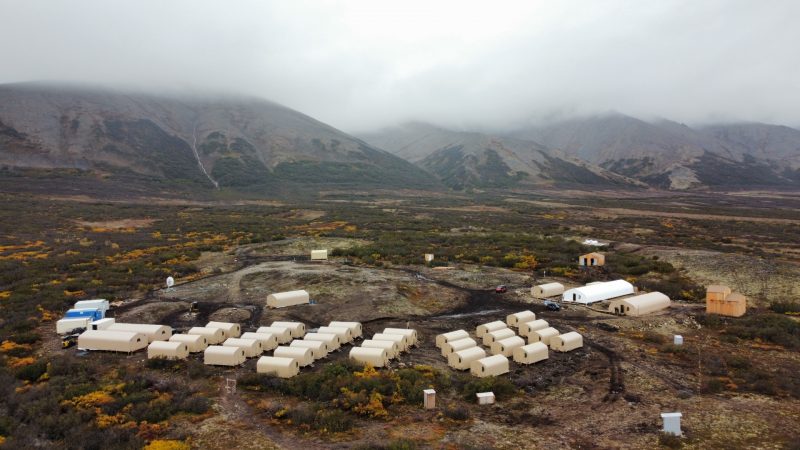
The company intends to package mineralization from the project, transport it to an adjacent owned and operated processing plant to be rendered into concentrate, then ship it once more to the first in a series of planned artificial and natural graphite manufacturing facilities specializing in anode materials and other value-added products. Leadership will take a modular approach with these downstream facilities, one 25,000-tpy module at a time, with the first estimated to generated US$141 million in EBITDA and cost US$607 million, falling to US$552 million for each subsequent addition (see slide 24).
The initial manufacturing plant, slated to be located in Niles, Ohio, will focus on artificial graphite production, enabling near-term cash flow through the purchase of third-party concentrate until the Graphite Creek mine commences production. According to the feasibility study released in April 2025, with a 100,000 tpy plant capacity, it is estimated to generate 256,500 tpy of graphite/carbon products per year, including 169,000 tpy of anode materials, 25,000 tpy of purified graphite products and 31,000 tpy of unpurified graphite and carbon products suitable for the EV, lithium-ion battery and energy storage system supply chains. This is in addition to other industrial and technological applications within graphite’s wide-ranging functionality.
Once built, the company intends to expand into natural graphite anode materials, capitalizing on its performance, cost and efficiency advantages, as well as reduced carbon footprint compared to its artificial counterpart. The facility design process, initiated in Q2, is well advanced.
As per the feasibility study, Graphite One expects to produce 48,000 tpy of anode materials by 2028, initiate extraction from Graphite Creek by 2030 and reach the 169,000-tpy mark by 2031.
This development pathway is de-risked by a technology and advisory support agreement with Chenyu signed in October 2024 covering Canada, Mexico and the United States, with potential expansion into Europe and Saudi Arabia, in addition to:
- Two non-binding supply agreements with Lucid Group for artificial graphite and natural graphite anode material.
- A streamlined development pathway thanks to a memorandum of understanding between the Federal Permitting Improvement Steering Council and the State of Alaska to assist with the Council’s FAST-41 program and advance key infrastructure projects in the state.
- A total of US$895 million in potential financings through a pair of letters of intent with the Export‑Import Bank of the United States, contingent on due diligence, directing US$570 million to development at Graphite Creek and US$325 million towards the planned Ohio facility. The company plans to submit formal applications for the funding in 2026.
Once mining, concentrate and anode material production get underway, Graphite One has its sights set on disciplined expansion and revenue growth, currently evaluating sites for additional advanced material facilities in Washington State, among other locations, and conducting a growing pipeline of partnership and offtake discussions, looking to take full advantage of the Inflation Reduction Act’s billions in tax credits and subsidies for EV batteries containing US-sourced graphite.
Concurrently, the company will continue to explore its flagship project, with the feasibility study pit accounting for only 12 per cent of the known graphite mineralized zone, suggesting that there remains significant exploration upside to be harvested.
Leadership tailored to the task at hand
A differentiated asset such as the Graphite One project requires equally impressive leadership to optimize value creation and earn investor and stakeholder conviction, and the company does not disappoint, combining long-term backgrounds in graphite, as well as mining development, construction and operations, into a team worthy of the responsibility of reigniting the domestic US graphite supply chain. Let’s meet them now:
Board of directors
- Doug Smith, P.Eng., ICD.D, Executive Chair and Director, brings more than 35 years of experience in the international coal industry, including as the former president and CEO of First Coal (acquired by Xstrata in 2011) and former president and director of Andalex Resources (acquired in 2006).
- Anthony Huston, Founder, CEO and Director, is an entrepreneur well-versed in creating value in the tech, finance and business development spaces, raising over US$150 million as a managing partner for public and private companies throughout his career.
- Patrick Smith, Director, is a senior mining executive with 40 years of global executive management experience, including 20 years in Alaska. Highlight roles include Alaskan Exploration Manager for Kennecott Exploration Company, as well as other senior management positions with Rio Tinto over a 32-year tenure. Smith’s exploration and development experience spans gold, copper, molybdenum, iron ore, diamonds, industrial minerals and lithium.
- Brian Budd, Director, brings more than 25 years of entrepreneurial and sales leadership experience in technology and natural resources focused on business and financing plans, corporate communications and strategic planning for global markets. Budd has served as president, CEO and/or director for numerous public companies since 2010.
- Bedi A Singh, Director, is a seasoned senior financial executive with decades of experience in media, entertainment and technology. He currently serves on the North American Advisory Board of The London School of Economics. He is also the managing partner at BAS Consulting, providing advisory, board and management consulting services. Singh was the chief financial officer of News Corporation from 2012 to 2017, and previously served as co-CEO, president and CFO for MGM Studios, and as executive vice president and CFO of Sony Pictures Entertainment.
- Scott Packman, Director, is an attorney and corporate strategist whose previous roles include general counsel and executive vice president of Madison Square Garden Entertainment Corp., as well as general counsel of MGM Holdings. Packman is currently the managing member of SSP Partners, a firm that identifies, evaluates and advises on strategic transactions for financiers.
Management
- Mike Schaffner, Senior Vice-President of Operations, has been active in mine management and construction for over 35 years, including 15 years with Newmont Mining, rising up to general manager at the Carlin, Cripple Creek and Victor mines. Schaffner has worked on projects in excess of US$1 billion in capital, US$800 million in operating budget and 1,200 employees. He is also a three-time winner of the National Mining Association’s large mine Sentinels of Safety Award and holds two patents related to bio-oxidation heap leaching.
- Kirsten Fristad, Chief Geologist, brings 20 years of operational expertise in remote Artic environments, including eight years in Alaskan mineral exploration. Her career includes tenures with Teck Resources in the Red Dog District and Pend Oreille, with HighGold in the Johnson Tract, and with Ambler Metals leading regional exploration in the Ambler VHMS Belt of the Brooks Range.
- Kevin Torpy, Vice-President of Mining, is a mining engineer of 27 years with ample experience developing, building and operating mines, mostly in remote northern locations. Torpy previously served as the vice president of operations at Ambler Metals, as well as at Titan Mining, where he guided the restructuring and turnaround of the Empire State Mine.
- Gordon Jang, CPA, CMA, Chief Financial Officer, has built a more than 25-year track record in senior management with mid-to-large mining companies, including Fortuna Silver Mines, Lundin Mining, Pan American Silver and Augusta Resources (acquired by Hudbay in 2014).
- Andrew Tan, M.Sc.E, Vice-President of Advanced Graphite Materials, is a more than two decade veteran in the graphite materials industry, including serving as general manager of SGL Carbon Group’s graphite foil manufacturing plant. Tan specializes in manufacturing advanced graphite products, including anode materials.
- Finally, Rebecca Donald, CPA, Vice-President of Finance, has been a finance and accounting professional for more than 20 years, highlighted by a 14-year tenure at BP Exploration in Alaska, where she rose up the ranks before transitioning to mining as vice president of finance at Ambler Metals before joining Graphite One.
Backed by well-rounded executives, many of which have experience with major miners, Graphite One is in the early stage of one of the most important mineral development stories in US history, unfolding during a period of pressing need to secure the domestic supply chain and ensure the country’s industrial and technological progress for generations to come.
Getting in on the ground floor of a potentially differentiated investment
With an investment thesis checking the boxes of geology in the form of the largest known graphite resource in the US, policy in the form of the US government’s concerted effort at fortifying the critical minerals supply chain, and growth strategy in the form of a mine-to-manufacturing blueprint in the process of becoming a reality, investors have strong reasons for conviction in Graphite One stock that are playing out in practice, with shares up by 70.45 per cent year-over-year.
That said, investors have only enjoyed a 30 per cent return since the pre-feasibility study in 2022, suggesting that Graphite One’s billions in potential revenue have yet to be priced it, with geopolitical tension surrounding Trump’s tariffs likely obscuring investors’ view of the fact that the company may become a cornerstone of North America’s critical mineral future.
As the tailwinds of defense, electrification and energy security pick up steam, and with them the demand for the critical metals and battery technology at their heart, look for Graphite One to continue delivering development milestones, fostering positive sentiment and fueling the stock to climb higher, as its strongly qualified leadership team closes the gap over the coming years between junior miner and strategic supplier actively defining the future of graphite in North America.
Join the discussion: Find out what investors are saying about this graphite stock on the Graphite One Inc. Bullboard and check out the rest of Stockhouse’s stock forums and message boards.
Stockhouse does not provide investment advice or recommendations. All investment decisions should be made based on your own research and consultation with a registered investment professional. The issuer is solely responsible for the accuracy of the information contained herein.
For full disclaimer information, please click here.