

Meta Platforms: Radical Solutions for Superclusters
Meta operates social networks and communication platforms and generates revenue through advertising. So far, so good. However, to remain competitive in the AI sector, the management team led by Mark Zuckerberg is building the Prometheus AI supercluster in New Albany, Ohio, which requires a continuous electrical power capacity of over 1 GW. Despite excellent operational performance in the first quarter, management implemented layoffs of over 8,000 employees as part of an AI restructuring. The reason: to redirect financial resources and capacity specifically toward AI infrastructure, including the nuclear power supply for the data centers. To operate this infrastructure off-grid, the company has entered into power purchase agreements. These include, for example, a 20-year contract with Vistra to purchase 2,609 MW of CO₂-free energy from existing nuclear power plants, including capacity expansions. In addition, through a partnership with TerraPower, the technology group has secured the option to build up to 8 reactors by 2035 and is also supporting Oklo in its reactor plans.
Cameco: The Current Pillar of Uranium Supply Is Too Inflexible
Cameco is considered the undisputed cornerstone of Western uranium supply and operates a vertically integrated business model ranging from exploration to fuel assembly manufacturing. The company holds stakes in the most productive uranium mines in the Athabasca Basin, including Cigar Lake and McArthur River. Cameco’s revenue structure is highly defensive and relies on long-term supply contracts with energy utilities. While this offers exceptional price security, it limits the short-term flexibility that hyperscalers require. In addition, the recent flood disaster in northern Saskatchewan, which cut off supply routes to the Key Lake mill, exposed the vulnerability of large-scale, centralized mining operations: the company warned that the annual production guidance for the affected projects could be impacted.
American Atomics: Geological Hits in the Lisbon Valley
The Canadian exploration company American Atomics is breaking down the traditional fuel cycle structure under the premise “From Rock to Reactor.” In the upstream sector, the company is focusing on the Big Indian Project in Utah, comprising 217 lode mining claims on the eastern flank of the Lisbon Valley. Historical oil and gas drilling encountered high-grade deposits, with anomalous gamma radiation detected at depths between 2,200 and 2,800 feet in 28 of a total of 51 documented wells. Since gamma ray anomalies are the most important and direct geological indicator of radioactive elements such as uranium, this historical oil and gas drilling data serves as a kind of “treasure map” for the company, pointing the way to potentially economic uranium deposits. American Atomics can secure an interest of up to 80% in the project through an ongoing option agreement.
Strategic Downstream Infrastructure and Regional Consolidation
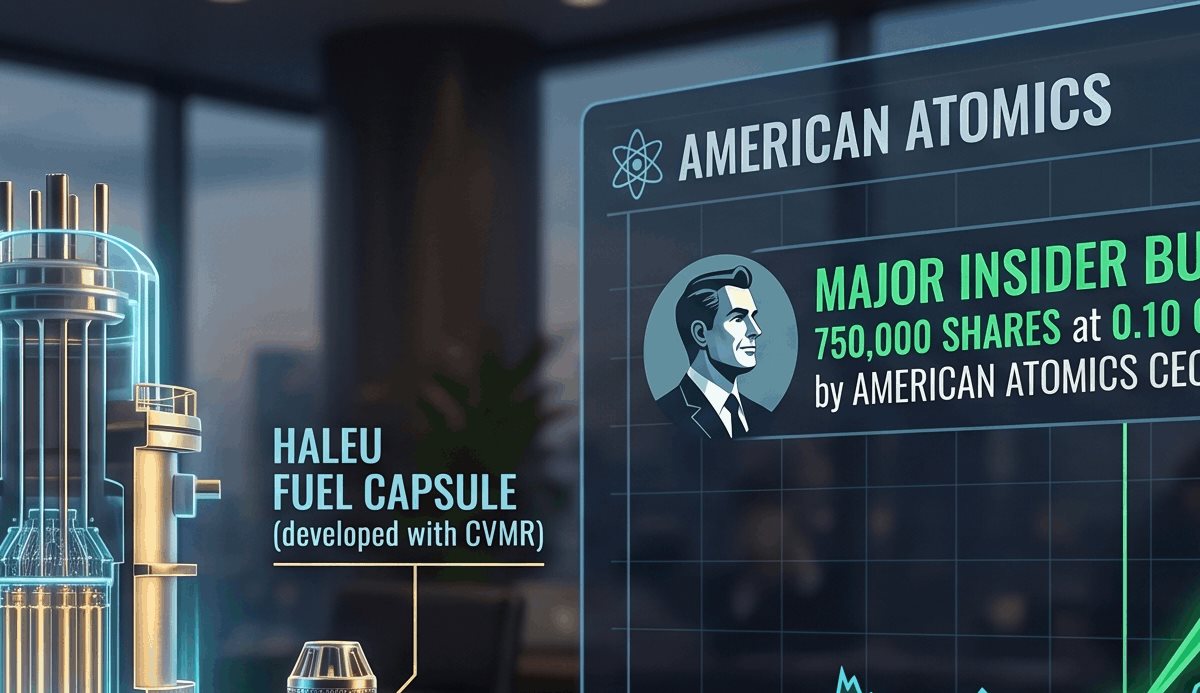
American Atomics complements its mining activities with a 50/50 joint venture with the US metallurgy group CVMR for further processing. The goal is to build North America’s first fully modularized uranium mill to produce High-Assay Low-Enriched Uranium (HALEU) directly at the mine site using patented gas-phase metallurgy technology. These products are essential as fuel for SMR reactors, which are currently the subject of much discussion, particularly in the tech world.
In addition to the Big Indian Project in Utah, the company holds the Blue Streak Project in Colorado, located in the Uravan Mineral Belt, which, according to management, also has a strong starting position. Amid consolidation in the uranium industry—evidenced, among other things, by Myriad Uranium’s recent sale of the Red Basin Project to Subatomic—American Atomics, with its rapidly reactivatable sandstone assets, is considered a logical acquisition target for the major players in the commodities sector. At the same time, management is demonstrating considerable confidence in its own company. American Atomics CEO David Mitchell purchased 750,000 shares on the open market in January at a price of CAD 0.10.
American Atomics: Conclusion and Investment Outlook
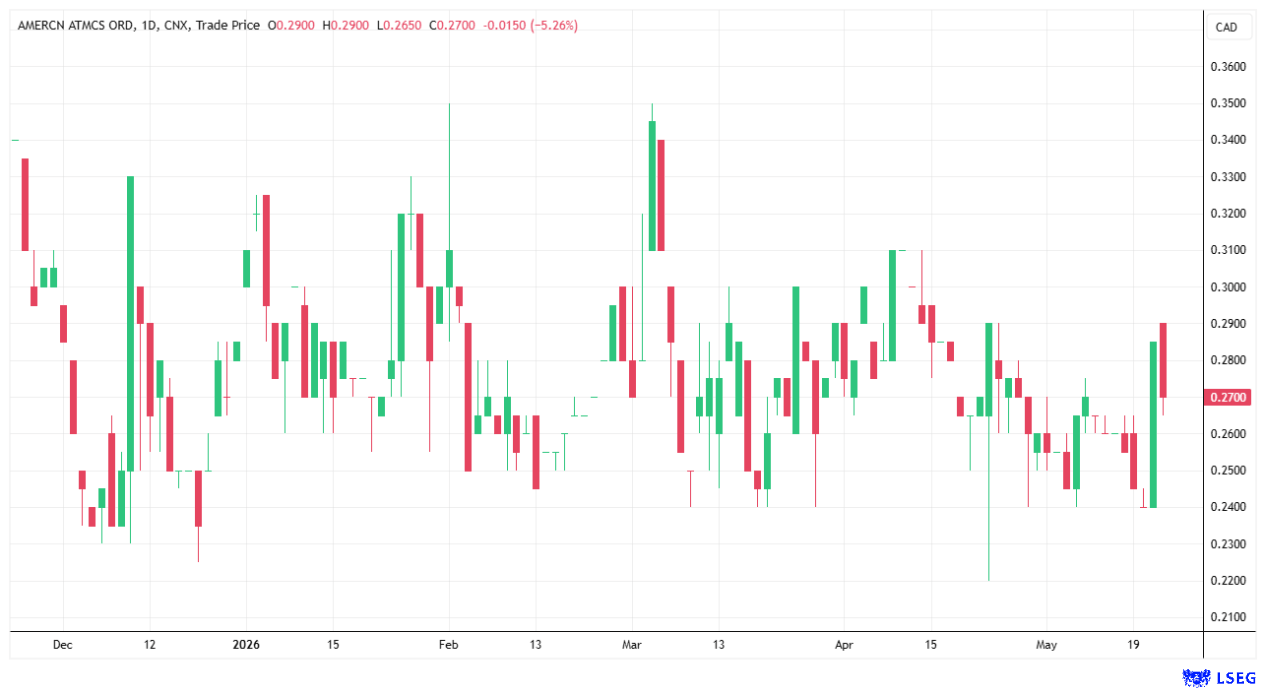
Scarcity meets the insatiable appetite of tech giants—this sentence sums up the investment story surrounding American Atomics. With a market capitalization of just CAD 13.6 million, the company is a suitable vehicle for profiting. In particular, the scarcity of HALEU fuel for the next generation of reactors is a key driver for American Atomics. Since the company also operates in a secure jurisdiction, it has another ace up its sleeve. The company has many ambitious plans and appears to be tackling them step by step. The stock warrants deeper analysis and, given its low valuation, is always ripe for a dynamic breakout.
Conflict of interest
Pursuant to §85 of the German Securities Trading Act (WpHG), we point out that Apaton Finance GmbH as well as partners, authors or employees of Apaton Finance GmbH (hereinafter referred to as “Relevant Persons”) may hold shares or other financial instruments of the aforementioned companies in the future or may bet on rising or falling prices and thus a conflict of interest may arise in the future. The Relevant Persons reserve the right to buy or sell shares or other financial instruments of the Company at any time (hereinafter each a “Transaction”). Transactions may, under certain circumstances, influence the respective price of the shares or other financial instruments of the Company.
In addition, Apaton Finance GmbH is active in the context of the preparation and publication of the reporting in paid contractual relationships.
For this reason, there is a concrete conflict of interest.
The above information on existing conflicts of interest applies to all types and forms of publication used by Apaton Finance GmbH for publications on companies.
Risk notice
Apaton Finance GmbH offers editors, agencies and companies the opportunity to publish commentaries, interviews, summaries, news and the like on news.financial. These contents are exclusively for the information of the readers and do not represent any call to action or recommendations, neither explicitly nor implicitly they are to be understood as an assurance of possible price developments. The contents do not replace individual expert investment advice and do not constitute an offer to sell the discussed share(s) or other financial instruments, nor an invitation to buy or sell such.
The content is expressly not a financial analysis, but a journalistic or advertising text. Readers or users who make investment decisions or carry out transactions on the basis of the information provided here do so entirely at their own risk. No contractual relationship is established between Apaton Finance GmbH and its readers or the users of its offers, as our information only refers to the company and not to the investment decision of the reader or user.
The acquisition of financial instruments involves high risks, which can lead to the total loss of the invested capital. The information published by Apaton Finance GmbH and its authors is based on careful research. Nevertheless, no liability is assumed for financial losses or a content-related guarantee for the topicality, correctness, appropriateness and completeness of the content provided here. Please also note our Terms of use.
Stockhouse does not provide investment advice or recommendations. All investment decisions should be made based on your own research and consultation with a registered investment professional. The issuer is solely responsible for the accuracy of the information contained herein. For full disclaimer information, please click here.