
- The UAE will leave OPEC on May 1 after a lengthy review
- OPEC’s influence may weaken without one of its top producers
- The move reflects rising tensions with Saudi Arabia and regional instability
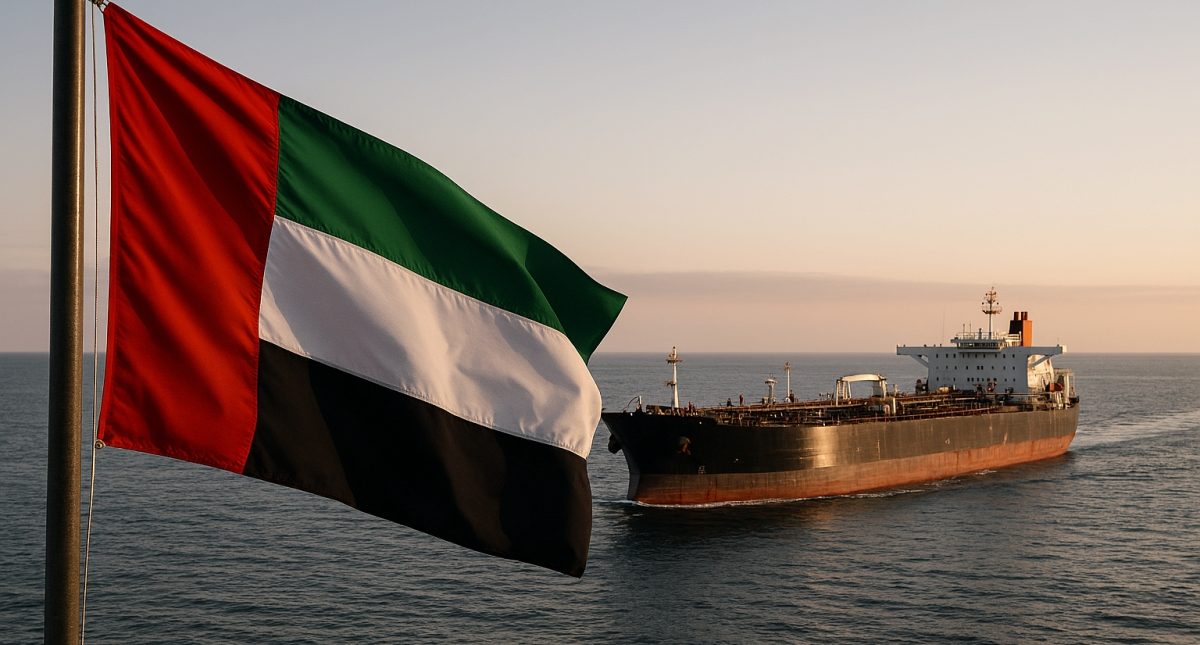
- Strait of Hormuz disruptions have sharply limited UAE oil exports
The United Arab Emirates will withdraw from the Organization of the Petroleum Exporting Countries (OPEC) effective May 1, the state news agency WAM reported this week, marking one of the most consequential shifts in the global oil landscape in years.
The decision follows what officials described as a “comprehensive evaluation” of the country’s strategic and economic priorities, including the impact of ongoing disruptions in the Gulf and the Strait of Hormuz, a critical chokepoint for global energy supplies. The announcement comes a day before a scheduled OPEC meeting in Vienna and is expected to dominate discussions among member states.
This article is a journalistic opinion piece that has been written based on independent research. It is intended to inform investors and should not be taken as a recommendation or financial advice.
The UAE’s exit represents a significant setback for OPEC and OPEC+, a broader production management alliance that also includes major non‑OPEC producers such as Russia. The group, led respectively by Saudi Arabia and Russia, has for years sought to stabilize oil prices through coordinated production quotas and supply management.
With the departure of one of its largest producers, OPEC’s share of the global oil market—and its ability to influence prices—is expected to decline. Analysts say the move could weaken the organization’s leverage at a time when oil markets are already under strain from geopolitical instability and supply disruptions.
The announcement also exposes widening political tensions between the UAE and Saudi Arabia, long-standing allies that have increasingly found themselves competing for regional influence. In recent years, the two countries have backed opposing factions in conflicts in Yemen and Sudan, while also diverging on economic strategies and approaches to oil production policy within OPEC.
The UAE’s decision comes amid heightened regional instability following the outbreak of the U.S.-Israel war on Iran two months ago. During that conflict, the UAE faced significant drone and missile attacks attributed to Tehran, including strikes on energy-related infrastructure. The resulting security situation has led to what officials described as the effective closure of Iran’s Strait of Hormuz, sharply curtailing the UAE’s ability to export oil.
The strait, which connects the Persian Gulf to global markets, is one of the world’s most vital maritime trade routes, with a substantial portion of global oil shipments transiting through it daily. Prolonged disruption has posed a severe challenge to the UAE, whose oil revenues have underpinned its economic development and geopolitical influence since the 1960s.
Despite the immediate shipping disruptions, the WAM statement noted that medium‑ and long‑term global trends still indicate rising demand for energy. Officials emphasized that the UAE intends to pursue production and export strategies that better align with its national interests, free from the constraints of collective production quotas.
Before output declined due to the conflict with Iran, the UAE produced approximately 3.4 million barrels per day in March, accounting for more than 16 percent of total OPEC output. The country has ambitious plans to raise production capacity to 5 million barrels per day by 2027, a target that has previously been a point of contention within the organization.
Debate over a potential UAE withdrawal from OPEC had been ongoing for several years. In 2023, The Wall Street Journal reported that internal discussions were already underway, reflecting long‑standing frustration within the UAE over production limits that it argued failed to reflect its expanding capacity and investment in upstream infrastructure.
The UAE is not the first Gulf producer to leave OPEC in recent years. In 2019, regional neighbour Qatar withdrew from the organization, citing its significant shift toward natural gas production and the belief that OPEC membership no longer aligned with its economic priorities.
Market reaction to the announcement was closely watched, with traders assessing the implications for future supply coordination and price volatility. While the immediate operational impact may be limited due to existing shipping constraints, analysts said the UAE’s departure signals a broader fragmentation of producer unity at a moment of heightened geopolitical risk.
As OPEC meets in Vienna without one of its most prominent members, questions remain about the group’s future cohesion—and its ability to shape global energy markets in an increasingly uncertain world.
Join the discussion: Find out what the Bullboards are saying about oil and gas and check out Stockhouse’s stock forums and message boards.
Stockhouse does not provide investment advice or recommendations. All investment decisions should be made based on your own research and consultation with a registered investment professional. The issuer is solely responsible for the accuracy of the information contained herein. For full disclaimer information, please click here.