
Volatus Aerospace: The Next Step
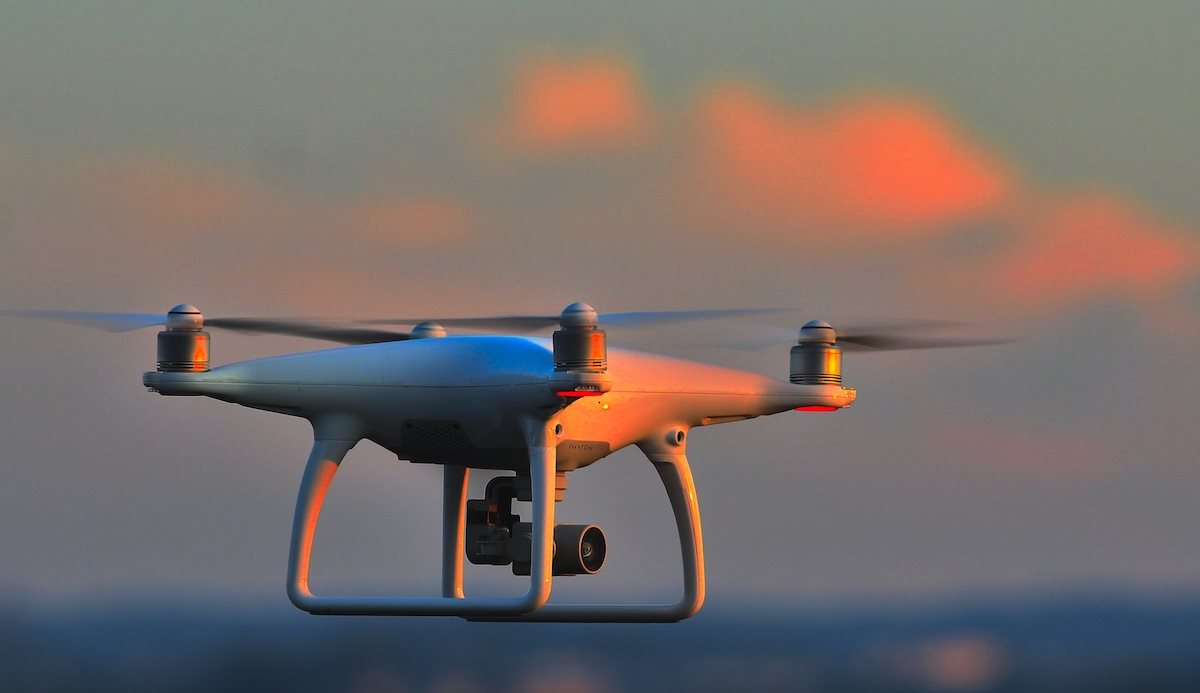
Volatus Aerospace’s drone strategy is taking shape. At the end of June, the Canadian company began operations at a new production and integration facility at Montréal-Mirabel International Airport. The facility, spanning approximately 4,900 sqm, is set to become the industrial heart of the group. The first drone docking stations are already in production. Next, production of the company’s own V-Series aircraft is set to begin there.
This is an important developmental step for Volatus. Until now, the company has been perceived primarily as a provider of drone services, training, and aerial reconnaissance. In the future, the group aims to position itself more strongly as an integrated aviation and defence technology provider. Its platform ranges from manned and unmanned aircraft systems, through reconnaissance services and training, to proprietary software and in-house manufacturing.
In doing so, Volatus is responding to the political desire for independent supply chains. Canada, the US, and other NATO countries aim to become less dependent on Chinese manufacturers for drones and key components. The new production facility in Mirabel is therefore intended not only to supply Canadian customers but also to fulfill orders from allied NATO countries. With the funds raised from the capital increase completed in June, Volatus is financially equipped for this expansion. The gross issue volume amounted to CAD 34.5 million.
A potential door-opener to the massive US defence market is the so-called Drone Dominance Program. Volatus has been selected for the next evaluation phase of the US initiative. The company is competing with an attack drone designed for longer ranges. In the coming stages, the systems’ operational capability and production readiness, among other factors, will be tested. The total program budget is USD 1.1 billion. While participation does not yet guarantee Volatus a contract, a successful qualification could catapult the company into an entirely new league.
Volatus also aims to differentiate itself more strongly on the technological front. With V-Cortex, the company has unveiled a control and autonomy platform it developed in-house. The system combines flight control, software, and artificial intelligence. It enables drones to operate without satellite navigation, process data directly on board, and make certain decisions autonomously. Such capabilities are particularly in demand in military operations where GPS signals are jammed. Added to this is the business of defence systems against hostile drones. At the Farnborough Airshow, Volatus presented its own SKYDRA software alongside autonomous flight systems. This software is designed to support security agencies, the military, and operators of critical infrastructure in planning and preparing for drone defence. Volatus thus covers both the deployment and the countermeasures against unmanned systems.
Operationally, however, the company is still in its early stages. In the first quarter of 2026, revenue of CAD 5.6 million was nearly on par with the previous year. The gross margin showed positive growth, rising from 32% to a record high of 35%. At the end of March, Volatus had cash and cash equivalents of CAD 31.7 million and working capital of CAD 36.4 million. The subsequent capital increase has significantly expanded the company’s financial flexibility once again. Even more importantly, Volatus estimated its order pipeline at approximately CAD 600 million as of the end of March. For a company of this size, that is more than impressive. Management also expects recurring revenue of approximately CAD 20 million for 2026.
The capital market story is also gaining momentum. Following the move to the Toronto Stock Exchange, the stock is more accessible to institutional investors. Investors have long been speculating about whether further capital market moves might follow in the medium term. There is also takeover speculation. Major defence and technology conglomerates are under pressure to quickly establish a foothold in the drone sector. Building their own platforms takes time. Smaller specialists with proven technology, operational experience, and government references can therefore quickly become targets. Volatus would be of interest to larger players because the company offers not just individual drones, but an entire ecosystem encompassing production, software, training, and operations.
However, the company is still reporting losses. The key factor now will be whether Volatus can convert its well-stocked project pipeline into larger production orders and rising revenue. If the company successfully makes the transition from individual services and development projects to scalable production, the stock has considerable potential. The five banks and analyst firms that cover the stock all recommend buying it. The average price target is CAD 1.04, which is 114% above the current share price of around CAD 0.46. Volatus Aerospace therefore has the potential to double from current levels. However, given the company’s early stage of development, the stock remains a speculative investment.
Alzchem: Margin Continues to Rise
While Volatus is still very much a long-term play, Alzchem is already delivering strong profits. The specialty chemicals group increased revenue by 6% to EUR 303.9 million in the first half of the year. EBITDA rose disproportionately by 14% to EUR 64.5 million. As a result, the EBITDA margin improved from 19.6% to 21.2%. Earnings are increasingly driven by the high-margin Specialty Chemicals segment, where revenue rose by 10% to EUR 214.3 million. EBITDA even climbed by 19% to EUR 64.1 million. With an EBITDA margin of 29.9%, Alzchem is performing exceptionally well in this business.
The growth drivers could hardly be more different. With Creapure and Creavitalis, Alzchem is benefiting from the global fitness and health trend. These creatine products are used in dietary supplements. A second boost comes from the defence industry. Alzchem produces nitroguanidine and guanidine nitrate; these chemicals are essential components of propellants for artillery ammunition and key raw materials for propellants and other military applications. The additional capacity at the German site is expected to become available gradually in the second half of the year. Alzchem also plans to establish its own nitroguanidine production facility in the US state of South Carolina. This will position the company closer to its North American customers and allow it to benefit from the development of local defence supply chains. According to the company, Alzchem is the only supplier in the Western Hemisphere. This results in strong pricing power, high barriers to entry, and above-average demand visibility.
For CEO Andreas Niedermaier, the defence business is an attractive niche market with structural demand growth. As a result, the segment is evolving from an optional side business into a key focus of capital allocation. NATO’s long-term investment strategy through 2035 provides a tailwind. According to this strategy, at least 3.5% of each country’s gross domestic product is to be allocated to core defence, with up to an additional 1.5% going toward defence- and security-related areas. These include, for example, resilience, innovation, and the strengthening of the industrial defence base. For European supply chains, this points to a multi-year expansion of capacities and inventories—particularly for ammunition and energetic materials. Alzchem therefore plans to invest more than EUR 400 million over the next four to five years. In the short term, the substantial investment program will put pressure on cash flow. In the medium term, however, it opens up significant potential for capacity and earnings.
For 2026, management continues to expect revenue of around EUR 600 million and EBITDA of around EUR 126 million. Following the sharp rise in the share price, the stock is no longer a bargain. The 2027 P/E ratio stands at over 20, which is about 20% above the industry average. However, given the high margins, strong market position, and new capacity, a premium is justified—and the growth story remains intact. Analysts, on average, expect the stock to reach prices above EUR 200, putting the average upside potential at over 30%. Weaker trading days present good opportunities to buy.
Siltronic: The Turnaround Is Gaining Momentum
Investors are betting on a comeback for Siltronic. The silicon wafer manufacturer has long suffered from high customer inventories, price pressure, and weak demand from the automotive, smartphone, and PC industries. Now, signs are mounting that the cyclical trough may have been passed.
In the second quarter, revenue increased by 4.9% quarter-over-quarter to EUR 321.6 million. Siltronic thus exceeded the Bloomberg consensus by about 2%. EBITDA improved from EUR 65.1 million to EUR 69.4 million and was about 5% above expectations. The EBITDA margin rose from 21.2% to 21.6%. Since price, product mix, and exchange rate effects had virtually no impact, the improvement was primarily driven by higher sales volumes, better capacity utilization, and the associated economies of scale in fixed costs.
Of particular importance is that the recovery in demand is broadening. Business with modern 300 mm wafers for memory and logic applications has been developing robustly for several quarters now. Existing factories are operating at high capacity utilization. Customers are requesting additional volumes and are beginning to secure their supply for the next two to three years.
Meanwhile, a turnaround is also emerging in the previously weak market for 200 mm wafers. Siltronic is once again hiring additional staff and reports a significant increase in demand. Initial discussions regarding new long-term contracts are also underway. Drivers include power semiconductors for data center power supply and energy management. As a result, the recovery no longer depends solely on AI-related applications for larger wafers.
The Executive Board has therefore raised its revenue outlook slightly. Instead of a decline in the mid-single-digit percentage range, a decline in the low to mid-single-digit percentage range is now expected for 2026. Adjusted for exchange rate effects and the discontinuation of smaller wafer formats, revenue could reach or slightly exceed the previous year’s level. The forecast for the EBITDA margin remains at 20 to 24%.
The next major lever is pricing. For smaller 300 mm volumes not covered by long-term contracts, Siltronic is already seeing initial improvements. However, the price level still falls short of the level required for long-term reinvestment. For 200 mm wafers, prices are initially expected to stabilize in the second half of the year. If prices also begin to rise following the increase in sales volumes, this is likely to have a disproportionately large impact on earnings and cash flow due to the high proportion of fixed costs.
This development is still being overshadowed by high depreciation charges on the new factory in Singapore. As a result, Siltronic reported a net loss of EUR 130 million in the first half of the year. However, capacity utilization at the new facility is increasing. By the end of the year, its EBITDA margin is expected to approach the Group average. Starting in 2027, additional production volumes could therefore have a significantly greater impact on earnings.
Analysts at DZ Bank expect revenue of EUR 1.32 billion for 2026. Revenue is projected to rise to EUR 1.45 billion next year and to EUR 1.60 billion in 2028. At the same time, free cash flow is expected to improve from EUR 1.00 per share this year to EUR 4.36 in 2027 and EUR 6.49 in 2028. The capital increase totaling EUR 273 million gross has also strengthened the balance sheet and reduced net financial debt to EUR 691.9 million.
Due to the broadening recovery in demand, DZ Bank has upgraded the stock from “Hold” to “Buy.” The fair value is EUR 87. Deutsche Bank even sets a price target of EUR 100. On average, the current price target of the 13 analysts covering the stock stands at EUR 92. The recovery is still volume-driven, while a sustainable price turnaround has yet to materialize. However, this is precisely where the additional potential lies. Following the significant share price decline, the stock offers an interesting turnaround opportunity.
The trio presented here covers a broad spectrum of opportunities and risks. Volatus Aerospace, as a speculative drone play with the potential to double in value, offers the greatest upside potential. Alzchem, on the other hand, impresses with high profitability, and Siltronic with an increasingly tangible turnaround in its operating business. Volatus now needs to secure major orders; an investment here is particularly suitable for speculative investors who are willing to accept high volatility and operational risks in exchange for significant upside potential. Alzchem, on the other hand, is a solid, high-quality stock and offers the most balanced profile. The stock appeals to growth-oriented investors who are betting on a profitable, high-quality company—but given its ambitious valuation, prospective buyers should wait out any pullbacks first. Siltronic has yet to see a turnaround in its share price; the stock is well-suited for countercyclical investors with patience who are betting on a sustainable recovery in the semiconductor industry and rising wafer prices.
Conflict of interest
Pursuant to §85 of the German Securities Trading Act (WpHG), we point out that Apaton Finance GmbH as well as partners, authors or employees of Apaton Finance GmbH (hereinafter referred to as “Relevant Persons”) may hold shares or other financial instruments of the aforementioned companies in the future or may bet on rising or falling prices and thus a conflict of interest may arise in the future. The Relevant Persons reserve the right to buy or sell shares or other financial instruments of the Company at any time (hereinafter each a “Transaction”). Transactions may, under certain circumstances, influence the respective price of the shares or other financial instruments of the Company.
In addition, Apaton Finance GmbH is active in the context of the preparation and publication of the reporting in paid contractual relationships.
For this reason, there is a concrete conflict of interest.
The above information on existing conflicts of interest applies to all types and forms of publication used by Apaton Finance GmbH for publications on companies.
Risk notice
Apaton Finance GmbH offers editors, agencies and companies the opportunity to publish commentaries, interviews, summaries, news and the like on news.financial. These contents are exclusively for the information of the readers and do not represent any call to action or recommendations, neither explicitly nor implicitly they are to be understood as an assurance of possible price developments. The contents do not replace individual expert investment advice and do not constitute an offer to sell the discussed share(s) or other financial instruments, nor an invitation to buy or sell such.
The content is expressly not a financial analysis, but a journalistic or advertising text. Readers or users who make investment decisions or carry out transactions on the basis of the information provided here do so entirely at their own risk. No contractual relationship is established between Apaton Finance GmbH and its readers or the users of its offers, as our information only refers to the company and not to the investment decision of the reader or user.
The acquisition of financial instruments involves high risks, which can lead to the total loss of the invested capital. The information published by Apaton Finance GmbH and its authors is based on careful research. Nevertheless, no liability is assumed for financial losses or a content-related guarantee for the topicality, correctness, appropriateness and completeness of the content provided here. Please also note our Terms of use.
Stockhouse does not provide investment advice or recommendations. All investment decisions should be made based on your own research and consultation with a registered investment professional. The issuer is solely responsible for the accuracy of the information contained herein. For full disclaimer information, please click here.