
Steyr Motors: The Indispensable Powertrain in the Defence Industry
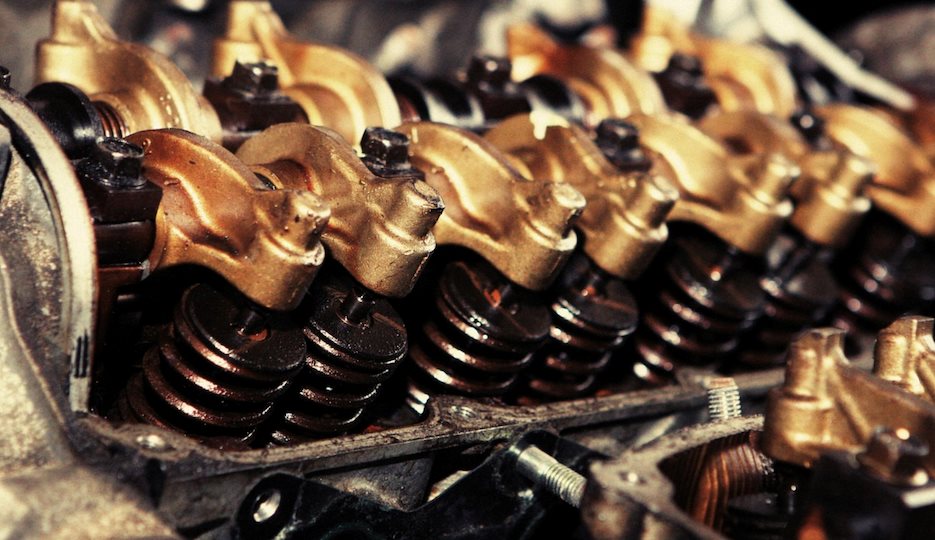
The story begins with the mechanical foundation: the monoblock diesel engine from Steyr Motors. In the M14 and M16 series, the cylinder head and cylinder block are cast as a single piece, eliminating the need for a cylinder head gasket that could blow out under extreme stress. This makes the engines robust, durable, and efficient at cooling, while offering comparatively low weight and high power density. Added to this is their multi-fuel capability. In an emergency, the engines run not only on regular diesel but also on kerosene or low-grade fuels—a critical feature for deployment in crisis zones.
These characteristics have made Steyr Motors a sought-after defence supplier. Around 60 to 70% of its revenue now comes from the military sector. Rheinmetall installs the Austrian-made engines in the new Panther main battle tank, and KNDS, the manufacturer of the Leopard 2, is one of its most prominent customers. Once a Steyr engine is integrated and certified by the relevant defence ministry, it is virtually impossible to replace it with a competing product for decades—a moat that competitors can hardly overcome. In addition, the Austrian company supplies mobile power sources for military camps and drone defence, as well as drive systems for locomotives—with Siemens as its largest customer in this segment.
Nevertheless, the stock has recently taken a significant hit. Following a downward revision of its forecast in August, the share price plummeted from nearly EUR 40 to EUR 27.95. This is not due to a demand problem; the order books are full, but rather to bureaucratic delays in government defence approvals. If, for example, the German Federal Security Council approves the Leopard 2 for export, that alone could generate up to EUR 70 million in additional revenue. For the current year, the company is targeting revenue of EUR 56 to 61 million, an increase of 15 to 25% compared to 2025, with an EBIT margin of 8 to 12%. According to CEO Julian Cassutti, two major orders have so far been only “half-publicly” known: 474 boats for the US Navy SEALs and 1,000 vehicles for a Spanish manufacturer. At an investor event in Heidelberg, Cassutti also recently confirmed earlier takeover talks and hinted that this issue is not yet completely off the table. Those interested in investor conferences outside the mainstream can sometimes obtain information there that the broader market has not yet priced in.
Analysts remain unfazed by the profit warning. Over 85% continue to recommend “Buy”, and there are virtually no “Sell” recommendations. The average price target ranges from EUR 46 to EUR 50, with the highest set by the investment bank Hauck & Aufhäuser at EUR 61. Based on the current price of just under EUR 28, this corresponds to upside potential of 65% to over 100%. For 2027, earnings per share are expected to average EUR 2.11, resulting in a P/E ratio of around 13.2.
dynaCERT: The Smart Bridge for Millions of Diesel Engines
But how does the large fleet of diesel engines align with policymakers’ ambitious CO₂ targets? This is where dynaCERT comes into play—the link between an optimized present and an emission-free future. Engines are not replaced, but rather retrofitted at a low cost. At the heart of the system is HydraGEN™ technology: a suitcase-sized box that generates hydrogen and oxygen from distilled water as needed (or “on demand”). Both gases are fed into the diesel engine’s air intake system. This system does not require a hydrogen tank or a dedicated fueling station. The result: more complete combustion, less unburned fuel, and fewer pollutants.
This results in a classic win-win situation, especially for heavy-duty equipment. According to the company, this can save up to 10% in fuel, reduce soot particles, and cut nitrogen oxides—even when using low-quality fuels, such as those sometimes found in crisis-stricken areas. The hardware is complemented by HydraLytica™, a telematics platform that documents fuel consumption and emission reductions—laying the groundwork for the potential future sale of CO₂ credits in accordance with the methodology certified by the climate protection organization Verra.
From a business perspective, dynaCERT is currently transitioning from a pure retrofit solution to the more sought-after original equipment manufacturer (OEM) business. In June, following the successful completion of a pilot phase, the company received its first production order from a Vietnamese logistics company. At the same time, additional installations are underway at a major port operator, a waste management company near Hanoi, and an oil and gas company; discussions in Cambodia, Indonesia, and Japan are intended to continue the company’s expansion in Asia. Kevin Unrath has been leading the company as CEO for the past six months. “Our focus is on expanding existing relationships, creating new commercial opportunities, and carrying this momentum into 2027,” he said in August, outlining the strategy. The commercialization phase is financially secured by a convertible bond issued in June for CAD 5 million with a 2-year term and a 6% interest rate.
To raise awareness of the technology, dynaCERT is presenting at all major trade shows, including the recently concluded IAA Transportation in Hanover. Unlike in the past, what matters now is less the number of meetings held than the conversion rate into actual orders. The stock is currently trading at around CAD 0.10 (EUR 0.06 on German exchanges). Analysts at GBC Research in Augsburg see a price target of CAD 0.75 or EUR 0.48 —nearly eight times today’s level! From an investor’s perspective, October 7 might therefore be worth marking on the calendar: On this day, Kevin Unrath will present live at the 20th International Investment Forum (IIF), a virtual investor event that is also open to retail investors. As with Steyr Motors at the exclusive event in Heidelberg, they may discuss information there that the broader market has not yet picked up on.
Ballard Power: The Long Road to a Real Turning Point
Where infrastructure allows, development goes one step further. Sooner or later, the internal combustion engine is set to give way to completely emission-free solutions. This is precisely where Ballard Power Systems, a pioneer in PEM fuel cells for heavy-duty vehicles, a type featuring a proton-conducting membrane, positions itself. The company has deliberately opted out of the passenger vehicle market; instead, it supplies powertrains for buses, trucks, trains, ferries and forklifts.
In the meantime, the business model has been fundamentally expanded. With the complete acquisition of the British provider GeoPura for approximately USD 400 million, Ballard is transforming itself from a hardware seller into an energy service provider and is now also building mobile, zero-emission hydrogen power generators. Instead of simply selling the units, they will be leased in the future along with fuel, for example, for construction sites or as emergency power supplies. The model is called “Energy-as-a-Service” and is expected to generate recurring revenue and profitability by 2027.
So far, the stock market has shown little reaction to this. Since its annual high of USD 6.57 in early June 2026, the stock has lost about two-thirds of its value. Three events weighed on the share price: the surprising withdrawal of long-time Chinese partner Weichai Power from the supervisory board shortly after the annual shareholders’ meeting; a miss on quarterly earnings, with revenue of USD 21 million compared to the expected USD 25.7 million; and the reduction of US hydrogen subsidy programs by approximately USD 2.2 billion at the end of August. The analyst consensus has darkened accordingly; only about 12% still recommend a “Buy”, while the majority recommend “Hold”. The average price target, however, remains between USD 3.50 and USD 3.67—well above the current level. Nevertheless, there are significant doubts about whether the company will reach the break-even point next year as planned. On average, experts even expect losses to continue through 2029.
Moreover, the Ballard story is anything but new. For about 30 years, the stock has been traded on the promise of a major breakthrough. Between 1996 and 2000, the price on the Nasdaq rose from USD 10 to well over USD 100, before plummeting to barely more than USD 1 by 2009. Since then, there have been repeated sharp rallies, the most significant of which occurred in late 2020/early 2021, pushing the price to over USD 40. The stock has since come back down to earth at around USD 2.14. In Germany, it is currently trading at EUR 1.85. Investors investing here are buying not only a vision of the future but also a test of patience.
Conclusion: The Eternal Dream and Reality on the Roads
These three companies show that, for the heavy-duty truck industry, the hydrogen and cleantech transition does not mean the immediate end of the internal combustion engine, but its accelerated evolution. Steyr Motors represents an undervalued net asset value that is currently suffering from government bureaucracy. Yet, its order book remains intact, and analysts believe it has enormous upside potential—bolstered by takeover speculation that CEO Cassutti himself has not ruled out. The same goal—and a reminder that diesel is far from obsolete. At 13.2, the P/E ratio for next year is comparatively low for a defence-related company, while neither dynaCERT nor Ballard Power can boast such a ratio, as both are still operating at a loss. One is doing so as planned, because the monetization of its business model is still in its early stages. The other has been waiting a long time to reach break-even. Ballard Power thus remains a long-term bet on complete zero emissions, accompanied by extreme ups and downs over the past three decades, without having achieved a definitive breakthrough to date. In contrast, dynaCERT is the speculative yet logical efficiency lever for millions of existing diesel fleets. Analysts therefore see the greatest price potential here, at around 700%. As different as the three business models may be, at their core they pursue the same goal—and serve as a reminder that diesel is far from obsolete.
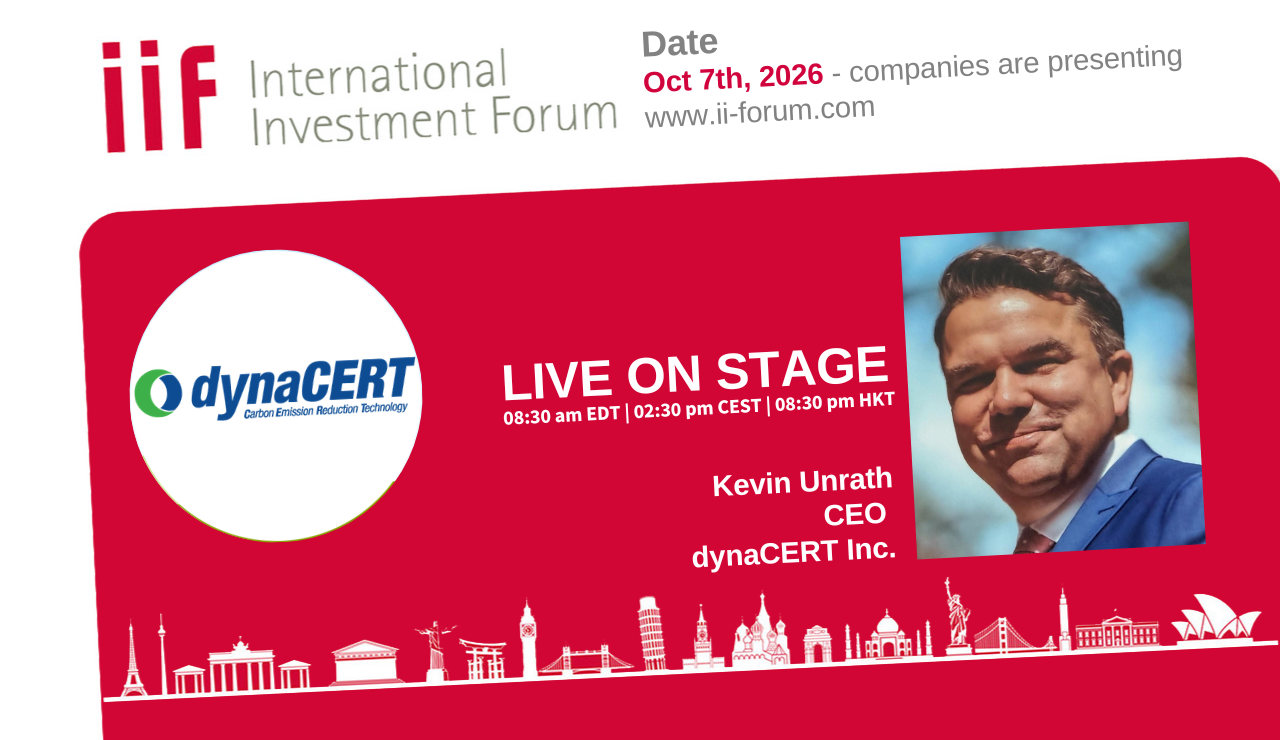
For investors focused on small-cap stocks, the Steyr Motors case offers a lesson: Attending investor conferences outside the mainstream can uncover information that the broader market has not yet priced in. This pattern could repeat itself on October 7 during dynaCERT’s presentation at the International Investment Forum, when CEO Kevin Unrath takes the stage at 2:30 pm CET. Click here to register:
https://us06web.zoom.us/webinar/register/WN_KxUBth5WSYagM_MwU_P4fw#/registration
Conflict of interest
Pursuant to §85 of the German Securities Trading Act (WpHG), we point out that Apaton Finance GmbH as well as partners, authors or employees of Apaton Finance GmbH (hereinafter referred to as “Relevant Persons”) may hold shares or other financial instruments of the aforementioned companies in the future or may bet on rising or falling prices and thus a conflict of interest may arise in the future. The Relevant Persons reserve the right to buy or sell shares or other financial instruments of the Company at any time (hereinafter each a “Transaction”). Transactions may, under certain circumstances, influence the respective price of the shares or other financial instruments of the Company.
In addition, Apaton Finance GmbH is active in the context of the preparation and publication of the reporting in paid contractual relationships.
For this reason, there is a concrete conflict of interest.
The above information on existing conflicts of interest applies to all types and forms of publication used by Apaton Finance GmbH for publications on companies.
Risk notice
Apaton Finance GmbH offers editors, agencies and companies the opportunity to publish commentaries, interviews, summaries, news and the like on news.financial. These contents are exclusively for the information of the readers and do not represent any call to action or recommendations, neither explicitly nor implicitly they are to be understood as an assurance of possible price developments. The contents do not replace individual expert investment advice and do not constitute an offer to sell the discussed share(s) or other financial instruments, nor an invitation to buy or sell such.
The content is expressly not a financial analysis, but a journalistic or advertising text. Readers or users who make investment decisions or carry out transactions on the basis of the information provided here do so entirely at their own risk. No contractual relationship is established between Apaton Finance GmbH and its readers or the users of its offers, as our information only refers to the company and not to the investment decision of the reader or user.
The acquisition of financial instruments involves high risks, which can lead to the total loss of the invested capital. The information published by Apaton Finance GmbH and its authors is based on careful research. Nevertheless, no liability is assumed for financial losses or a content-related guarantee for the topicality, correctness, appropriateness and completeness of the content provided here. Please also note our Terms of use.
Stockhouse does not provide investment advice or recommendations. All investment decisions should be made based on your own research and consultation with a registered investment professional. The issuer is solely responsible for the accuracy of the information contained herein. For full disclaimer information, please click here.