


- Canadian businesses became more cautious after Canada-U.S. trade talks collapsed, with new tariffs and counter-tariffs weighing on confidence and future growth expectations
- Firms reported weaker outlooks for exports and investment, while concerns about higher costs and inflation increased
- Despite the setback, overall business sentiment remained stronger than during the peak of trade tensions in 2025
- Consumers also grew more concerned about inflation and recession risks, with trade tensions and energy prices cited as key pressures
Canadian businesses grew more cautious after trade negotiations between Canada and the United States collapsed in late August, with new tariffs and retaliatory measures weighing on sentiment, according to the latest surveys from the Bank of Canada.
The central bank said results collected after the breakdown in talks on Aug. 21 showed renewed trade tensions are dampening business confidence, weakening outlooks for exports and investment, and increasing concerns about inflation.
While overall business sentiment improved during the third quarter compared with the previous three months, much of that optimism was recorded before negotiations between the two countries fell apart. Roughly three-quarters of responses for the quarterly Business Outlook Survey—Third Quarter of 2026 were gathered before the collapse in talks and the announcement of new Canadian counter-tariffs.
This article is a journalistic opinion piece that has been written based on independent research. It is intended to inform investors and should not be taken as a recommendation or financial advice.
The survey found firms initially reported stronger sales expectations, improved export prospects and solid investment plans, helped by resilient U.S. demand, elevated commodity prices and easing concerns about geopolitical risks in the Middle East.
However, the central bank said more recent responses paint a less optimistic picture.
More firms reported favourable business conditions than in the previous quarter
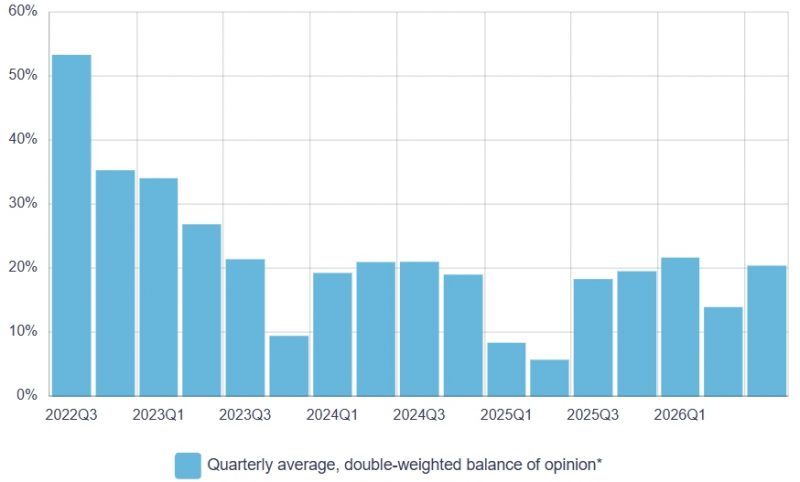
Businesses reported that the renewed trade dispute is raising costs, putting upward pressure on prices and making it more difficult to plan future investments. Inflation expectations also increased following the return of tariffs and a recent rise in energy prices.
Despite the deterioration, business confidence remains considerably stronger than during the height of trade tensions in 2025, suggesting companies view the latest setback as a moderation in conditions rather than a fundamental shift in the economic outlook.
The Bank of Canada’s business outlook indicator edged up to -0.33 in the third quarter from -0.38 in the previous quarter, reflecting modest improvement overall. Hiring intentions, however, remained subdued, with most firms planning to maintain current staffing levels rather than expand payrolls.
A separate Canadian Survey of Consumer Expectations found households are also becoming more worried about inflation. Consumers cited tariffs, trade tensions and energy prices as the leading factors likely to drive prices higher. Those surveyed after the collapse in trade talks reported higher inflation expectations and were more likely to believe the worst economic effects of the dispute are still ahead.
The consumer survey also showed that while Canadians generally felt better about their personal finances and labour market prospects, spending intentions remained weak amid elevated prices and ongoing economic uncertainty. More than half of respondents continued to expect a recession within the next 12 months.
The findings come just days before the Bank of Canada is scheduled to announce its next interest rate decision, with policymakers closely monitoring whether higher energy costs and tariffs begin feeding broader inflation pressures across the economy.
Join the discussion: Find out what the Bullboards are saying about Canadian banks and check out Stockhouse’s stock forums and message boards.