
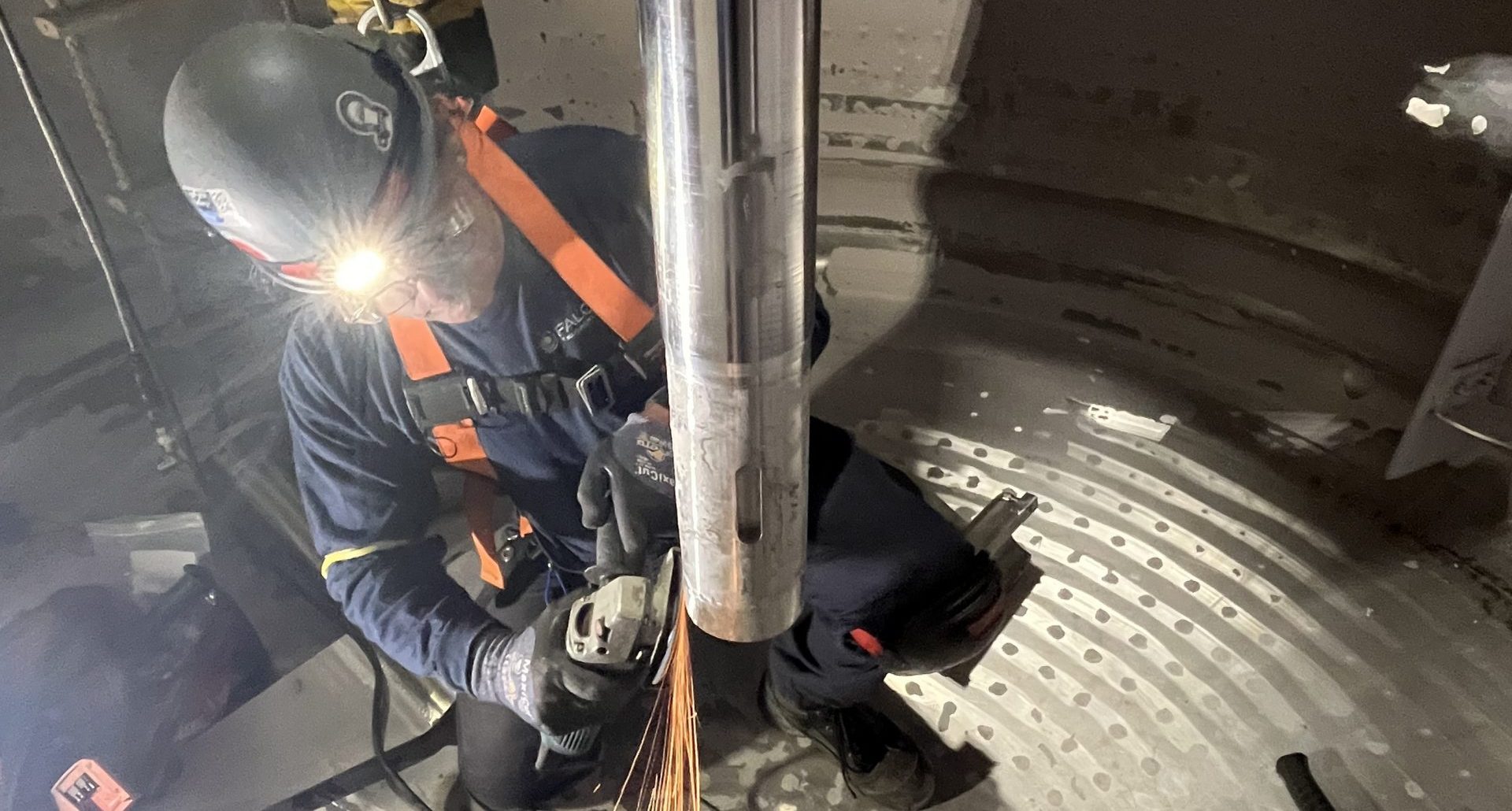

- Nano One’s stock (TSX:NANO) has struggled as investors shift their focus from battery technology potential to commercial contracts and recurring revenue
- A Democrat-controlled government could support battery manufacturing and domestic supply chains, creating a more favourable environment for Nano One’s technology
- The company is expanding its Candiac facility, advancing customer qualification programs, and targeting its first commercial LFP agreement in early 2027
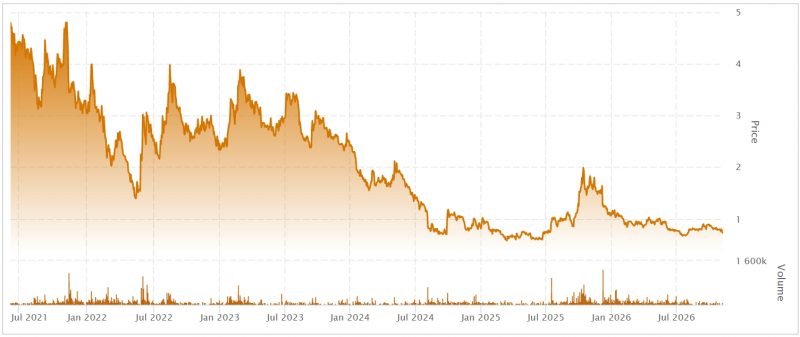
- Nano One Materials stock (TSX:NANO) opened trading at $0.75
Over the past five years, Nano One Materials (TSX:NANO) has had some impressive highs, but concerning lows.
Starting out as one of Canada’s most closely watched battery technology companies, the company stepped into the spotlight during the electric vehicle boom of 2020 and 2021, when investors were aggressively pursuing opportunities tied to battery materials, critical minerals, and North American supply chain development.
Since then, however, Nano One’s share price has steadily declined, leaving investors wondering whether the company’s long-awaited commercialization efforts can finally translate into meaningful revenue growth. With the possibility of a fresh Democrat-controlled government in Washington, some investors are also asking whether changing political winds south of the border could provide an additional tailwind.
This article is a journalistic opinion piece that has been written based on independent research. It is intended to inform investors and should not be taken as a recommendation or financial advice.
Why has Nano One’s stock struggled?
The decline in Nano One’s share price largely reflects a broader shift in investor sentiment rather than a collapse in the company’s business plan.
During the EV boom, many battery-related stocks were valued primarily on future potential. Investors placed significant value on Nano One’s patented One-Pot cathode production process, which aims to simplify battery material manufacturing, reduce waste, lower production costs, and strengthen local supply chains.
As interest rates rose and the EV sector matured, investors became increasingly focused on commercial execution. While Nano One continued to advance its technology, secure government funding, and establish strategic relationships, the company has yet to generate the type of recurring commercial revenue many shareholders expected several years ago.
Today, the market is no longer evaluating whether Nano One’s technology has promise. Instead, investors are asking whether the company can successfully convert years of development and customer qualification work into long-term commercial contracts.
Could Democrat policies help Nano One?
A Democrat-controlled House and Senate could be broadly supportive of the environment in which Nano One operates.
Historically, Democrats have favoured policies that promote electric vehicle adoption, battery manufacturing, clean energy infrastructure, and domestic supply chain development. Incentives supporting North American battery production could encourage additional investment in local manufacturing capacity and reduce dependence on overseas suppliers.
For Nano One, that matters because its technology is designed to support exactly those objectives. The company’s One-Pot process seeks to enable more efficient production of lithium iron phosphate (LFP) cathode materials while reducing environmental impacts and strengthening regional supply chains.
However, investors should recognize that any benefit would likely be indirect rather than immediate. Government policy alone does not guarantee commercial success. Ultimately, Nano One still needs customers to adopt its technology and enter into revenue-generating agreements.
In other words, a favourable policy environment may create opportunities, but it is unlikely to eliminate the execution risks that remain.
Recent progress shows commercialization efforts continue
Despite the stock’s weak performance, Nano One has continued to make progress operationally.
In its latest update, the company announced that detailed engineering for the expansion of its Candiac, Québec facility has been completed and construction is now underway. The project is expected to be completed during the first quarter of 2027, with commissioning scheduled for the second quarter.
Following the expansion, Nano One’s planned LFP cathode production capacity will increase to approximately 800 tonnes annually, up from the existing 200-tonne pilot-scale capability. The expanded facility is intended to support commercial sales, customer qualification programs, and the company’s broader commercialization strategy.
The company also reported progress in customer engagements. Nano One stated that product performance improvements during 2026 have expanded discussions across defence, energy storage, battery manufacturing, and automotive markets. Qualification work is ongoing with cell manufacturers and an automotive original equipment manufacturer (OEM).
“The team has been progressing well on the product and with potential customers this year and I am confident the current discussions will result in our first commercial agreement,” Nano One’s chief operating officer, Denis Geoffroy, said in a news release. “Shifts in customer timelines and specification requirements are simply the nature of qualification work—we have run multiple retrofits and product iterations with global tier-1 companies, and I stand behind the material we are producing at our Candiac Facility. Our goal remains the same: to lock in multi-year purchase commitments that generate revenue, advance commercialization and create long-term shareholder value.”
Management expects its first commercial LFP agreement to be signed in the first quarter of 2027, although the timeline has been pushed back as customers continue qualification programs and refine their battery specifications.
The investment thesis remains intact, but unproven
For long-term investors, the central Nano One thesis has not fundamentally changed.
The company continues to possess technology that addresses several important industry challenges, including manufacturing efficiency, supply chain security, production costs, and environmental sustainability. These themes align well with many of the policy goals traditionally supported by Democratic lawmakers.
The challenge is that the market now wants evidence of commercial adoption rather than technological validation.
If Nano One successfully secures multi-year supply agreements, licensing deals, or substantial offtake commitments, the stock could attract renewed investor interest. Conversely, additional delays in commercialization could make it increasingly difficult for the company to regain market confidence.
Investor’s corner
A Democrat-controlled government could create a more favourable policy backdrop for companies involved in battery manufacturing and domestic supply chains, which may indirectly benefit Nano One. However, the company’s future ultimately depends less on politics and more on its ability to convert customer qualification programs into signed commercial agreements and recurring revenue.
Nano One Materials Corp. is a clean technology company with a patented, scalable and low-carbon intensity industrial process for the low-cost production of high-performance lithium-ion battery cathode materials. The company boasts partnerships with the likes of BASF, Umicore and Rio Tinto.
Nano One Materials stock (TSX:NANO) opened trading around 1.30% higher at $0.74 but is trading 30% lower than where it was at the beginning of the year.
Join the discussion: Find out what everybody’s saying about this Canadian small-cap stock on the Nano One Materials Bullboard, and check out the rest of Stockhouse’s stock forums and message boards.