


Electric vehicles (EVs) are one of the most important catalysts behind the green energy transition, with global sales growing from 800,000 vehicles in 2016 to more than 17 million in 2024, increasing the global fleet to almost 58 million vehicles displacing more than 1 million barrels of oil consumption per day.
The International Energy Agency (IEA) expects this growth to carry on unabated, with total EVs almost quadrupling by 2030 to more than 250 million units, representing about 15 per cent of vehicles on the road, exponentially reducing global reliance on fossil fuels.
This article is disseminated in partnership with Graphite One Inc. It is intended to inform investors and should not be taken as a recommendation or financial advice.
That said, the lithium-ion batteries EVs rely on for power generation need critical minerals to function, many of which traverse unstable supply chains expected to complicate long-term demand. This is especially true among Western countries and their allies, who must contend with China’s average 70 per cent share of refining capacity for 19 out of 20 strategic critical minerals identified by the IEA.
Graphite’s oncoming deficit is a robust investment opportunity
Graphite offers us an illustrative example, as it stands unmatched when it comes to anodes, which facilitate the release of electrons during a battery’s discharge cycle, accounting for more than 95 per cent of the lithium-battery market, according to Benchmark Mineral Intelligence, making the mineral a key catalyst for the energy storage sector and green energy transition at large.
This environmental use-case, representing more than half of global graphite demand, is complemented by electrodes and refractory materials, commanding about a quarter of the market, which rely on graphite’s resistance to high-temperatures to improve the efficiency of industrial furnaces, incinerators and reactors, as well as a wide array of defense technologies spanning drones, ammunition, satellites, fighter aircraft, tactical power systems and radar-absorbent coatings.
All things considered, when we add graphite’s applications in lubricants and the recarburization of iron and steel, the global market is expected to more than double from US$15.67 billion in 2024 to US$36.40 billion by 2030, compounding at a robust 15.1 per cent per year.
However, despite graphite’s essential nature, a deficit with respect to the IEA’s net-zero emissions scenario is expected by 2035, which will only be exacerbated by China’s role as the world’s leading producer – earning an 82 per cent share in 2024, according to Mining Technology – as well as the communist country’s propensity to institute export controls to reinforce its critical mineral stronghold.
This high demand-constricted supply environment is, in turn, creating an incentive for graphite explorers, developers and producers in underserved jurisdictions to progress across the mining lifecycle and bring tonnage to market.
US graphite supply vulnerability
We find one of the highest-potential avenues to put graphite’s long-term value creation thesis in play in the United States, where no large-scale production exists, making the world’s leading economy 100-per-cent dependent on imports, mostly from China, to meet growing batter power demand.
In response to the impending graphite shortage’s threat to economic prosperity, the Biden administration recognized the critical mineral as essential to national interests in 2022 under the Defense Production Act (DPA), instituted in 1950, which grants the president a broad set of measures to bolster domestic critical minerals supply, including loans, purchase agreements and contract prioritizations. This milestone was followed by President Trump signing an executive order in March 2025 to streamline critical mineral permitting, leasing and funding processes.
The US government’s recognition of graphite, specifically focused on reducing reliance on foreign parties, including China, as well as fortifying the domestic battery and clean energy supply chains, beckons investors’ attention to graphite companies with the potential to meaningfully bolster US energy and technological resiliency.
Introducing Graphite One
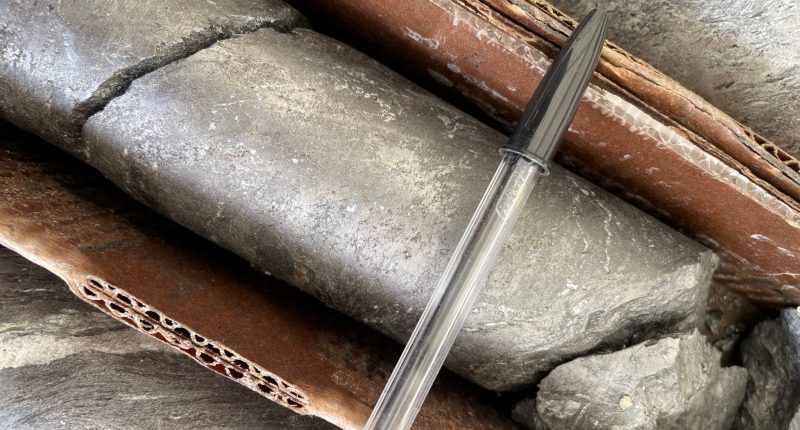
One of the main beneficiaries of the US government’s increased focus on graphite has been Graphite One (TSXV:GPH), a micro-cap company progressing towards vertical integration driven by its flagship Graphite Creek project in Alaska, which is recognized by the US Geological Survey to host the largest known graphite deposit in the US and among the largest in the world.
Resources are estimated at 4.79 million tons of graphitic carbon (Cg) measured and indicated, plus 11.56 million tons of Cg inferred, based on drilling that covers only 12 per cent of the project’s graphite-mineralized zone and doesn’t account for newly discovered rare earth element mineralization reported in November. Referencing imarc‘s estimated price of US$856 per ton of graphite in Q4 2025, Graphite Creek may host in excess of US$10 billion in commodities in the ground.
The mine remains on track for production in 2030 and will be complemented by an active anode material (AAM) manufacturing facility in Ohio expected to come online by 2028, meaningfully contributing to company margins and revenue.
Graphite One was granted US$37.5 million in funding under the DPA in 2023 to complete Graphite Creek’s feasibility study, which leadership delivered on in 2024, followed by a bankable feasibility study in 2025, detailing:
- A post-tax net present value of US$5 billion.
- Average annual production of 256,000 tons of active anode materials (AAM) over a 22-year operational life.
- Average annual production of 175,000 tons of graphite concentrate over a 20-year mine life.
The project is further supported by a C$35 million capital raise closed in February, as well as US$2.07 billion in letters of interest from the Export-Import Bank of the United States, with US$670 million to be allocated to the construction of the Graphite Creek mine and US$1.4 billion to fund the Ohio anode material facility, representing about 70 per cent of the company’s total costs to reach production.
Graphite One intends to submit formal applications for the funding in 2026, highlighting potential eligibility for consideration under Section 402 of EXIM’s 2019 reauthorization, which provides measures to mitigate the impact of export support from China and other strategic countries. The company is also in active discussions with five North American investment banks to secure the remaining 30 per cent of estimated capital costs.
Looking across the next six years, Graphite One’s development plans are both aggressive and cost-conscious, aiming for 10,000 tons per year (tpy) of artificial graphite AAM production by Q4 2027, transforming the company into a cash-flowing entity, surpassing the 25,000 tpy mark by 2030 and the 100,000 tpy mark by 2032.
The company will concurrently move into natural graphite production in 25,000 tpy modules that reduce upfront costs, freeing up resources to strategically grow its customer base, backed by:
- An exclusive license to use proven, commercial-scale AAM manufacturing technology in the US, Mexico and Canada, with negotiations ongoing to enter the United Kingdom, the EU and Saudi Arabia.
- A consulting agreement with AAM manufacturer Chenyu that provides the company with a proven model to build its Ohio facility.
From this position of strength, the company envisions initial production at Graphite Creek by 2030, followed by a diligent ramp up to the 256,000 tons of AAM and 175,000 tons of graphite concentrate laid out in the feasibility study. To this end, the company intends to leverage Graphite Creek’s status as the first mining project in Alaska to be listed on the FAST-41 Permitting Dashboard, which offers a more timely and predictable permitting pathway compared to legacy federal practices.
A pronounced price-value dislocation
According to the Q1 2026 investor deck, at production of 100,000 tons of AAM per year, Graphite One expects to earn just under US$1 billion in revenue and generate about US$530 million in EBITDA. Given the company’s current market capitalization of C$278 million, this would value it at less than 0.5 times EBITDA, more than 12 times less than mining industry multiples calculated by Equidam in July, presenting investors with a data-driven thesis for a significant re-rating.
Graphite One’s high-conviction leadership team
Complementing its in-demand commodity and differentiated flagship asset, Graphite One further de-risks its growth runway with a leadership team experienced across the mining lifecycle.
Notable names include Executive Chair, Doug Smith, who brings more than 35 years in the coal industry, highlighted by leading First Coal and Andalex Resources into M&A transactions, and Founder and CEO, Anthony Huston, who has advised on resource transactions and raised more than US$150 million in capital throughout his career.
These top executives are supported by a technical and operational team well-versed in mine building, mining finance, the graphite materials industry and the Alaskan resource development landscape, reinforcing the company’s vertically integrated pursuit of graphite’s diversified use-cases.
An underappreciated path to US graphite leadership
Graphite One stock remains down by 16 per cent since 2021, missing the memo on the company’s robust investment thesis and near-term path to revenue, likely reflecting the average investor’s reluctance to consider pre-revenue companies, a generalized sense of market uncertainty stemming from Trump’s chaotic governance style, as well as the pronounced difficulty of valuing mining assets, whose economic studies can quickly become overwhelming for those with a low tolerance for the meticulous.
Despite these barriers to entry, as we’ve laid out in this article, the Graphite Creek deposit stands alone as the US’s prime development asset, hosting the largest known graphite resource in the country and one of the largest on the planet – even though it barely covers the land package’s mineralized footprint – while benefitting from strong institutional and governmental interest.
As such, Graphite One presents investors with a high-conviction opportunity to tap into graphite’s multi-pronged value proposition, with EV demand on the tip of consumers’ tongues, commanding the majority of the spotlight, and defense technology quietly driving government policy in the background, rapidly reframing graphite from a commodity to a strategic infrastructure material.
Look out for part two of this three-part series, in which we’ll provide an in-depth analysis of the Graphite Creek deposit, shedding light on its de-risked location, long-term production profile and potential role as a pillar supporting US national security.
Join the discussion: Find out what investors are saying about this vertically integrated critical mineral stock on the Graphite One Inc. Bullboard and make sure to explore the rest of Stockhouse’s stock forums and message boards.
Stockhouse does not provide investment advice or recommendations. All investment decisions should be made based on your own research and consultation with a registered investment professional. The issuer is solely responsible for the accuracy of the information contained herein.
For full disclaimer information, please click here.