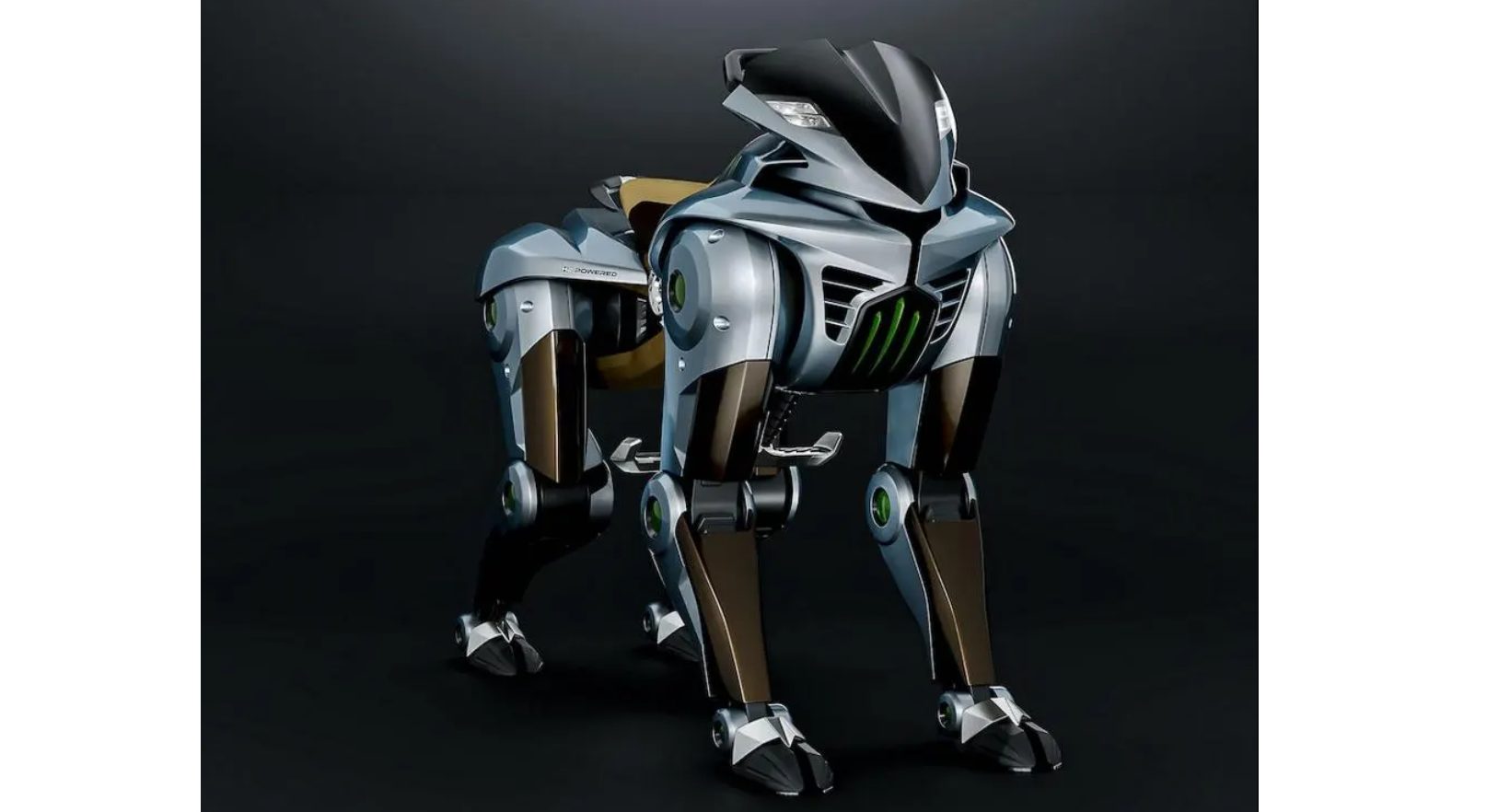

- Kawasaki (OTC Pink:KAIKY) is advancing Corleo, its four‑legged hydrogen‑powered ride‑on robot, with plans for public use at Expo 2030 in Riyadh and commercialisation targeted for 2035
- The company has formed the Safe Adventure Business Development Team to push Corleo beyond concept status, developing both the mobility platform and a 2027 riding simulator with gaming/e‑sports applications
- Corleo blends motorcycle engineering and advanced robotics, using body‑shift controls, independent leg suspension, and hydrogen power to navigate rough terrain as part of Kawasaki’s larger Safe Adventure safety and navigation initiative
- Kawasaki stock (OTC Pink:KAIKY) opened trading at US$14.44
Kawasaki (OTC Pink:KAIKY) is accelerating development of Corleo, its four‑legged, hydrogen‑powered ride‑on robot, with a clear plan to put the machine into public use at Expo 2030 in Riyadh. The concept, first unveiled at Expo 2025 in Osaka, has rapidly evolved from a futuristic curiosity into one of the boldest mobility projects undertaken by a major manufacturer in decades.
A sci‑fi machine with a real deployment timeline
Although Corleo still resembles something out of Star Wars rather than a mainstream showroom product, Kawasaki is no longer treating it as a mere showpiece. According to recent industry reports, the company has formalized a dedicated internal group—the Safe Adventure Business Development Team—which reports directly to the president and is tasked with advancing Corleo toward real‑world use. The immediate target is to have Corleo serve as on‑site mobility transport at the Riyadh Expo, navigating terrain typically inaccessible to conventional vehicles.
Toward commercialisation by 2035
Kawasaki is going further still: the company is already eyeing commercial release around 2035, dramatically accelerating earlier expectations that had once pushed feasibly into the 2050s. This positions Corleo as one of the most ambitious long-range mobility development programs in the industry.
How Corleo works: Robotics meets motorcycling
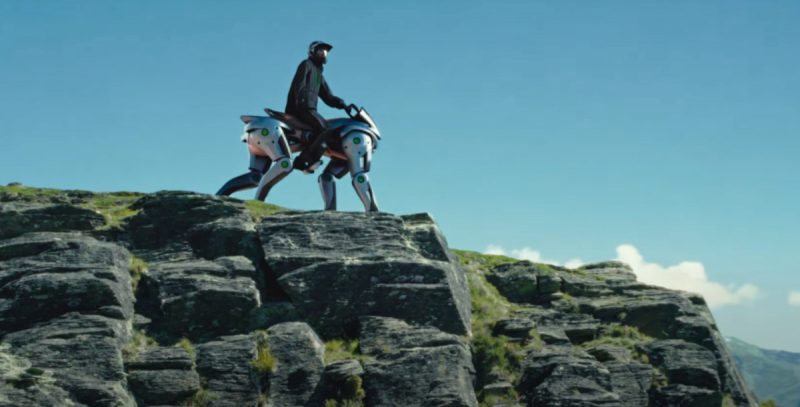
Corleo is pitched as an off‑road personal mobility vehicle, but that description hardly captures its complexity. Riders sit astride the robotic platform and steer not through traditional handlebars but by shifting body weight, effectively controlling it in a manner reminiscent of horseback riding or aggressive motorcycle maneuvering. Kawasaki emphasizes that this level of human‑machine integration is only possible because the company straddles two domains—motorcycle engineering and advanced robotics—which intersect directly in Corleo’s design philosophy.
Advanced mobility for mountainous and remote terrain
From a mechanical perspective, Corleo incorporates a swingarm‑style mechanism that allows its rear legs to articulate independently, absorbing shocks and helping maintain rider stability. This gives it capabilities far beyond wheeled vehicles, including improved handling on rocky slopes, uneven surfaces, and even shallow water. The machine uses electronic assistance layered atop rider weight‑shift controls, enabling even inexperienced users to traverse terrain that would normally require years of off‑road motorcycling skill.
Power comes from a hydrogen internal‑combustion engine that generates electricity for the leg drives.
Simulator development and digital expansion
To demonstrate that Corleo is more than a futuristic display item, Kawasaki is concurrently developing a full riding simulator, scheduled for completion in 2027. The simulator will utilize motion data and 3D models derived from Corleo’s development and is already being eyed for crossover use in gaming and e‑sports—a clear signal of the project’s digital ambitions. A separate announcement confirms users will be able to try a virtual Corleo riding experience as early as next year, even before the robot’s real‑world Expo deployment.
Part of Kawasaki’s “Safe Adventure” initiative
Corleo also anchors Kawasaki’s broader Safe Adventure concept, which aims to reduce accidents in remote and mountainous areas. Beyond the robot itself, the company is developing a navigation system capable of monitoring weather, terrain, temperature, and even wildlife activity, delivering real‑time safety guidance to riders via smartphones and other devices. The goal is a seamless integration of advanced mobility and intelligent data to keep adventurers out of harm’s way.
The road ahead
Whether Corleo ever becomes a common sight beyond Expo grounds is still uncertain. The machine is niche, complex, and at least a decade from consumer availability. Yet Kawasaki’s increasingly firm development roadmap—coupled with its investment in simulation, data systems, hydrogen power, and real‑world expo deployment—suggests the concept has moved well beyond the realm of novelty.
If Kawasaki succeeds, Corleo may redefine what personal off‑road mobility can be, merging robotics, motorcycling heritage, and clean‑energy engineering into a form factor the world has never seen before.
Kawasaki engages in the provision of marine, land, and air transportation services in Japan, the United States, Europe, Asia, and internationally.
Kawasaki stock (OTC Pink:KAIKY) opened trading in the U.S. 18 per cent higher at US$14.44.
Join the discussion: Find out what the Bullboards are saying about Kawasaki and check out Stockhouse’s stock forums and message boards.
Stockhouse does not provide investment advice or recommendations. All investment decisions should be made based on your own research and consultation with a registered investment professional. The issuer is solely responsible for the accuracy of the information contained herein. For full disclaimer information, please click here.