
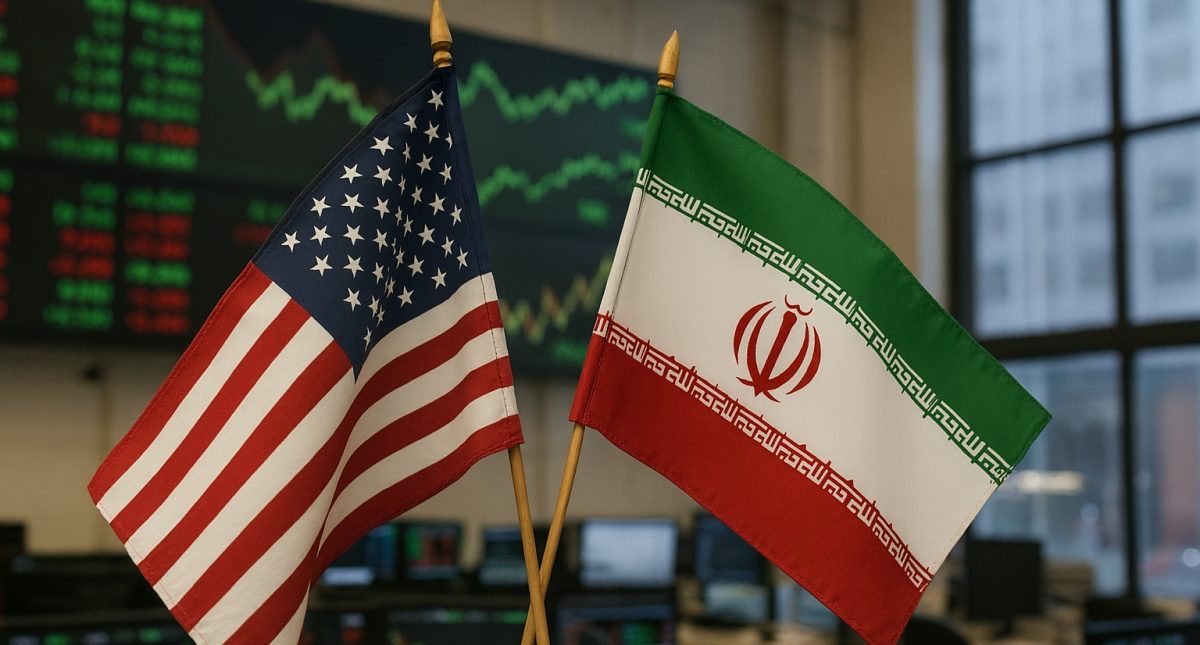

- Renewed U.S.–Iran tensions are the main driver on Monday, after President Trump rejected Iran’s latest proposal, raising doubts about a near-term resolution
- Markets turned cautious, with stock futures slipping and oil prices rising due to concerns over potential disruption in the Strait of Hormuz
- The geopolitical risk comes right after markets hit record highs, making investors more sensitive to negative headlines
- Focus now shifts to inflation data this week, as higher oil prices could complicate the Federal Reserve’s outlook and delay rate cuts
Global financial markets opened the week on uncertain footing as renewed tensions between the United States and Iran re-emerged as the dominant force shaping investor sentiment. After weeks of optimism fueled by strong economic data and record-setting equity gains, developments over the weekend have shifted attention back to geopolitics—particularly the fragile state of negotiations surrounding the Strait of Hormuz, one of the world’s most critical energy chokepoints.
This article is a journalistic opinion piece that has been written based on independent research. It is intended to inform investors and should not be taken as a recommendation or financial advice.
Another sudden shift in market mood
Early Monday trading reflected the change in tone. U.S. stock futures edged lower while oil prices moved higher, signalling a cautious start to the week as investors assessed the latest headlines out of the Middle East.
The immediate catalyst came after U.S. President Donald Trump publicly rejected Iran’s latest response to a proposed framework aimed at de-escalating the conflict. Describing the counterproposal as “totally unacceptable,” the statement cast doubt on the prospects for a near-term diplomatic breakthrough.
Iran, for its part, had indicated a willingness to gradually reopen its Strait of Hormuz to commercial shipping—but only if Washington agreed to lift restrictions on Iranian vessels and ports. The gap between the two positions underscores the ongoing uncertainty, which is now feeding directly into market behaviour.
The Strait of Hormuz won’t be leaving headlines any time soon
The Strait of Hormuz sits at the centre of global energy flows, serving as a narrow passage through which a significant portion of the world’s oil supply travels. Any disruption—or even the threat of disruption—can quickly ripple across commodity markets and broader financial assets.
That sensitivity was evident again Monday, as oil prices climbed on fears that negotiations could stall or deteriorate further. Rising oil prices, in turn, have wider implications for inflation expectations, corporate costs, and consumer demand.
Investors are particularly attuned to this dynamic because energy-driven price pressures had already been a concern in recent months. Even with some easing from earlier peaks, crude prices remain elevated, contributing to ongoing inflation risks across developed economies.
Markets at record highs meet geopolitical reality
The reappearance of geopolitical risk comes at a delicate moment for equity markets. Just days earlier, major U.S. indices had climbed to fresh all-time highs, supported by stronger-than-expected April jobs data and a solid first-quarter earnings season.
The S&P 500 and Nasdaq both posted record closing levels, buoyed by resilient economic indicators and continued strength in technology and artificial intelligence-related stocks.
This backdrop makes markets particularly sensitive to negative surprises. After a prolonged rally—marked by six consecutive weeks of gains—valuations are elevated, and investor positioning is more vulnerable to shifts in sentiment.
As a result, geopolitical headlines that might otherwise have been absorbed more easily are now triggering sharper reactions, especially in pre-market trading.
Inflation and central bank policy in the crosshairs
Beyond the immediate market moves, U.S.–Iran tensions are intersecting with a broader macroeconomic narrative centred on inflation and central bank policy.
Investors are heading into a critical week that includes the release of the U.S. Consumer Price Index (CPI) for April, scheduled for May 12. The report is widely viewed as a key test of whether inflation is stabilizing—or at risk of re-accelerating.
Higher oil prices linked to geopolitical uncertainty could complicate the outlook. If energy costs continue to rise, they may feed into broader inflation measures, potentially delaying expectations for interest rate cuts by the Federal Reserve.
At the same time, markets are also monitoring potential leadership changes at the Fed, with speculation around a transition at the top of the central bank adding another layer of uncertainty.
The convergence of these factors—geopolitics, inflation data, and monetary policy—has created a more fragile environment for risk assets.
A balancing act for investors
For now, investors are attempting to reconcile two competing narratives. On one side is a still-resilient economic picture, characterized by steady job growth and strong corporate earnings. On the other is the reemergence of geopolitical risks that could disrupt supply chains, push commodity prices higher, and dampen global growth.
Recent market behaviour reflects this tension. While equities have not yet seen a broad-based selloff, the modest decline in futures and the uptick in volatility suggest a more cautious stance.
Bond markets are also showing signs of adjustment, with Treasury yields edging higher as investors reassess inflation risks and safe-haven demand.
More pain at the pumps
As the week unfolds, much will depend on the trajectory of U.S.–Iran negotiations and the tone of future statements from both sides. Any sign of progress toward de-escalation could quickly restore confidence, potentially easing oil prices and supporting equities. Conversely, further deterioration in talks may lead to additional market volatility.
At the same time, the imminent release of U.S. inflation data ensures that macroeconomic fundamentals will remain in focus alongside geopolitical developments.
For now, the message from markets is clear: even in a period of strong economic performance, geopolitical risks retain the power to reshape investor sentiment—often with little warning.