
As artificial intelligence expands rapidly, all the energy needed for its processing power has to come from somewhere. Its infrastructure needs are reshaping the electricity grid in profound ways.
Small modular reactors (SMRs) and uranium supply chains are emerging as central pieces of this evolving energy puzzle.
So, here’s what investors need to know—what the data shows, what projects are underway, and what supply risks may affect portfolios.
This article is a journalistic opinion piece which has been written based on independent research. It is intended to inform investors and should not be taken as a recommendation or financial advice.
Rising demand: AI and data centres
A report from the International Energy Agency (IEA) projects that global electricity demand from data centres will more than double by 2030, reaching about 945 terawatt-hours annually. This is driven primarily by AI-optimized data centres.
Electricity consumption from data centres was estimated to be about 1.5 per cent of global electricity consumption in 2024, having grown about 12 per cent per year over the last five years.
“AI is one of the biggest stories in the energy world today,” said IEA Executive Director Fatih Birol. “In the United States, data centres are on course to account for almost half of the growth in electricity demand; in Japan, more than half; and in Malaysia, as much as one-fifth.”
Goldman Sachs research forecasts that power demand from data centres will increase 165 per cent by 2030, relative to 2023. By 2027, they expect AI to represent approximately 27 per cent of data centre power usage.
In the U.S., data centre construction spending hit a record US$40 billion annualized in June 2025, up about 30 per cent year-over-year, largely due to investments from major cloud/AI players.
The evidence suggests that AI isn’t just increasing demand, but also changing the shape of demand: more continuous load, more power per facility, more strain on grid interconnect capacity, transmission, and baseload power.
SMRs: Small modular reactors in play
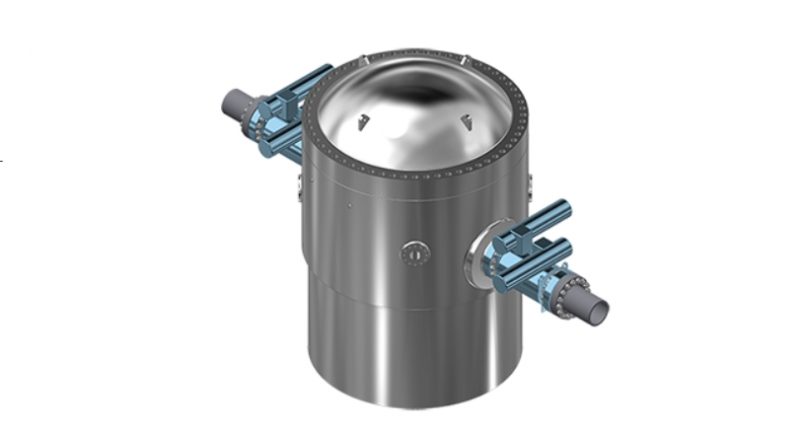
There may be a remedy. SMRs are being positioned as flexible, factory-built alternatives to traditional large nuclear plants, and Canada is a clear example of a jurisdiction moving into SMRs.
Ontario Power Generation (OPG) is building four GE Hitachi BWRX-300 SMRs at its Darlington site. The budget stands at C$20.9 billion, with the first unit expected around 2030. The four units combined will generate about 1.2 gigawatts of baseload power, enough for 1.2 million homes.
OPG projects that deploying and operating the SMRs could contribute C$35.1 billion to Ontario’s GDP over their lifetime.
Saskatchewan’s SaskPower is also evaluating the BWRX-300 design, with a decision due by 2029 for potential mid-2030s deployment.
Fuel & supply chain: uranium and enriched fuels
Many SMRs, including the BWRX-300, require enriched uranium fuel. Some designs need High Assay Low Enriched Uranium (HALEU), which has limited global supply.
However, Canada currently lacks enrichment capacity. This means that SMR projects will depend on international suppliers for enriched fuel.
Existing uranium supply is constrained by long development timelines, regulatory oversight, and production scale. Past cycles have shown delays in mine approvals, environmental permits, and extraction capacity.
Plus, supply disruptions and strong demand continue to create tight market conditions for uranium. Spot prices climbed toward US$100 per pound in 2024–2025 before easing, underscoring how supply lags new demand due to the long lead times required for new mines.
For investors, this creates potential opportunities across uranium miners and fuel-cycle specialists, but also exposes projects to commodity price volatility.
Risks and cautionary parallels
While SMRs and uranium are discussed as solutions to AI’s rising energy demand, they aren’t without challenges.
Large nuclear projects have a long history of delays and cost overruns, and the first wave of SMRs is already showing signs of similar pressures.
Fuel supply chains remain concentrated, with limited enrichment capacity available outside of a few jurisdictions. Beyond economics, there are regulatory and political uncertainties that can affect project timelines and public support.
These risks mirror earlier digital booms such as cryptocurrency mining, where rapid growth in electricity demand outpaced grid planning and led to backlash from governments and regulators.
- Timeline risk: Even in Canada, where political support is strong, Darlington’s first SMR unit is scheduled for 2030. Large-scale rollout could take decades.
- Cost: Early SMR projects are expensive. Darlington’s cost of C$20.9 billion reflects both new construction and the need to establish supply chains.
- Fuel dependencies: Reliance on international enrichment adds geopolitical and supply-chain risk.
- Regulation: Licensing hurdles remain long and complex. In the U.S., NuScale’s (Nuscale Power Corp: NYSE:SMR) flagship Idaho SMR project was cancelled in 2023 due to rising costs, showing how timelines can slip.
Here, the crypto comparison is instructive. When mining surged in Texas, utilities sometimes had to pay miners to shut down during heat waves to protect grid stability.
In Iran, uncontrolled growth led to rolling blackouts and bans. In the U.S., the Environmental Protection Agency and Department of Energy began monitoring crypto mining’s power consumption, which reached between 0.6 per cent and 2.3 per cent of national electricity demand.
The lesson to learn here is that when demand rises faster than supply or regulation, governments intervene. For AI and nuclear, that could mean stricter rules, new permitting requirements, or shifts in public opinion — all of which can impact timelines and costs.
What to consider
The intersection of AI demand, SMR development, and uranium supply is less about broad narratives and more about identifying where capital may flow in the near and medium term.
While large utilities and tech majors are driving headline projects, many of the investable opportunities lie further down the supply chain.
From uranium developers to engineering firms supplying reactor components, there are multiple entry points. Each carries its own exposure to commodity prices, regulatory timelines, and technological risk.
Developers like NexGen Energy and Denison Mines (Denison Mines Corp: TSX:DML) remain leveraged to uranium prices. Tight supply conditions could amplify volatility.
Components for SMRs (e.g. pumps, valves, safety systems) are often sourced from smaller engineering firms that may benefit as projects advance.
Firms with enrichment or fuel fabrication capabilities could see rising demand if SMRs scale, though many remain state-linked.
Public utilities and tech majors are making long-term power purchase agreements, but their projects typically lie outside the small-cap space.
SMRs and uranium are being positioned as solutions to provide clean, reliable baseload power. Yet high capital costs, lengthy licensing timelines, and supply chain dependencies mean risks remain.
For investors, the opportunities in SMRs and uranium lie not in certainty but in recognizing the points where supply, regulation, and demand will intersect. Monitoring project approvals, uranium pricing, and enrichment capacity will be key signals in assessing where small caps may benefit.
NuScale Power Corp. (N.SMR) closed at US$36.16, up 2.79 per cent, while Denison Mines Corp. (T.DML) closed at C$3.32, down 1.63 per cent.
Join the discussion: Find out what the Bullboards are saying about SMRs, uranium, and data centers and check out Stockhouse’s stock forums and message boards.
Stockhouse does not provide investment advice or recommendations. All investment decisions should be made based on your own research and consultation with a registered investment professional. The issuer is solely responsible for the accuracy of the information contained herein. For full disclaimer information, please click here.