
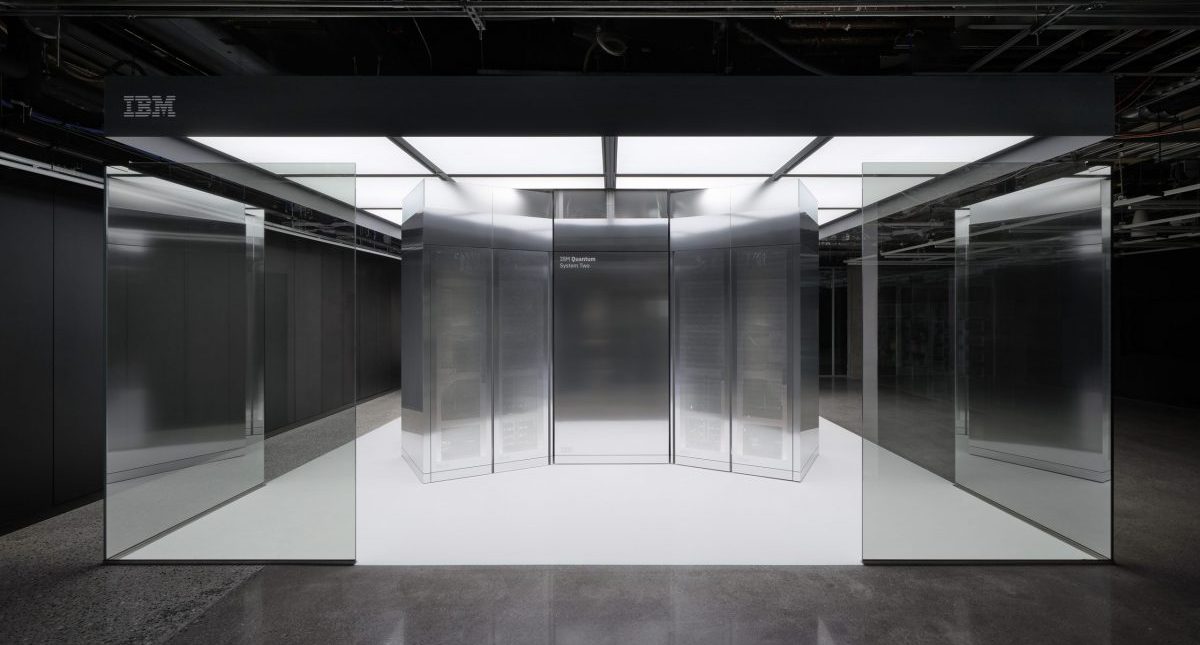

- IBM (NYSE:IBM) plans to invest over US$10 billion in quantum computing over five years to advance toward a fault-tolerant system by 2029
- The funding will support research, manufacturing, partnerships, and a growing global network of quantum systems and users
- The initiative aims to strengthen IBM’s leadership and push quantum technology toward real-world applications across industries
- IBM stock (NYSE:IBM) last traded at US$312.50
IBM (NYSE:IBM) announced that it plans to invest more than US$10 billion in quantum computing over the next five years, a move aimed at accelerating the development of large-scale, fault-tolerant quantum systems and reinforcing its position in the emerging technology sector.
The company said the funding will be directed across multiple areas, including research and development, capital expenditures, manufacturing scale-up, mergers and acquisitions, and ecosystem partnerships. The initiative is intended to advance IBM’s quantum computing roadmap, which targets the delivery of the world’s first large-scale fault-tolerant quantum computer by 2029.
IBM executives framed the investment as part of a broader push to move quantum computing from experimental stages toward real-world commercial applications. “The quantum era is no longer ahead of us, it has started,” Chief Executive Arvind Krishna said in a statement, highlighting growing demand from research institutions, enterprises, and governments.
This article is a journalistic opinion piece that has been written based on independent research. It is intended to inform investors and should not be taken as a recommendation or financial advice.
A focus on fault-tolerant systems
At the center of IBM’s roadmap is “Quantum Starling,” a planned system expected to be operational by 2029. The machine is designed to significantly exceed current capabilities, with the ability to perform tens of thousands of times more operations than today’s quantum computers.
Starling is intended to serve as the foundation for a subsequent system, “Quantum Blue Jay,” which IBM says will handle up to one billion quantum operations across roughly 2,000 logical qubits. Together, these systems represent a shift toward error-corrected, fault-tolerant architectures considered essential for practical applications.
Quantum computers currently operate in what researchers describe as the “noisy intermediate-scale quantum” (NISQ) era, where error rates and instability limit usefulness outside specialized experiments. IBM and other developers are working to overcome these limitations through error correction and scaling techniques.
“The quantum era is no longer ahead of us, it has started. Our clients, partners and users around the world are tapping into IBM quantum computers to do work that was impossible a few years ago,” IBM’s CEO and chair, Arvind Krishna, said in a news release. “The pace of discovery with quantum computers is accelerating rapidly and this investment powers our ability to deliver the next generation of quantum hardware, software, and manufacturing.”
Expanding infrastructure and manufacturing
A key element of the investment strategy involves manufacturing. IBM recently unveiled plans for “Anderon,” a standalone quantum chip foundry in the United States designed to produce quantum wafers at scale. The project is supported by both private investment and government funding, including incentives tied to the U.S. CHIPS and Science Act.
IBM has committed US$1 billion of its own capital to the venture, matching federal support, and intends for the facility to supply chips not only for its own systems but also for other companies. Analysts have noted that the open-foundry model could position IBM as a central manufacturer within the broader quantum ecosystem.
The company said the broader US$10 billion plan will also support the expansion of its global quantum infrastructure, including new systems and facilities. IBM currently operates more than 90 quantum computers worldwide, deployed through both cloud access and on-site installations.
Existing footprint and ecosystem
IBM’s announcement builds on what it describes as the largest quantum computing platform currently available. Its systems are hosted in multiple locations across North America, Europe, and Asia, including research centers and partnerships with universities and hospitals.
The company also maintains a network of over 340 organizations—ranging from corporations to academic institutions—that are actively using its quantum systems for research and early-stage applications. Since 2017, IBM has signed more than US$1 billion in quantum-related contracts, reflecting growing interest in the technology.
On the software side, IBM’s open-source platform Qiskit remains widely adopted, used by a majority of quantum developers globally to build and run algorithms. The platform has executed trillions of quantum circuits, according to company data.
Toward quantum advantage
IBM said it expects to reach a milestone known as “quantum advantage” later this year, when quantum systems can outperform classical computers on certain tasks of practical importance. Early experiments conducted with partners have already demonstrated progress in fields such as molecular modelling and materials science.
Despite these advances, significant technical challenges remain before quantum computing becomes broadly commercial. These include reducing error rates, improving qubit stability, and scaling systems to support complex workloads.
Industry and national context
With US$10 billion, you could purchase 10,000+ luxury $1 million homes, 200 $50 million private jets, or several major sports franchises.
The investment comes amid increased global competition in quantum computing, with governments and technology companies investing heavily in the field. In the United States, federal support for quantum research and manufacturing has expanded in recent years as part of efforts to maintain technological leadership.
IBM’s announcement can be seen as an alignment with this broader push, emphasizing domestic manufacturing and research capabilities. The company said its strategy is designed not only to advance its own technology but also to contribute to a larger ecosystem of partners and suppliers.
Outlook
While commercialization timelines remain uncertain, IBM’s multi-billion-dollar commitment signals continued confidence in quantum computing’s long-term potential. The company’s roadmap suggests a transition from experimental systems to practical, scalable machines over the next decade, with 2029 as a central target for fault-tolerant capability.
Observers say the success of that effort could have far-reaching implications across industries, including pharmaceuticals, finance, logistics, and materials science—areas where quantum computing is expected to eventually solve problems beyond the reach of conventional computers.
About IBM
International Business Machines Corp. is a global hybrid cloud, AI and consulting company with clients in more than 175 countries.
IBM stock (NYSE:IBM) last traded at US$312.50 and has risen more than 20 per cent since this time last year.
Join the discussion: Find out what the Bullboards are saying about IBM and check out Stockhouse’s stock forums and message boards.