
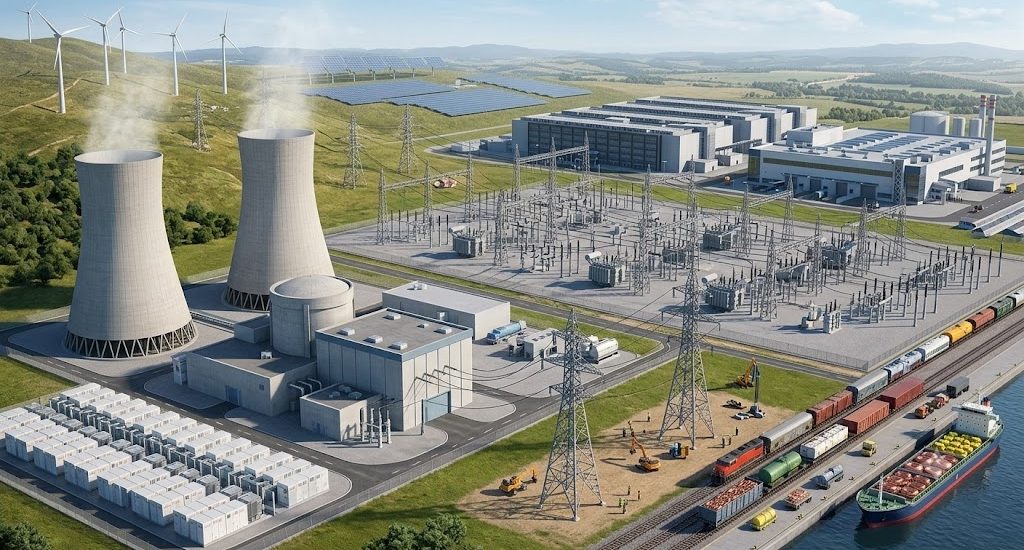

- Rising electricity demand from AI, electrification, and industrial growth is creating new opportunities across the energy sector
- Utilities and grid infrastructure companies may be among the biggest beneficiaries as power networks require major upgrades and expansion
- Nuclear energy and large-scale battery storage are gaining renewed attention as reliable sources of support for growing power needs
- The strongest long-term returns may come from the infrastructure and critical materials that enable the energy transition, rather than the most heavily hyped technologies
For much of the past decade, energy-transition investing was largely synonymous with solar panels, wind turbines, and electric vehicles. Investors poured capital into companies positioned to benefit from a cleaner energy future, often rewarding growth potential over profitability. While some firms emerged as leaders, others struggled with supply chain challenges, pricing pressure, and the realities of scaling highly competitive businesses.
Today, the investment landscape is evolving. The next chapter of the energy transition may have less to do with flashy consumer products and more to do with the infrastructure required to power a rapidly electrifying and increasingly digital economy.
As demand for electricity accelerates, investors are beginning to look beyond traditional renewable-energy narratives and toward the foundational assets that make modern economic growth possible. Utilities, grid infrastructure, nuclear power, energy storage, and critical minerals are emerging as some of the most compelling areas to watch.
This article is a journalistic opinion piece that has been written based on independent research. It is intended to inform investors and should not be taken as a recommendation or financial advice.
A fundamental shift in energy demand
The world is entering a period of growing electricity consumption after years of relatively modest demand growth in many developed economies.
Several powerful trends are converging:
- Artificial intelligence and cloud computing are driving rapid expansion of power-hungry data centres
- Electric vehicle adoption continues to increase electricity demand from transportation
- Industrial reshoring and advanced manufacturing require additional energy capacity
- Population growth and urbanization are increasing power needs in many regions
- Aging electrical infrastructure requires modernization and expansion
The result is a shift in focus from simply generating electricity to ensuring that sufficient, reliable power can be delivered where it is needed.
For investors, this distinction matters. The opportunity is no longer confined to energy production. It extends across the entire ecosystem that supports generation, transmission, storage, and distribution.
Utilities: The unusual suspects
Utilities have traditionally been viewed as defensive investments. Their regulated business models often produce stable cash flows, modest growth rates, and reliable dividends. While these characteristics remain attractive, the sector may be entering a period of renewed growth.
The surge in power demand from data centres, industrial facilities, and electrification initiatives is creating opportunities for utilities to invest in new generation capacity and grid upgrades. In many jurisdictions, these investments can be incorporated into regulated rate bases, potentially supporting earnings growth over time.
This dynamic is causing some investors to reconsider the sector’s long-term prospects.
Rather than serving merely as defensive holdings, certain utilities may become key beneficiaries of structural increases in electricity demand. Companies with significant exposure to transmission networks, fast-growing service territories, or energy infrastructure projects could be particularly well positioned.
Of course, utilities remain subject to regulatory oversight, capital requirements, and interest-rate sensitivity. Nevertheless, the combination of stability and potential growth makes the sector increasingly difficult to ignore.
Nuclear Energy’s surprising comeback
Perhaps no energy source has undergone a more dramatic shift in investor perception than nuclear power.
Once viewed as politically controversial and economically challenged, nuclear energy has re-entered the conversation as policymakers and businesses search for reliable, low-carbon sources of electricity.
Unlike intermittent renewable sources, nuclear facilities provide continuous baseload power, making them attractive in an era of growing electricity demand. As artificial intelligence applications expand and data centres seek dependable power supplies, the appeal of around-the-clock generation has become more apparent.
Investors have responded by taking greater interest in uranium producers, nuclear infrastructure companies, and utilities with existing nuclear assets.
At the same time, technological innovation is fueling optimism around Small Modular Reactors (SMRs), which proponents argue could offer more flexible and cost-effective deployment than traditional large-scale plants.
The sector still faces significant hurdles, including regulatory complexity, construction costs, and lengthy development timelines. However, nuclear power’s resurgence highlights a broader reality: ensuring reliable energy supply may become just as important as reducing emissions.
The electric grid: Sliding into more portfolios
While much attention is paid to power generation, the electrical grid itself may represent one of the most critical investment themes of the coming decade.
Generating additional electricity is only part of the challenge. That electricity must also be transmitted efficiently across vast distances and delivered reliably to homes, businesses, and industrial facilities.
Many electrical grids were designed for a different era. Today’s energy system requires infrastructure capable of integrating renewable generation, managing higher demand levels, and supporting increasingly complex power flows.
As a result, substantial investment is being directed toward:
- Transmission lines
- Electrical substations
- Transformers
- Switchgear
- Grid management technologies
For investors, these businesses often resemble the “picks and shovels” providers of the energy transition. Rather than betting on which energy source will dominate, they benefit from the need to move electricity regardless of how it is generated.
This infrastructure-focused approach may appeal to investors seeking exposure to long-term energy trends without taking concentrated risks on individual technologies.
Energy storage moves into the spotlight
As energy systems become more complex, storage is increasingly being viewed as a necessity rather than an optional enhancement.
Battery storage allows utilities and grid operators to balance supply and demand, improve reliability, and integrate renewable energy more effectively. Utility-scale storage projects are expanding globally as electricity networks confront fluctuating generation patterns and rising demand.
Investors often associate batteries exclusively with electric vehicles, but some of the most significant growth opportunities may lie elsewhere.
Grid-scale storage, industrial energy management systems, and software platforms that optimize energy consumption are becoming increasingly important components of the broader energy ecosystem.
The growth of storage technologies has also created opportunities throughout the supply chain, from battery manufacturers to materials producers and infrastructure developers.
While competition and technological uncertainty remain risks, storage’s expanding role in modern energy systems is becoming difficult to overlook.
Critical minerals: The building blocks of electrification
No discussion of the new energy economy would be complete without examining the commodities that make electrification possible.
Copper, uranium, lithium, nickel, and rare earth elements all play essential roles in energy infrastructure and advanced technologies. From power transmission networks to battery systems and nuclear reactors, these materials are foundational to future development.
Among them, copper stands out as particularly important.
Virtually every major electrification trend depends on copper-intensive infrastructure. Electric vehicles, charging networks, renewable-energy systems, data centres, and transmission projects all require substantial amounts of the metal.
This has led many analysts to suggest that copper could become one of the defining commodities of the energy transition.
Yet commodity investing is rarely straightforward. Supply constraints, geopolitical concerns, environmental regulations, and economic cycles can all significantly influence prices and profitability.
Investors considering exposure to critical minerals must balance long-term demand trends with the inherent volatility of commodity markets.
Separating hype from happenings
The history of investing is filled with examples of transformative technologies that changed the world but failed to produce consistent returns for shareholders.
The energy transition may be no different.
High-profile sectors often attract the majority of investor attention, while less glamorous areas quietly generate steady profits. As a result, the most attractive opportunities may not always be found in the companies receiving the most media coverage.
Instead, investors may benefit from focusing on businesses that provide essential services, infrastructure, and materials needed regardless of which energy technologies ultimately prevail.
Utilities, grid equipment manufacturers, energy-storage providers, nuclear infrastructure firms, and critical mineral producers each occupy different positions within the new energy economy. Collectively, they represent a broader investment universe than the traditional renewable-energy story that dominated headlines in previous years.
You have the power
The new energy economy is not just about generating cleaner power. It is increasingly about delivering reliable electricity, modernizing infrastructure, securing critical resources, and meeting growing demand from an increasingly digital world.
For investors, that shift opens the door to opportunities extending far beyond solar panels and electric vehicles.
The companies most likely to benefit may be those enabling the energy transition rather than those merely symbolizing it. As infrastructure spending rises and electricity demand grows, the real returns could emerge from the less visible foundations supporting the next era of economic development.
In investing, as in energy, what powers the system is often more important than what captures the spotlight.
Join the discussion: Find out what the Bullboards are saying about diversified utilities and power production, then check out Stockhouse’s stock forums and message boards.