Key takeaways
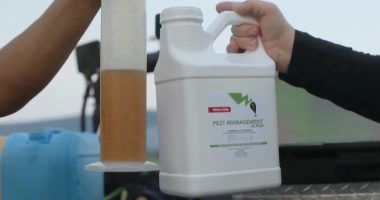
- Med-X is developing plant-based pest control alternatives through its Nature-Cide product line, targeting professional, commercial and residential applications.
- Nature-Cide is distributed through approximately 70 U.S. distribution centres, while Med-X is pursuing registrations and expansion in international markets.
- The company has established a relationship with Mainline Brands, franchiser of Mosquito Authority and Pest Authority, as it looks to expand adoption among professional pest control operators.
- Med-X is preparing for a planned Nasdaq listing under the reserved ticker MXRX, with management identifying marketing, acquisitions and international expansion as priorities.
Could plant-based pest control become a meaningful alternative within an industry traditionally dominated by synthetic chemicals?
Med-X is betting that it can. The health and wellness company is developing Nature-Cide, a line of naturally derived pest control products designed for professional and consumer applications.
This content has been prepared as part of a partnership with Med-X and is intended for informational purposes only.
In the latest episode of The Capital Compass, Med-X Chairman and CEO Matthew Mills joins Stockhouse’s Ricki Lee to discuss the company’s approach to pest control, its commercial expansion strategy and its plans to pursue a Nasdaq listing.
Building Nature-Cide through professional pest control
Rather than initially positioning Nature-Cide primarily as a consumer product, Med-X has focused on professional pest control operators.
Mills says the products are now available through approximately 70 distribution centres across the United States, while the company is also working toward registrations and distribution in markets including Singapore, the Philippines and New Zealand.
A significant part of that strategy is getting professional operators to test Nature-Cide themselves.
That approach has contributed to a strategic relationship with Mainline Brands, the franchiser behind Mosquito Authority and Pest Authority. According to Mills, the relationship gives Med-X exposure to hundreds of territories and could help demonstrate Nature-Cide’s potential to other large pest control operators.
Med-X prepares for its next stage
The company’s ambitions extend beyond its existing U.S. distribution network.
Med-X is preparing for a potential Nasdaq listing under the reserved ticker MXRX. Mills says access to additional capital would allow the company to increase marketing, attend more industry events, expand its team and pursue acquisitions.
International expansion is another longer-term objective, with management ultimately aiming to establish Nature-Cide as a global brand.
In the interview, Mills also discusses why Med-X spent years developing and testing its products before pursuing wider commercialization, and why gaining acceptance from professional pest control operators has been central to the company’s strategy.
Watch the full interview above to hear more about Med-X, Nature-Cide and the company’s plans for its next stage of growth.
Transcript
This transcript has been lightly edited for clarity and readability.
Ricki: What if controlling pests didn’t have to mean introducing more potentially harmful chemicals into our homes, businesses and food supply?
Hello, I’m Ricki Lee, and this is The Capital Compass. Today, we’re taking a closer look at Med-X, a health and wellness company developing plant-based alternatives across the pest control market.
At the heart of the story is Nature-Cide, its line of naturally derived pest control products. Med-X is targeting a global market where conventional pesticides face growing scrutiny around human and environmental health, while pests themselves continue to contribute to vector-borne disease and significant agricultural losses.
The company is now preparing for its next stage of growth, including a planned Nasdaq listing under the reserved ticker MXRX, while expanding the commercial reach of Nature-Cide through relationships across the professional pest control industry.
Joining me now to walk us through the business, the market opportunity and what comes next is Matthew Mills, Chairman and CEO of Med-X. Matthew, it’s great to have you with us.
Matthew: Hey, thanks for having me, Ricki. Pleasure to be here.
Ricki: It’s a pleasure to have you. Let’s start with the problem that you’re trying to solve. Conventional pest control can create concerns around health and environmental exposure, while pests themselves pose risks through disease and crop losses. How does Nature-Cide approach that problem differently, and what makes biopesticides such an important part of the solution?
Matthew: If you look around the world right now, everything you do, everywhere you go, you’re surrounded by pest control. Some sort of pesticide is in the park, all the grass. How do they keep the fleas and ticks off of that? Pesticide. When you go to the hospital, how do they keep the cockroaches and bed bugs out? Pesticide.
You really start looking at food production, dairy farms, poultry production and all these different areas, and you’re talking about cancer risk, you’re talking about all the risks. It’s everywhere you go. So we got together as a group, and we all have very robust careers, and we decided we wanted to do something to make a real difference in the world.
We started creating this product. It first started with a rattlesnake abatement program. That’s how this started. And it’s now morphed into one of the fastest-growing products in professional pest control that is everywhere I was just mentioning, from school districts to parks and recreation, restaurants, food production and livestock applications. The list goes on and on, and it is our mission to alleviate so many chemicals.
You don’t need to use them all the time. If you have a really bad infestation somewhere in the professional world, you can use a little bit of chemicals, but you don’t need to go back and repeat that process over and over when you have an alternative like Nature-Cide that can take care of the problem over and over again. If you maintain and do the right protocols, you can keep pests away naturally.
Ricki: You’ve mentioned so many of these different applications for Nature-Cide, but who are you ultimately targeting? Where are your products already available, and where do you see the biggest opportunities for expansion?
Matthew: Good question. We started this in a little different mode than other natural products that you’ve seen come and go. We really wanted to target professional pest control — the guys that you see running around in the trucks, the big names that are out there. They’re doing homes, they’re doing commercial, they’re doing parks — all these places that I’ve mentioned.
We are working with the largest distribution channels in the United States right now, all the biggest names, and our products are in approximately 70 different distribution centres on a coast-to-coast basis.
Then you can start seeing our products moving into places like Singapore, the Philippines and New Zealand. The list goes on and on. We are registering everywhere. We’re hoping to be a global name in the next five years.
Ricki: Speaking of professionals in the business, you recently secured a strategic relationship with Mainline Brands, the franchiser behind Mosquito Authority and Pest Authority. What does that relationship tell you about Nature-Cide’s acceptance within professional pest control, and how important could partnerships like this be to your wider launch and growth strategy?
Matthew: The first thing is the orders are big. It’s 500 different territories. There’s 150 owners, or somewhere in that area, as a franchise company. It is the largest mosquito application company in North America as a franchise.
They tested for a long time, and that’s one of the things that we do. We don’t just go sell product. We give product to the big companies. We say, “Go test it, check it out for yourself and see what happens.”
This Mosquito Authority-Pest Authority relationship is growing very quickly. We just got done shooting how-to videos to pass around to all their applicators throughout their company.
I’m feeling very confident this is going to lead to a lot of different large companies taking on our products, not only for mosquito control, which is a very big deal. Vector control is a very big deal. We are working with mosquito districts in Florida that are government-based.
But really, for all types of pests for commercial and residential applications, we believe that we are going to be with all of the big companies very soon. This was the one big company we needed to really let everybody know that our products really do what we say they do.
Ricki: You’re also preparing to join a load of companies on the Nasdaq under the reserved ticker MXRX.
How does becoming a publicly traded company fit into the broader business strategy? What are the key commercial catalysts that you want investors to be watching as you enter this next stage?
Matthew: The first thing is becoming a publicly traded company will give us the marketing girth that we need. We’ve never really marketed. We’ve been to select trade shows. We do a little bit of magazine placement for the professional world, but we need to go to all the shows. We need to be in all the magazines.
We need to start telling the world about how we’re making a difference, not just here in California, but in places around the world. We can’t wait until we can get to Africa. Maybe we could help save lives. The World Health Organization is saying 700,000 people still die from vector-borne diseases. How could we help that?
So we’re very focused on marketing and hires. Luckily, we don’t have to move into a big facility. We’re already in one. All of our investors who have helped us get this far have given us the strength to get this model built, get it in position, and now it’s about marketing dollars, acquisition and really growing this business.
I’m very excited about the opportunity of hopefully soon becoming a traded company on the Nasdaq with our symbol MXRX.
Ricki: And, of course, spreading your message around the world. A great way to do that is on The Capital Compass.
Finally, Nature-Cide has been developed and tested over a number of years, so this isn’t a product you’ve brought to market overnight. What gives you confidence in its performance, and why are you personally so passionate about changing the way the pest control industry approaches these products?
Matthew: First, I’ve got to tell you, when we started this project, everybody said, “No, no, no. What are you guys doing? No. We’ve seen this song and dance before. We don’t want to have essential oils in a bottle. Nobody’s going to use your product. Go away.”
That’s what we were told: “Get out of here. You guys have no business.”
Boy, that hit me right here. I put my head down. I put my team together. We got licensed as applicators in the State of California for agriculture and landscape. We kept our heads down, kept developing, went to the shows and started giving product away for free. You don’t believe it works? Try it.
The next thing you know, we’ve got distributor after distributor coming to us saying, “We want to load your products. Everybody’s asking for it.” And it’s because we gave the product out for free.
Even with that brand, Mosquito Authority, that you were just talking about, they tested forever. We gave them product: “Here, try some product.” They even started buying from one of our distributors without telling us. We would have given them more product, but they didn’t ask us because they were using a lot.
So you start looking at the global scale of this thing. As this gets to the places it needs to go, like dairy farms, equine centres, poultry farms and the places that are really going to make a difference, and agriculture, our food — we all know.
The weed killer is in all the breads and all the pastas that are produced here in the U.S. These things need to stop, and we’re here to try and make that difference across the board in all industries.
Whether it’s the zoo you’re going to, the theme park, the park you’re going to or the restaurant you’re going to, there are alternatives to using these very toxic chemicals that have been around for 50 years and haven’t been replaced.
There are a couple of other companies out there that we compete with, but we’re on the cutting edge of science. Science and essential oils — there are some things that we do to these products that differentiate them from just being essential oils in a bottle.
It’s a pretty neat thing that we’ve got going, and I expect big expansion to happen as we get the dollars to market not only the company, but the brands themselves, and really let the general public make the choice with the professionals that come to their business or come to their home on whether or not they want poisons or something a little less invasive that you don’t even have to think about when they put it on the lawn.
Whether your animals, your cat and your dog, or your little kids are rolling around on the grass. You don’t have to worry about that kind of stuff with this type of application, and we take great pride in that.
We are really moving the needle here, and I expect this to continue. I expect it to blast off when we get capitalized the way we should be. It’s going to be a great thing, and I’m really looking forward to implementing our plans of acquisition and positioning this company as a global force.
Ricki: The good old try-before-you-buy method never fails. Matthew, thank you for joining us today and introducing us to the Med-X story.
Matthew: Thanks, Ricki. I appreciate the time, and we’ll see you again soon.
Ricki: For more information, you can visit medx-rx.com. I’m Ricki Lee, and this has been The Capital Compass. Thank you for watching, and we’ll see you again next time.