
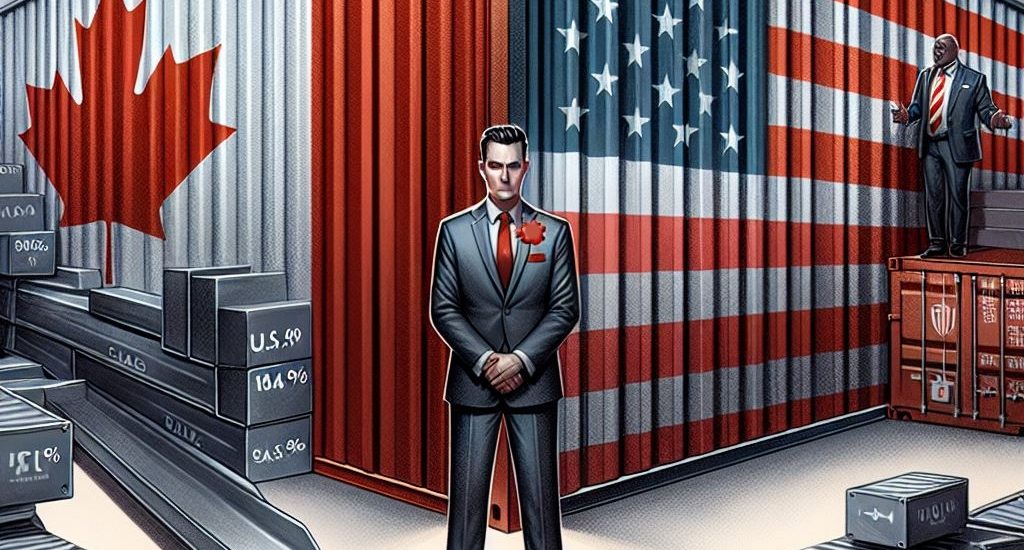

Canada’s main stock index edged up on Thursday as new US tariffs on steel and aluminum came into force. As the top supplier of these metals to the US, Canada exports nearly twice the amount of aluminum as the combined total of the next 10 largest exporters. Prime Minister Mark Carney stated that Canada is ready to retaliate if negotiations with Washington to lift the tariffs fail. Meanwhile, China rejected Canada’s request to establish a dispute panel to examine Beijing’s additional import duties on certain Canadian goods.
From Our Partners

In the US, stock markets continued the downturn, despite a rally in tech stocks and an impressive Q1 earnings season, which helped boost investor confidence. However, concerns linger among investors about potential future setbacks due to the Trump administration’s ongoing tariff policies.
| TSX | 26,342.29 | +13.29 |  |
| TSXV | 718.27 | -1.16 |  |
| CSE | 116.76 | -0.33 | |
| DJIA | 42,319.74 | -108.00 | |
| NASDAQ | 19,298.45 | -162.04 | |
| S&P 500 | 5,939.30 | -31.51 | |
The Canadian dollar traded for 73.16 cents US compared to 73.11 cents US on Wednesday.
US crude futures traded $0.42 higher at US$63.27 a barrel, and the Brent contract rose $0.40 to US$65.26 a barrel.
The price of gold was down US$21.42 to US$3,353.49.
In world markets, the Nikkei was down 192.96 points to ¥37,554.49, the Hang Seng was up 252.94 points to HK$23,906.97the FTSE was up 9.75 points to ₤8,811.04 and the DAX was up 47.10 points to €24,323.58.
The material provided in this article is for information only and should not be treated as investment advice. For full disclaimer information, please click here.