

Gold investors are constantly searching for projects that combine resource scale, exploration upside, strong funding, and clear development catalysts.
In Canada’s prolific Abitibi region, one emerging story that may warrant a closer look is a company advancing a large gold asset while launching an aggressive exploration campaign to expand its resource base and generate new discoveries.
That company is McFarlane Lake Mining (CSE:MLM), which has recently delivered two significant developments at its flagship Juby Gold Project in Ontario: the filing of an updated NI 43-101 Mineral Resource Estimate (MRE) and the launch of a fully funded 50,000-metre Phase 2 drilling program. Together, these milestones provide investors with a clearer picture of the project’s current scale and the catalysts that could drive its next stage of growth.
This article is disseminated in partnership with McFarlane Lake Mining LimitedIt is intended to inform investors and should not be taken as a recommendation or financial advice.
A large resource in a proven mining district
The Juby Gold Project is located within Ontario’s portion of the renowned Abitibi Greenstone Belt, one of Canada’s most productive gold camps and home to numerous past-producing and operating mines.
The recently filed NI 43-101 Technical Report outlines a substantial gold resource at Juby, with an estimated:
- 1.07 million ounces of indicated gold resources grading 0.96 g/t Au contained within 34.68 million tonnes
- 5.09 million ounces of inferred gold resources grading 0.87 g/t Au contained within 183.05 million tonnes
The resource includes both open-pit and underground components, providing flexibility for future development evaluations. Importantly, the estimate was independently prepared by Todd McCracken, P.Geo., of BBA E&C Inc., following CIM standards and NI 43-101 guidelines.(1)
For investors evaluating exploration and development companies, the presence of a large existing resource often provides a foundation upon which additional value can be built. In McFarlane’s case, management is not positioning the project as a static resource asset. Instead, the company is focused on growing and refining the deposit through extensive drilling and technical work.
“The filing of the updated MRE Technical Report is an important milestone in the development of the Juby Gold Project and for McFarlane Lake,” McFarlane Lake Mining’s CEO and chair, Mark Trevisiol, explained in a news release. “This independent NI 43-101 report reinforces the scale, quality, and growth potential of Juby and provides external validation of what we believe is a highly strategic gold asset in one of Ontario’s most prolific mining regions. Investors can now see a clear, significant and independently verified increase in gold ounces over the prior MRE with an effective date of September 29, 2025, supporting our goal of growing this resource by another 60%.”
Permitting provides operational flexibility
Another noteworthy development is the extension of McFarlane’s drilling permit through December 2029. The permit covers the company’s primary exploration target areas, including Golden Lake, Juby, Juby East, 826 Zone, Hydro Creek, and Big Dome. This extended permitting window provides the company with the ability to execute multi-year exploration programs without facing near-term permitting constraints.
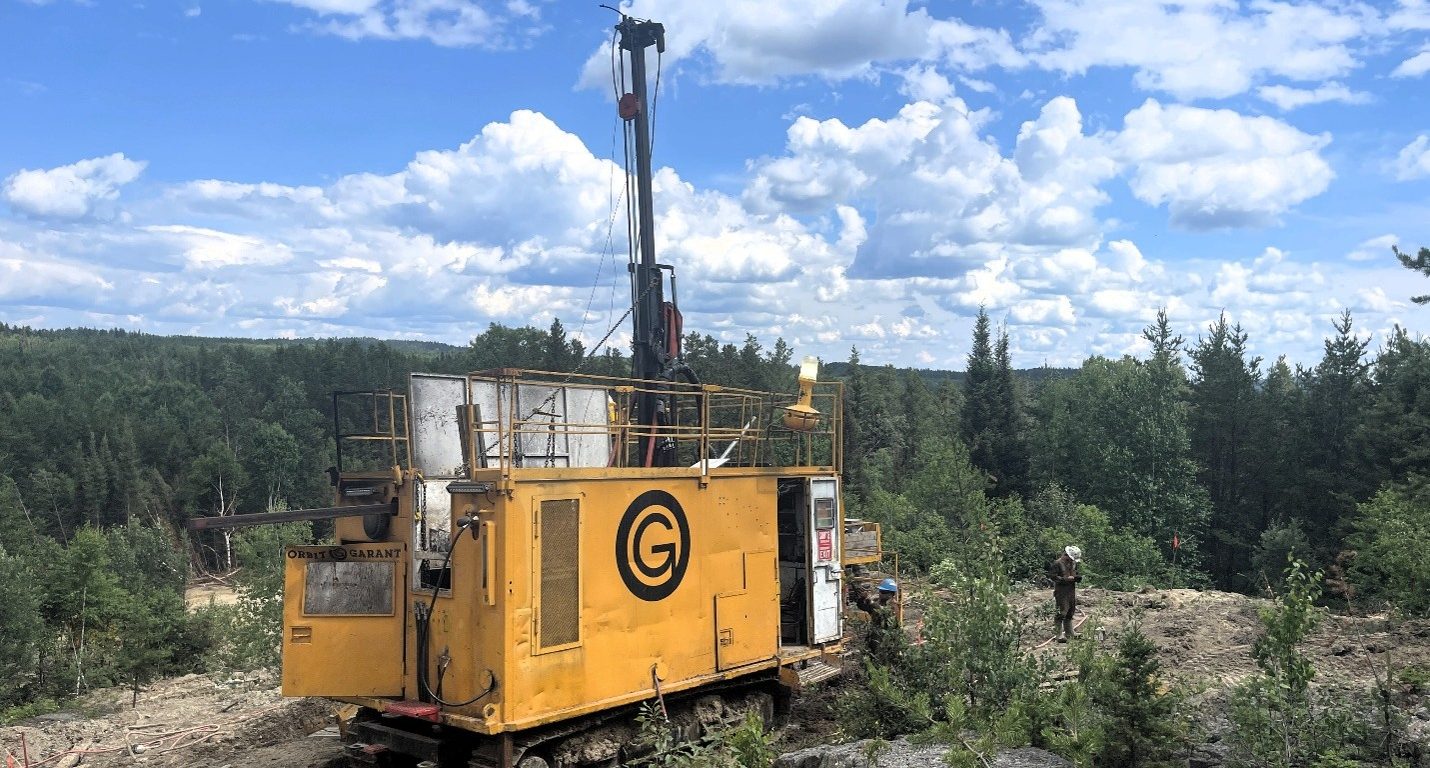
The company has also partnered with two of the three First Nations communities that have territorial rights on the Juby Gold Project. The companies are providing the diamond drilling equipment and labour to perform exploration as directed by McFarlane geologists. Since the end of October, there have been three drill rigs operating on the property and the plan is to keep all three drill rigs going until the 50,000-metre drill program is complete.
For exploration companies, access to drill capacity can often become a limiting factor. McFarlane’s ability to secure multiple active rigs positions the company to accelerate exploration efforts while maintaining consistent news flow over the coming months.
A significant increase in drilling activity
While the updated resource provides a snapshot of what has already been defined, the company’s newly announced 50,000-metre Phase 2 drill program may be the development that attracts the most attention from investors.
The fully funded program is expected to unfold over the next 12 to 15 months and represents a substantial escalation in exploration activity.
To put the scale into perspective:
- Phase 1 drilling completed 12,982 metres
- Historical operators completed 116,570 metres
- Phase 2 alone is planned at 50,000 metres
Management notes that the new campaign is nearly four times larger than the company’s initial Phase 1 effort and represents a meaningful increase in the overall drilling database available for future geological interpretation and resource growth.
Just as importantly, the program is funded following the company’s September 2026 financing that raised C$17.25 million in gross proceeds.
Two growth engines operating simultaneously
One feature that differentiates the Phase 2 program is its dual-track approach.
Two of the company’s drills will focus on expanding known mineralized zones, while a third drill will initially complete infill work before turning its attention toward discovery-focused targets.
This strategy allows McFarlane to pursue two potentially value-creating objectives at the same time:
- Expanding existing resources through step-out drilling.
- Testing entirely new targets that could lead to additional discoveries.
This combination can be particularly attractive because it balances resource growth with exploration upside. Resource expansion may help increase confidence in existing mineralized areas, while new target testing offers the possibility of identifying additional mineralized zones beyond those currently included in the resource estimate.
The 826 Zone and discovery potential
A key part of the exploration thesis centres on the broader land package and the opportunity to discover additional zones of mineralization.
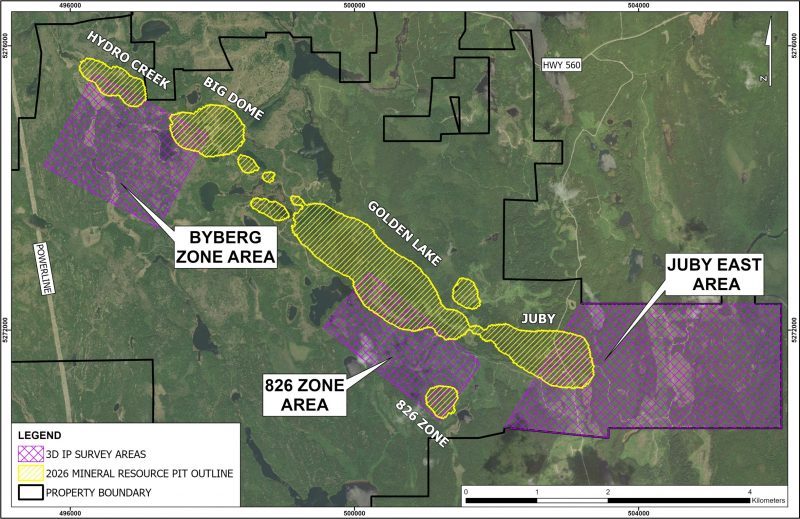
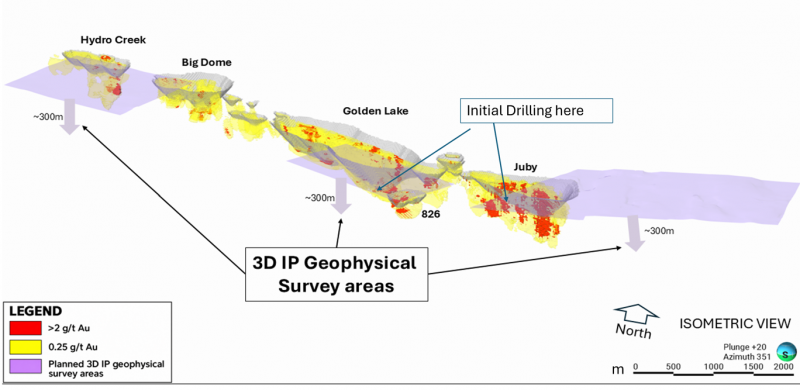
McFarlane plans to integrate geological modelling, structural interpretation, geophysics, and drilling data to prioritize future targets. The company has highlighted several areas for additional 3D induced polarization (IP) surveys, with results expected to guide future drilling.
What has really been gathering a lot of attention is the interpreted trend extending from the 826 Zone toward Golden Lake, approximately 1.6 kilometres to the northwest.
Although geophysical anomalies alone do not confirm the presence of economic gold mineralization, the identification of priority targets supported by multiple technical datasets provides a structured framework for exploration. Successful drilling in these areas could potentially expand the project’s mineralized footprint beyond currently defined resource boundaries.
“Over the past year, we have established a larger resource foundation at Juby, secured funding for our next major drilling campaign and built the team to execute it,” CEO Trevisiol added in a media statement. “Phase 2 gives us the capacity to expand the known deposits while systematically testing the broader property for new discoveries. Our objective is to demonstrate more of Juby’s scale and geological potential through drilling, while proving the economics of this prolific deposit through a scoping study and advancing the environmental and technical work needed for its next stage.”
Advancing toward development
Beyond exploration, McFarlane is beginning to advance the project on several parallel fronts.
The company plans to launch a scoping study with a target completion date in the second quarter of 2027. Such studies are often an important early step in evaluating potential development pathways and economic parameters.
At the same time, environmental baseline studies that began in late 2025 are nearing completion. McFarlane is also targeting submission of an advanced exploration permit and closure plan in early 2027 as part of its broader development planning process.
These activities suggest management is working to advance both exploration and project development simultaneously rather than waiting for one process to conclude before beginning the next.
Investor’s corner
Junior gold companies often attract investor attention when several factors align: meaningful resource scale, active exploration, strong financing, jurisdictional stability, and a steady stream of potential catalysts.
McFarlane Lake Mining Limited appears to possess several of those attributes today.
The company has established a multi-million-ounce gold resource in one of Canada’s most recognized mining regions, secured the funding required for a major drilling initiative, expanded drilling capacity to three active rigs, and outlined a clear pipeline of upcoming milestones that includes resource expansion drilling, discovery drilling, geophysical targeting, metallurgical work, environmental progress, and a forthcoming scoping study.
While exploration always carries technical, financial, and execution risks, the combination of an established resource base and a fully funded 50,000-metre drill campaign creates a steady flow of opportunities for value creation. For investors seeking exposure to Canadian gold exploration and development stories, McFarlane Lake Mining stands out as a company that may be worthy of deeper due diligence as it advances the next phase of growth at the Juby Gold Project.
Join the discussion: Find out what the Bullboards are saying about McFarlane Lake Mining and check out Stockhouse’s stock forums and message boards.
Note 1:
The Juby Mineral Resource Estimate (effective August 14, 2026) was prepared by Todd McCracken, P.Geo., of BBA E&C Inc. in accordance with NI 43-101, using a long-term gold price of US$3,600/oz and cut-off grades of 0.25 g/t Au (open pit) and 1.60 g/t Au (underground). Mineral resources are not mineral reserves and do not have demonstrated economic viability. The technical information in this article was reviewed and approved by Mark Trevisiol, P.Eng., P.Geo./P.Eng., an officer of McFarlane Lake and a non-independent qualified person under NI 43-101.
Cautionary note regarding forward-looking information:
This article contains certain “forward-looking information” within the meaning of Canadian securities legislation, including, but not limited to, statements about the Phase 2 drilling program of McFarlane Lake Mining Limited (the “Company”) at the Juby Gold Project, including its 50,000-metre scope, its expected 12- to 15-month duration, the continued operation of three drill rigs until the program is complete, and how those drills will be divided among resource expansion, infill drilling and new target testing. It also includes statements that the program is fully funded, and statements about the Company’s goal of growing the mineral resource at Juby. Other forward-looking statements concern the planned 3D induced polarization surveys, the generation and prioritization of drill targets, including along the interpreted trend between the 826 Zone and Golden Lake, and the potential to expand known mineralization, identify new mineralized zones and upgrade Inferred Mineral Resources. Others concern the term and scope of the Company’s drilling permit and the provision of drilling services by the Company’s First Nations partners. So do statements about the planned scoping study and its targeted completion in the second quarter of 2027, metallurgical work, the completion of environmental baseline studies, the targeted submission of an advanced exploration permit and closure plan in early 2027, and anticipated news flow. Finally, they include statements about the Mineral Resource Estimate and its underlying assumptions, and the Company’s objectives, plans and strategies generally. Forward-looking statements are statements that are not historical facts; they are generally, but not always, identified by the words “expects,” “plans,” “anticipates,” “believes,” “intends,” “estimates,” “projects,” “aims,” “potential,” “goal,” “objective,” “strategy,” “prospective,” and similar expressions, or that events or conditions “will,” “would,” “may,” “can,” “could” or “should” occur, or are those statements, which, by their nature, refer to future events. Forward-looking statements are based on the beliefs, estimates and opinions of the Company’s management on the date the statements are made, including assumptions regarding long-term gold prices, the accuracy of the mineral resource estimate and the underlying geological interpretation, metallurgical recoveries, operating and capital costs, the availability of drilling contractors, equipment and personnel, the continued validity of the Company’s permits, and the Company’s ability to obtain financing on acceptable terms, and they involve a number of risks and uncertainties. Consequently, there can be no assurances that such statements will prove to be accurate and actual results and future events could differ materially from those anticipated in such statements. Except to the extent required by applicable securities laws and the policies of the CSE, the Company undertakes no obligation to update these forward-looking statements if management’s beliefs, estimates or opinions, or other factors, should change. Factors that could cause future results to differ materially from those anticipated in these forward-looking statements include the inherent uncertainty of mineral resource estimates and the possibility that they may be revised as additional information becomes available; fluctuations in gold prices; the risk that exploration results will not support the expansion or upgrading of mineral resources; the risk that metallurgical recoveries or costs will differ from those assumed; delays in the mobilization of drilling equipment or contractors; the risk of accidents and other risks associated with mineral exploration operations; the risk that the Company will encounter unanticipated geological factors; the possibility that the Company may not be able to maintain or secure permitting and other agency or governmental clearances necessary to carry out the Company’s exploration plans; the Company’s ability to raise sufficient capital to fund its exploration programs and technical studies; and risks of political uncertainties and regulatory or legal changes in the jurisdictions where the Company carries on its business that might interfere with the Company’s business and prospects. The reader is urged to refer to the Company’s reports, publicly available through SEDAR+ at www.sedarplus.ca, for a more complete discussion of such risk factors and their potential effects. Readers are cautioned not to place undue reliance on forward-looking statements.