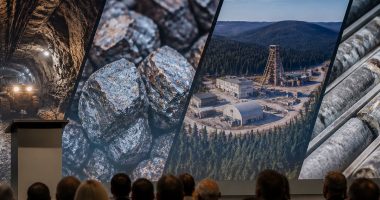



It does not happen often that a commodity market that has remained stable for decades suddenly becomes fundamentally disrupted. Yet that is exactly what we are currently witnessing in the tungsten right now. China is curbing exports, the US Department of Defense is banning Chinese tungsten starting in 2027, and prices are surging to historic highs. Amid this perfect storm stands a company that has quietly and persistently been building a Western alternative for years: Almonty Industries. While the world searches for solutions, the Canadian producer has just started operations at its Sangdong mine in South Korea – at precisely the right time and in exactly the right place.
This article is disseminated in partnership with Apaton Finance GmbH. It is intended to inform investors and should not be taken as a recommendation or financial advice.
A market awakens from a thirty-year slumber
For three decades, the price of tungsten remained within a narrow range. China, which controls more than 80% of global production, kept prices artificially stable through subsidies and a controlled export policy. Investing in new mines outside China was simply not economically attractive. Who would have invested hundreds of millions in a project if the price offered no return? This equation has shifted fundamentally. Since February 2025, China has imposed strict export licenses and tighter production quotas. Beijing has also introduced dual-use bans, which further complicate trade. The result was a price shock of historic proportions.
While the price of ammonium paratungstate (APT), the most important commercial form, was still averaging USD 648 per MTU in October 2025, it surged to over USD 1,200 by January 2026. In mid-February, it was trading at USD 1,775 in many places, with peaks of up to USD 1,900. What is happening here is not cyclical inflation, but a structural revaluation that will shape the market for years to come.
The geopolitical dimension
But the price surge is only one side of the coin. The real explosive power of the investment story lies in the geopolitical realignment of Western supply chains. A rethink has been going on behind the scenes for some time. An internal Pentagon paper reveals the urgency. Even before the recent escalations in the Middle East, an urgent request was made to industry to increase supplies of 13 critical minerals. Tungsten was at the top of the list.
The reason is obvious. Due to its exceptional hardness and density, tungsten is indispensable for modern weapon systems, from armor-piercing ammunition to vehicle armor and aircraft components. The intensive use of these systems, particularly in the war in Ukraine and now in Iran, has significantly depleted the West’s strategic reserves. From January 1, 2027, tungsten mined in China, Russia, Iran, or North Korea may no longer be used for US defense procurement. This opens up a strategic window for Western producers that is unparalleled in the raw materials industry. Those who can deliver now will not only secure market share but also become part of the national security infrastructure.
Sangdong: The heart of a new supply axis
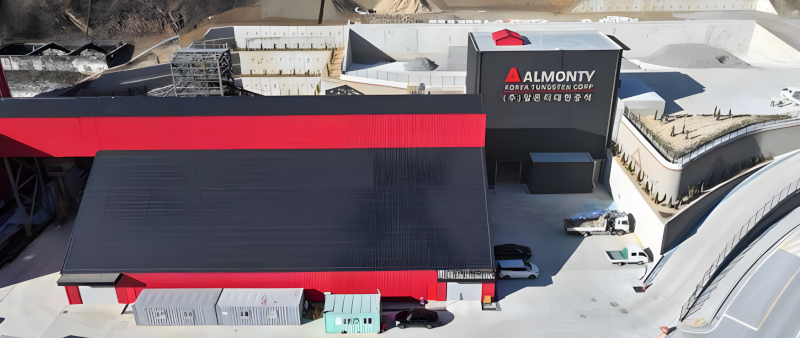
Amidst this tension, Almonty (TSX:AII) (NASDAQ:ALM) reached a decisive milestone in December 2025 when the first truck carrying ore rolled into the processing warehouse at the Sangdong mine in South Korea. What may sound unspectacular is in fact a historic moment. The largest tungsten deposit outside China is starting operations.
The dimensions are impressive. Once fully ramped up, Sangdong is expected to account for approximately 80% of non-Chinese tungsten production. The mine is designed for a life of over 90 years, meets the highest ESG standards, and is highly automated. Phase I is expected to achieve an annual production of approximately 230,000 MTU of tungsten trioxide concentrate. At the same time, management is already pushing ahead with planning for Phase II, which is expected to double production volume to up to 1.2 million tonnes of ore per year and increase production to approximately 460,000 MTU of concentrate.
The marketing side of things is comfortable. Almonty has signed long-term purchase agreements with hard minimum prices. A binding agreement with Tungsten Parts Wyoming and Metal Tech secures at least 40 tonnes of tungsten oxide per month for rockets, drones, and ammunition. Initially for three years, but the agreement is automatically renewable. For molybdenum, the second mainstay in Sangdong, South Korea’s SeAH Group has agreed to purchase 100% of production.
Three continents, one strategy
However, Almonty would be ill-advised to rely solely on the Korean flagship project. The company is pursuing a broader diversification approach that further underpins its position as a leading Western tungsten producer.
In Europe, Almonty operates the Panasqueira mine in Portugal, one of the longest continuously operated tungsten mines in the world. An extensive drilling program of around 14,000 m is underway here, driving forward the development of a deeper, higher-grade zone. The goal is to achieve an annual output of up to 124,000 MTU with higher ore grades and a significant extension of the mine life. Panasqueira already supplies material to US defense customers and generates stable cash flows.
At the same time, the Gentung Browns Lake Tungsten project in Montana is taking shape. The acquisition of this property in 2025 will expand the company’s geographic presence in the United States. Gentung is expected to be ready for production as early as the second half of 2026, with a projected peak production of approximately 140,000 MTU per year. A 15-year off-take agreement covers over 90% of the first phase for US defense customers and positions Almonty as the first domestic producer in a decade.
Financial stability and strong management
For years, Almonty struggled with tight cash flow and high capital expenditures. That has changed fundamentally. Two capital increases in 2025 brought the company gross proceeds of over USD 219 million. The IPO on the Nasdaq in July raised around USD 90 million, followed by another increased placement in December with USD 129.4 million.
These inflows have strengthened the balance sheet and given management the necessary leeway to manage the ramp-up in Sangdong and other expansions without financial pressure.
The newly formed management team underscores the company’s commitment to professionalism. With Brian Fox as CFO, Steven L. Allen, a Bronze Star recipient, as COO, and Guillaume Wiesenbach de Lamaziere as Chief Development Officer, Almonty has gained leaders who bring experience from major financial institutions and military logistics. Independent board directors General Gustave F. Perna and Alan Estevez, both with outstanding expertise in national security, are opening doors in Washington.
Analysts discover the potential
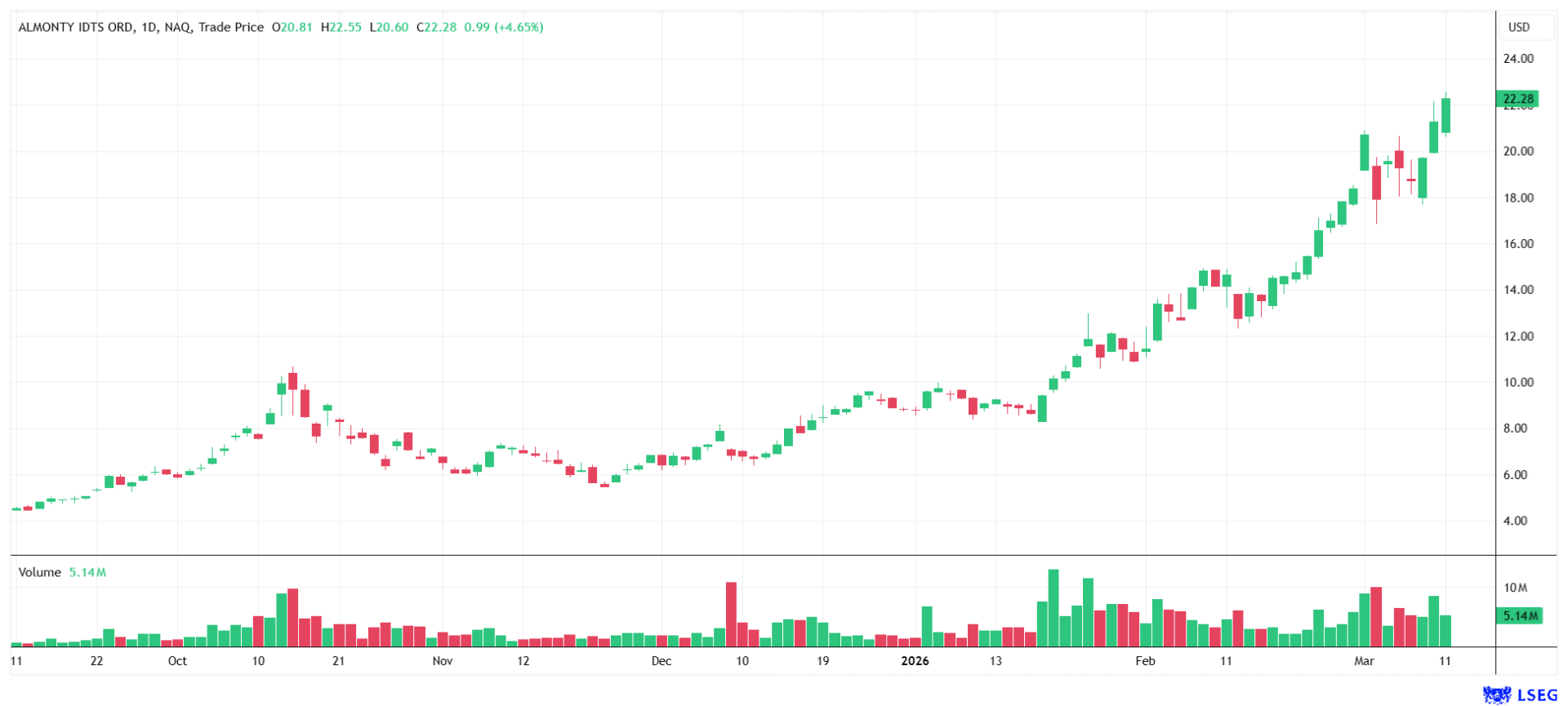
This development has not gone unnoticed by analyst firms. Since mid-February, price targets have been rising steadily. Particularly noteworthy is the latest assessment by Cantor Fitzgerald, which raised its price target to USD 25.80. The rationale lies in the long-term high price levels for tungsten and the tense supply situation for defense goods. GBC Research also raised its price target to USD 20.89, with Bank of America following suit at USD 20.00.
The share is currently trading at USD 22.28.
Almonty Industries is at a historic turning point. What was considered a speculative development project for years is now a systemically important component of Western supply security. With the start of production in Sangdong, long-term off-take agreements, and geographical diversification across three continents, the company has created a unique position for itself. The combination of structural market scarcity, geopolitical realignment, and operational execution creates a rare lever for growth-oriented investors. Those who believe in the future of critical raw materials outside China cannot ignore Almonty.
Conflict of interest
Pursuant to §85 of the German Securities Trading Act (WpHG), we point out that Apaton Finance GmbH as well as partners, authors or employees of Apaton Finance GmbH (hereinafter referred to as “Relevant Persons”) currently hold or hold shares or other financial instruments of the aforementioned companies and speculate on their price developments. In this respect, they intend to sell or acquire shares or other financial instruments of the companies (hereinafter each referred to as a “Transaction”). Transactions may thereby influence the respective price of the shares or other financial instruments of the Company.
In this respect, there is a concrete conflict of interest in the reporting on the companies.
In addition, Apaton Finance GmbH is active in the context of the preparation and publication of the reporting in paid contractual relationships.
For this reason, there is also a concrete conflict of interest.
The above information on existing conflicts of interest applies to all types and forms of publication used by Apaton Finance GmbH for publications on companies.
Risk notice
Apaton Finance GmbH offers editors, agencies and companies the opportunity to publish commentaries, interviews, summaries, news and the like on news.financial. These contents are exclusively for the information of the readers and do not represent any call to action or recommendations, neither explicitly nor implicitly they are to be understood as an assurance of possible price developments. The contents do not replace individual expert investment advice and do not constitute an offer to sell the discussed share(s) or other financial instruments, nor an invitation to buy or sell such.
The content is expressly not a financial analysis, but a journalistic or advertising text. Readers or users who make investment decisions or carry out transactions on the basis of the information provided here do so entirely at their own risk. No contractual relationship is established between Apaton Finance GmbH and its readers or the users of its offers, as our information only refers to the company and not to the investment decision of the reader or user.
The acquisition of financial instruments involves high risks, which can lead to the total loss of the invested capital. The information published by Apaton Finance GmbH and its authors is based on careful research. Nevertheless, no liability is assumed for financial losses or a content-related guarantee for the topicality, correctness, appropriateness and completeness of the content provided here. Please also note our Terms of use.
Stockhouse does not provide investment advice or recommendations. All investment decisions should be made based on your own research and consultation with a registered investment professional. The issuer is solely responsible for the accuracy of the information contained herein. For full disclaimer information, please click here.