
Agios Pharmaceuticals stays firmly focused on hematology – risks remain
Agios Pharmaceuticals underwent a radical strategy shift in 2021, selling its entire oncology portfolio to Servier for USD 1.8 billion. Agios has since focused on rare diseases with an emphasis on hematology. Following the US approval of vorasidenib in August 2024, substantial milestone payments flowed to Agios. Thanks to a monetization agreement with Royalty Pharma, the company now has a solid cash position. The market launch of the pyruvate kinase activator mitapivat under the brand name Aqvesme for the treatment of rare blood disorders has succeeded. In the first quarter of 2026, worldwide net product revenue climbed 138% year over year to USD 20.7 million. Despite this commercial success, the business is not without setbacks. At the end of May, the company announced it would discontinue development of the dual activator tebapivat for certain indications in bone marrow disorders. The reason was missed targets in the clinical Phase 2b trial. To diversify the pipeline, management is now advancing the siRNA therapeutic AG-236.Revolution Medicines: The star against pancreatic cancer
Pancreatic cancer is still more often than not a death sentence. But Revolution Medicines is giving patients great hope: in mid-April, the company published the data from the Phase 3 registrational study RASolute 302. The active substance daraxonrasib doubled median overall survival compared with standard chemotherapy, from 6.7 months to 13.2 months. This result triggered euphoria among experts and on the capital markets. After the data were announced, the company placed shares and senior convertible notes, raising around USD 2.1 billion. This gives the company reserves that fund operations through 2029. Given a high cash-burn rate driven by four Phase 3 trials running in parallel, this capital position provides reassurance to the market.Vidac Pharma: Reversing the Warburg effect possible? Clinical milestones ahead
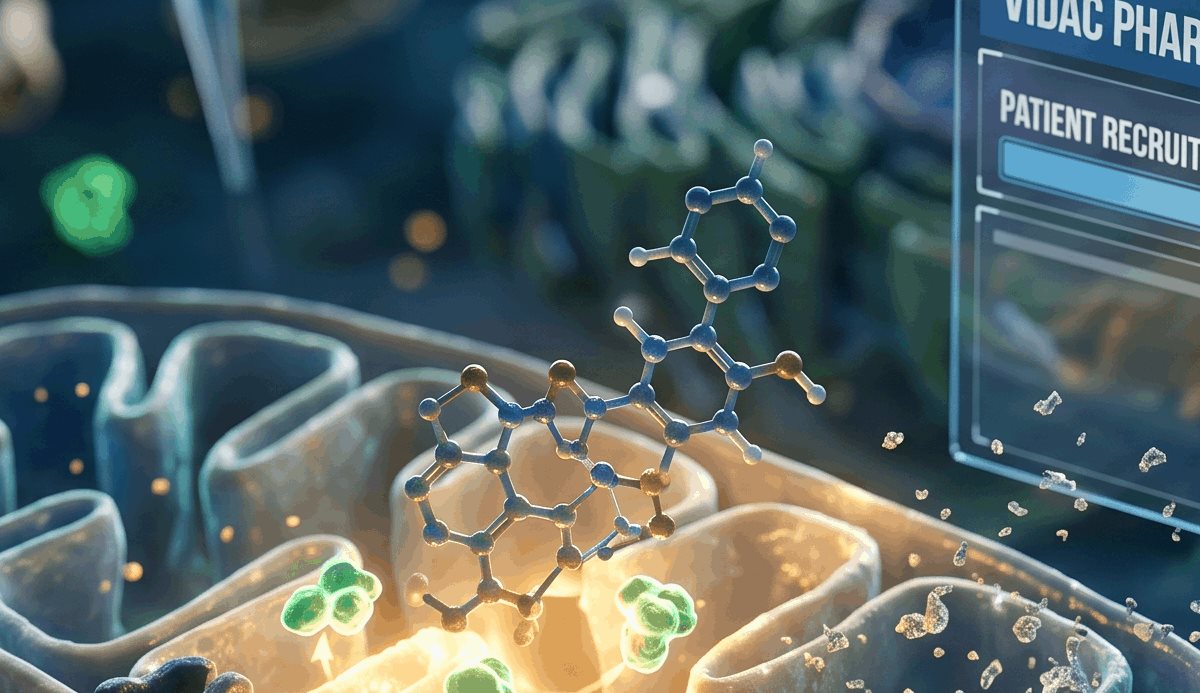
Vidac Pharma, led by CEO Dr. Max Herzberg, is betting on the pharmacological reversal of the Warburg effect. Cancer cells behave completely differently in their metabolism than healthy cells. They are practically addicted to sugar and use a very inefficient route of energy generation, known as aerobic glycolysis. In medicine, this process is known as the Warburg effect. This fatal state is driven by the overproduction of the enzyme hexokinase-2 (HK2), which acts as a metabolic checkpoint. In cancer cells, this HK2 protein attaches directly to the outer wall of the cell’s own power plants (mitochondria), at a channel called VDAC1. This connection acts like a protective shield: it permanently secures energy for the cancer cell and at the same time prevents the cell from carrying out the command to die – it makes the tumour cell immortal.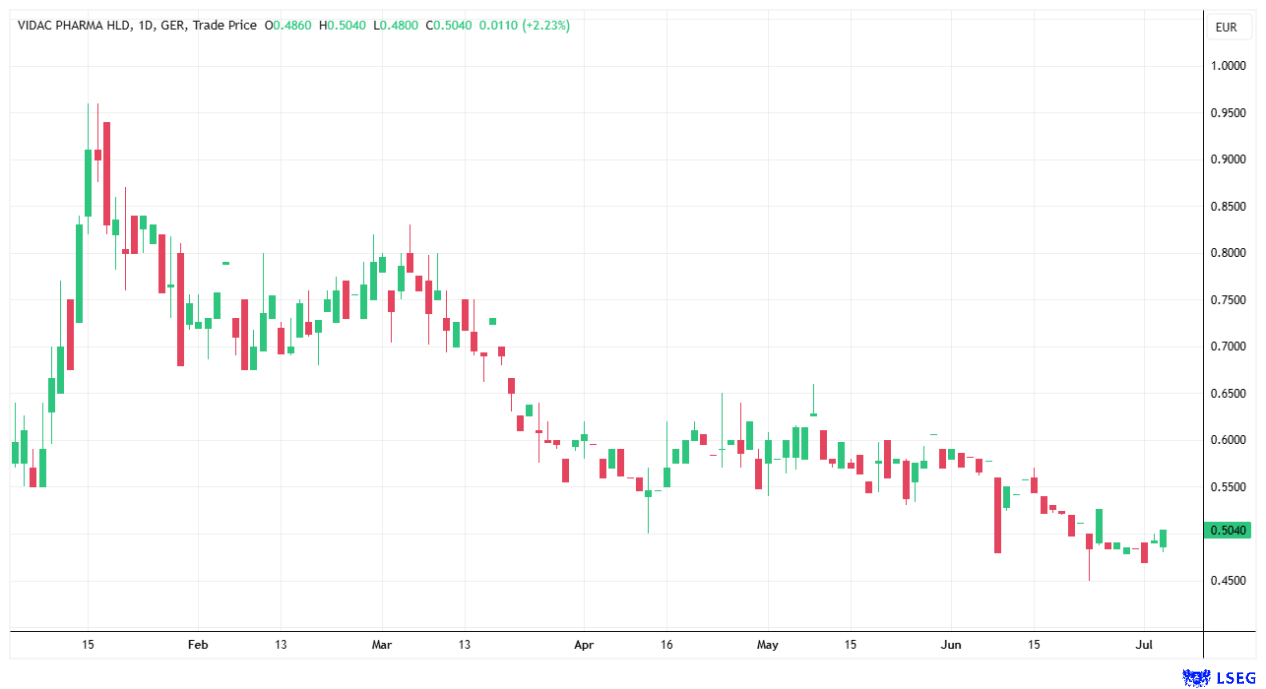
Vidac Pharma: Trials advance – analysts positive
Vidac’s most advanced program is VDA-1102, a topical ointment for the treatment of actinic keratosis, a chronic UV-induced precursor of non-melanoma skin cancer. While standard therapies often cause extreme skin reactions and severe pain, VDA-1102 showed an exceptionally favourable tolerability profile at placebo level in trials. In June, the company reported the successful completion of patient recruitment for the Phase 2b trial in Germany. Good trial results and further progress underpin the potential of Vidac Pharma and its approach. Sphene Capital confirmed its “Buy” recommendation this past November with a price target of EUR 4.10. Despite this great potential, investors should not lose sight of the risks. The stock remains a speculative biotech, yet Vidac Pharma, with its focus on the energy metabolism of cancer cells, appears to be pursuing a promising niche that is adaptable to various forms of therapy.Conflict of interest
Pursuant to §85 of the German Securities Trading Act (WpHG), we point out that Apaton Finance GmbH as well as partners, authors or employees of Apaton Finance GmbH (hereinafter referred to as “Relevant Persons”) may hold shares or other financial instruments of the aforementioned companies in the future or may bet on rising or falling prices and thus a conflict of interest may arise in the future. The Relevant Persons reserve the right to buy or sell shares or other financial instruments of the Company at any time (hereinafter each a “Transaction”). Transactions may, under certain circumstances, influence the respective price of the shares or other financial instruments of the Company. In addition, Apaton Finance GmbH is active in the context of the preparation and publication of the reporting in paid contractual relationships. For this reason, there is a concrete conflict of interest. The above information on existing conflicts of interest applies to all types and forms of publication used by Apaton Finance GmbH for publications on companies.Risk notice
Apaton Finance GmbH offers editors, agencies and companies the opportunity to publish commentaries, interviews, summaries, news and the like on news.financial. These contents are exclusively for the information of the readers and do not represent any call to action or recommendations, neither explicitly nor implicitly they are to be understood as an assurance of possible price developments. The contents do not replace individual expert investment advice and do not constitute an offer to sell the discussed share(s) or other financial instruments, nor an invitation to buy or sell such. The content is expressly not a financial analysis, but a journalistic or advertising text. Readers or users who make investment decisions or carry out transactions on the basis of the information provided here do so entirely at their own risk. No contractual relationship is established between Apaton Finance GmbH and its readers or the users of its offers, as our information only refers to the company and not to the investment decision of the reader or user. The acquisition of financial instruments involves high risks, which can lead to the total loss of the invested capital. The information published by Apaton Finance GmbH and its authors is based on careful research. Nevertheless, no liability is assumed for financial losses or a content-related guarantee for the topicality, correctness, appropriateness and completeness of the content provided here. Please also note our Terms of use.Stockhouse does not provide investment advice or recommendations. All investment decisions should be made based on your own research and consultation with a registered investment professional. The issuer is solely responsible for the accuracy of the information contained herein. For full disclaimer information, please click here.