
FuelCell Energy: Strategy Shift Unlocks Potential
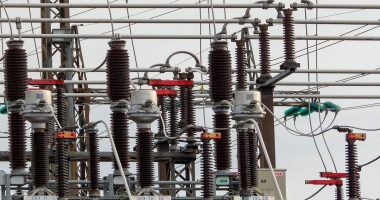
The US company FuelCell Energy is currently realigning its business model. The focus is on the enormous energy demand of modern server facilities, driven by the high demands of artificial intelligence. To optimally serve this specific market, the company has designed standardized power plant modules with a capacity of 12.5 MW each. In conjunction with this product adjustment, the fuel cell manufacturer is expanding its production capacity at its Connecticut facility to be able to produce an annual volume of 500 MW in the future.
Looking purely at the operating figures, there is a stark contrast between the current economic reality and the future outlook. The latest quarterly results revealed continued weakness. Revenues declined by approximately 5% year-over-year to USD 35.6 million. At the same time, the operating loss widened to USD 77.9 million, representing a doubling year-over-year, in part due to significant write-downs on an existing major project. Additionally, the firm order backlog decreased by about 10%. One key figure casts the rather mixed numbers in a positive light. The volume of potential new orders has risen by 267% to 4 GW since the beginning of the year. Financially, the group is well-cushioned with cash and cash equivalents totalling USD 441 million and operates with virtually no debt. However, capital consumption in day-to-day operations is high. This funding gap is being covered primarily through the issuance of new shares, which continuously dilutes the value of existing holdings for current shareholders.
Analyst assessments vary widely. Optimistic views came from the investment firm TD Cowen, which raised its price target from USD 9 to USD 16 following the release of the quarterly results. Canaccord also upgraded the stock from “Hold” to “Buy.” They anticipate imminent, lucrative contract signings in the IT sector. Other market observers, however, warn against unbridled euphoria. They emphasize that the proposed projects do not yet constitute signed contracts.
Standard Uranium: Drilling Program Launched
The global uranium market is on the verge of a new growth phase. More than 440 nuclear reactors are in operation worldwide, with around 70 more under construction. At the same time, 38 countries have committed to significantly expanding nuclear energy by 2050. Added to this is the rising demand for electricity from AI data centers and the growing importance of energy security. As a result, demand for uranium is expected to grow significantly faster than supply in the coming years. Standard Uranium is positioning itself precisely in this environment as a promising exploration play in the world-leading Athabasca Basin in Saskatchewan.
The company follows a project-generation and exploration model with a portfolio of more than 240,000 acres (approximately 974 km²) in the Athabasca region. The focus is on the flagship Davidson River project in the southwestern Athabasca Basin, one of the world’s most productive uranium regions. Deposits totalling more than 400 million pounds of high-grade uranium are already located there along the same geological trends. Standard Uranium relies on modern exploration technologies, including AI-assisted target selection and high-resolution multiphysics studies.
The 2026 drilling campaign at Davidson River began in late May. More than 8,000 m of diamond drilling is planned over a period of approximately 12 weeks. Two drill rigs are testing the high-priority structural corridors Bronco, Thunderbird, and Warrior, which are considered particularly promising for high-grade uranium mineralization.
The new drilling targets are based on a combination of historical drilling data, modern 3D ANT and HVSR surveys, gravimetry, and machine learning techniques. Several prominent anomalies were identified that indicate hydrothermal alteration zones and thus potential uranium deposits. According to the company, these are the most precise and promising targets in the project’s history to date. Should the campaign confirm expectations, Davidson River could emerge as one of the most interesting uranium exploration projects in the Athabasca Basin, and Standard Uranium could be on the verge of a significant value-added step.
BYD: Accelerating Global Expansion
The domestic market in China, the world’s largest automotive sales market, is currently facing extreme challenges. While electric mobility is increasingly dominating the streetscape, a price war among vehicle manufacturers is severely squeezing profit margins. Coupled with noticeable consumer reluctance to buy, this toxic environment is forcing local producers to realign their strategies completely.
Amid this challenging situation, BYD’s leadership is pursuing a clear strategy. To offset weakening domestic demand, the company is rapidly expanding its international presence. Exports to overseas markets are rising rapidly, which is why internal forecasts for international business have already been significantly revised upward. Management’s long-term vision is extremely ambitious. Within the next five years, the company aims to replace the current Japanese market leader, Toyota, at the top of the global rankings. To achieve the production volumes required for this, the company is working intensively to eliminate current bottlenecks in battery manufacturing.
At the same time, enormous investments are flowing into research. Particularly in the development of self-driving vehicles, the group benefits from the large amounts of data generated daily by already connected customer vehicles.
Despite rapid operational growth and technological advances, the financial markets are reacting with extreme caution. Since its all-time high at the end of May last year, BYD shares have lost about half their value.
FuelCell Energy could benefit from the rapidly rising electricity demand driven by AI data centers, but to do so, it must convert the announced large-scale projects into profitable revenue. With its drilling program in the Athabasca Basin, Standard Uranium is positioning itself to benefit from the global renaissance of nuclear energy. Despite fierce competition in China, BYD is consistently focusing on global expansion and could establish itself as one of the long-term winners of electric mobility.
Conflict of interest
Pursuant to §85 of the German Securities Trading Act (WpHG), we point out that Apaton Finance GmbH as well as partners, authors or employees of Apaton Finance GmbH (hereinafter referred to as “Relevant Persons”) currently hold or hold shares or other financial instruments of the aforementioned companies and speculate on their price developments. In this respect, they intend to sell or acquire shares or other financial instruments of the companies (hereinafter each referred to as a “Transaction”). Transactions may thereby influence the respective price of the shares or other financial instruments of the Company.
In this respect, there is a concrete conflict of interest in the reporting on the companies.
In addition, Apaton Finance GmbH is active in the context of the preparation and publication of the reporting in paid contractual relationships.
For this reason, there is also a concrete conflict of interest.
The above information on existing conflicts of interest applies to all types and forms of publication used by Apaton Finance GmbH for publications on companies.
Risk notice
Apaton Finance GmbH offers editors, agencies and companies the opportunity to publish commentaries, interviews, summaries, news and the like on news.financial. These contents are exclusively for the information of the readers and do not represent any call to action or recommendations, neither explicitly nor implicitly they are to be understood as an assurance of possible price developments. The contents do not replace individual expert investment advice and do not constitute an offer to sell the discussed share(s) or other financial instruments, nor an invitation to buy or sell such.
The content is expressly not a financial analysis, but a journalistic or advertising text. Readers or users who make investment decisions or carry out transactions on the basis of the information provided here do so entirely at their own risk. No contractual relationship is established between Apaton Finance GmbH and its readers or the users of its offers, as our information only refers to the company and not to the investment decision of the reader or user.
The acquisition of financial instruments involves high risks, which can lead to the total loss of the invested capital. The information published by Apaton Finance GmbH and its authors is based on careful research. Nevertheless, no liability is assumed for financial losses or a content-related guarantee for the topicality, correctness, appropriateness and completeness of the content provided here. Please also note our Terms of use.
Stockhouse does not provide investment advice or recommendations. All investment decisions should be made based on your own research and consultation with a registered investment professional. The issuer is solely responsible for the accuracy of the information contained herein. For full disclaimer information, please click here.