
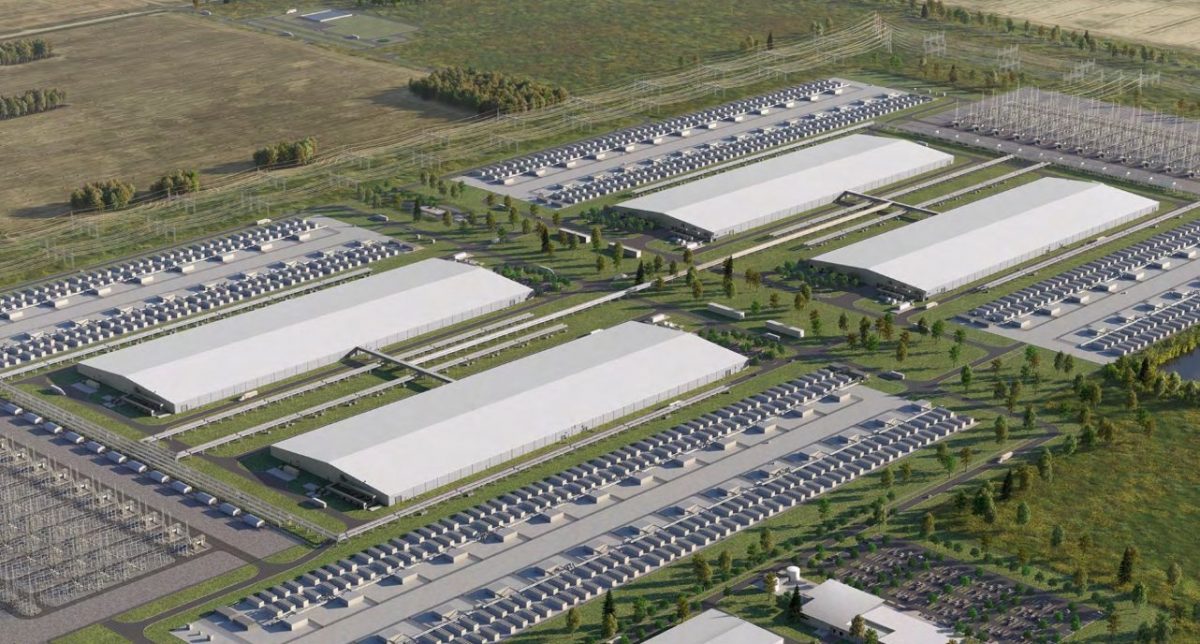

- Meta (NASDAQ:META) will invest more than C$13 billion to build its first Canadian data centre in Sturgeon County, Alberta, creating about 3,000 construction jobs and 300 permanent jobs
- The one-gigawatt facility will support growing AI demand and use a closed-loop cooling system that Meta says will eliminate operational water use for cooling
- Alberta officials say the project will boost the economy and strengthen the province’s AI sector, while critics have raised concerns about natural gas use and potential impacts on electricity costs
- Meta stock (NASDAQ:META) opened trading at US$583.99
Meta (NASDAQ:META) has announced plans to build its first Canadian data centre in central Alberta, committing more than C$13 billion to a major project that reflects the growing global demand for AI infrastructure.
The company, which owns Facebook, Instagram and WhatsApp, said Wednesday it will construct a one-gigawatt data centre in Sturgeon County, northeast of Edmonton. The facility will be Meta’s 33rd data centre worldwide and one of the largest technology infrastructure investments in Alberta’s history.
In addition to the data centre investment, Meta said it will contribute C$60 million toward local infrastructure improvements related to the project.
The announcement was made at a news conference in Calgary attended by Alberta Premier Danielle Smith, Sturgeon County Mayor Alanna Hnatiw and Meta executives.
This article is a journalistic opinion piece that has been written based on independent research. It is intended to inform investors and should not be taken as a recommendation or financial advice.
Alberta wants to position itself as AI hub
Smith said the project exposes Alberta’s growing role in the rapidly expanding AI sector, highlighting the province’s climate, workforce and technological expertise as key advantages.
“We believe our province can compete with any jurisdiction on Earth and what we have to offer,” Smith said.
She added that Alberta is emerging as a significant player in the global AI industry and estimated the Meta project would generate at least C$250 million annually for the provincial economy.
The investment comes as technology companies around the world race to build the computing infrastructure needed to support AI applications, which require large-scale data storage and processing capacity.
Focus on cooling and water use
Data centres have faced increasing scrutiny over their energy consumption and water requirements, particularly as demand for AI computing grows.
Meta said the Alberta facility will use a closed-loop liquid cooling system combined with dry cooling technology, which the company says will eliminate operational water use for cooling purposes.
Gary Demasi, Meta’s vice-president of data centre strategy and development, said the facility’s water consumption will be minimal compared with other large industrial operations.
“To put that into perspective, our annual water use is actually less than a typical Alberta golf course,” Demasi said.
He noted that Meta has committed to becoming water-positive by 2030, meaning the company aims to restore more water to local watersheds than it consumes.
Power supply includes natural gas
The project will be located in Alberta’s Industrial Heartland, a major industrial zone northeast of Edmonton. The site is expected to be supported by Project Greenlight, a proposed natural gas-fired power generation facility nearby.
Meta said electricity for the data centre will come from both Alberta’s power grid and on-site generation fueled by natural gas.
The project follows legislation passed by Alberta last year that allows data centres to generate their own electricity. Provincial officials have argued the policy helps attract large investments while limiting pressure on the existing grid.
Meta has not announced a specific opening date for the facility, although Demasi said operations are expected to begin within the next several years.
Employment and economic impact
According to Meta, construction of the data centre will create approximately 3,000 jobs, while the completed facility will support about 300 permanent positions.
Supporters say the project could help attract additional technology investments to Alberta.
Mark Daley, chief AI officer at Western University, described data centres as one of the major economic drivers of the modern digital economy. He said Canada’s abundant energy resources and available land make it an attractive location for such developments.
Daley said securing a project from a company of Meta’s size sends a strong signal to other technology firms considering future investments.
“You have one of the world’s largest technology corporations saying, ‘I have full faith and confidence that what I need can be delivered in this environment,’” he said.
He added that the move could encourage other companies to examine Alberta as a potential destination for large-scale AI and data infrastructure projects.
Concerns over energy strategy
The announcement also drew criticism from some energy and environmental observers.
David Pickup, director of the Pembina Institute’s electricity program, questioned Alberta’s approach of encouraging large industrial projects to rely on natural gas-powered generation.
Pickup argued the policy risks increasing demand for natural gas at a time when Alberta is also supporting expanded liquefied natural gas exports. He said growing electricity demand from data centres could contribute to higher energy costs for consumers.
“It’s going to have an impact on Albertans and that’s something that we’re really concerned about,” Pickup said in an interview with the CBC.
Alberta Technology and Innovation Minister Nate Glubish defended the province’s regulatory framework, saying officials have worked to avoid challenges experienced in some U.S. jurisdictions where rapid data centre growth has strained power systems.
“Alberta is doing it differently,” Glubish said. “We took the time to get the regulatory framework right. It’s a fair, reasonable and competitive framework. Everyone’s going to follow the same rules.”
As demand for AI infrastructure continues to accelerate worldwide, Meta’s Alberta project highlights both the economic opportunities and policy debates surrounding the next generation of data centres. For Alberta, the investment represents a significant step in its efforts to establish itself as a key destination for technology and AI-related development in Canada.
About Meta
Meta Platforms Inc. develops products that can enable people to connect and share with friends and family through mobile devices, personal computers, virtual reality and mixed reality headsets, augmented reality, and wearables worldwide.
Meta stock (NASDAQ:META) opened trading down more than 3 per cent at US$583.99 and has lost more than 10 per cent since the year began.
Join the discussion: Find out what the Bullboards are saying about Meta and check out Stockhouse’s stock forums and message boards.